
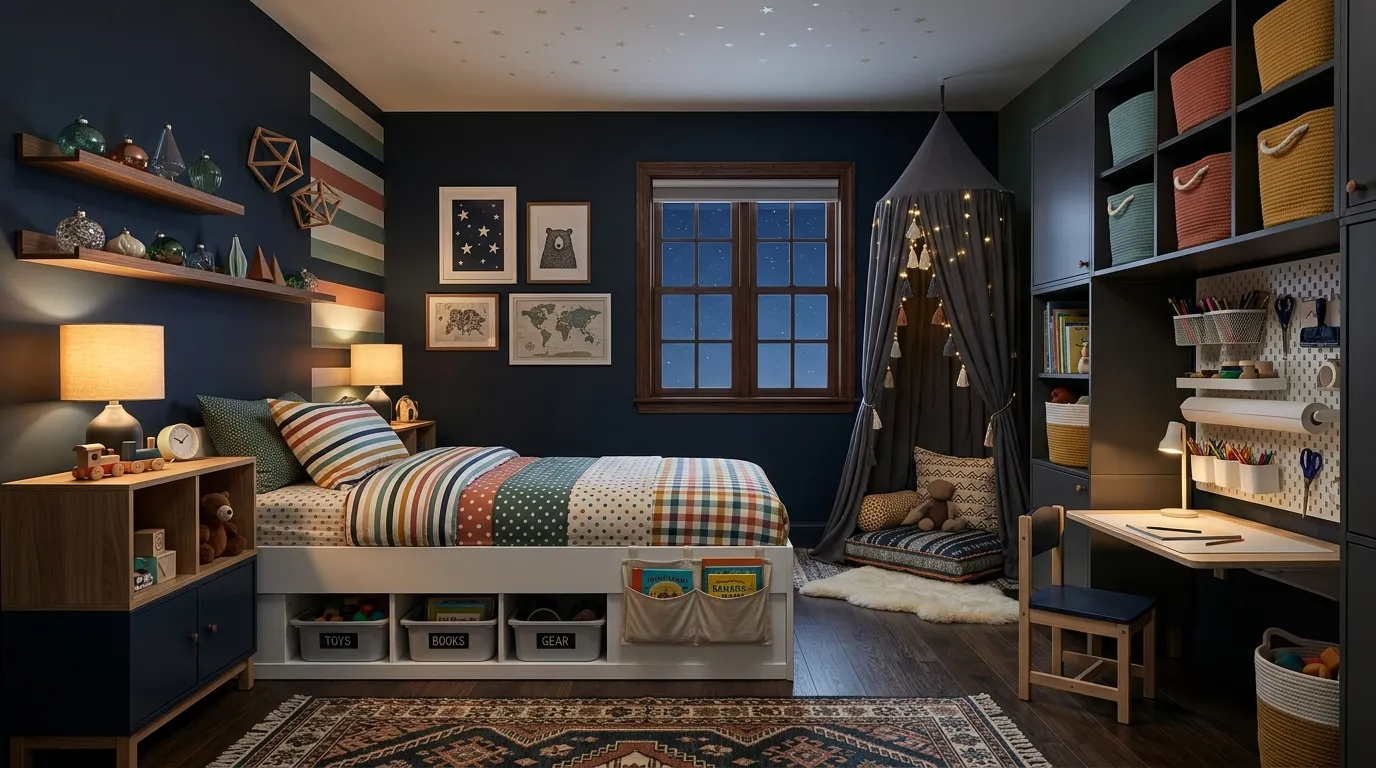
21 Playful Small Bedroom Decor for Kids Ideas You’ll Love
A small bedroom can still feel playful, organized, and full of personality. The right choices can make even the tightest room feel more open, useful, and fun for everyday life.
These small bedroom decor for kids ideas focus on smart storage, cheerful colors, flexible furniture, cozy corners, and creative details that do not require a large budget. Whether you are decorating a shared room, refreshing a growing child’s space, or simply trying to control toy clutter, each idea is designed to be practical and easy to adapt. In my experience, the most successful kids’ rooms are not filled with more furniture. They use the available space more thoughtfully. With a few simple changes, you can create a bedroom that feels organized for parents while still giving kids plenty of room to play, read, rest, and express their personality.
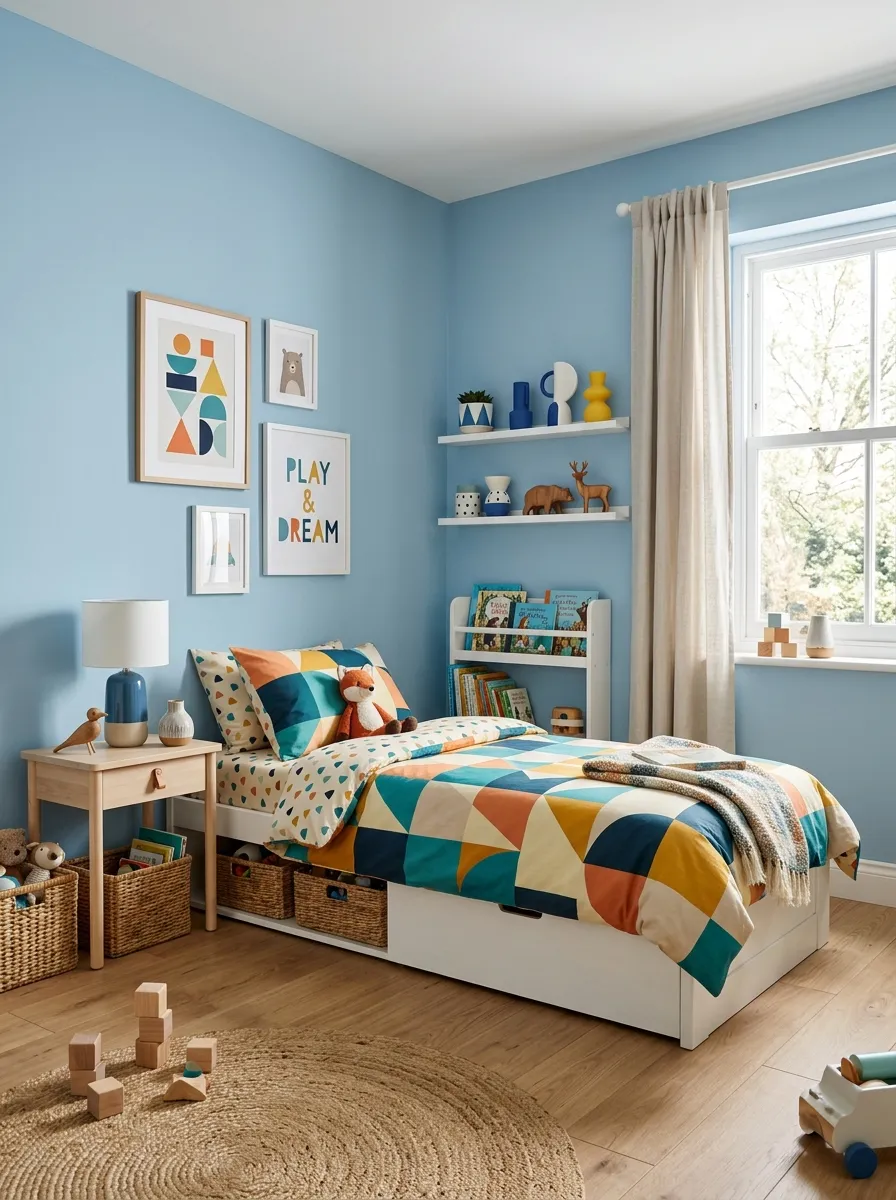
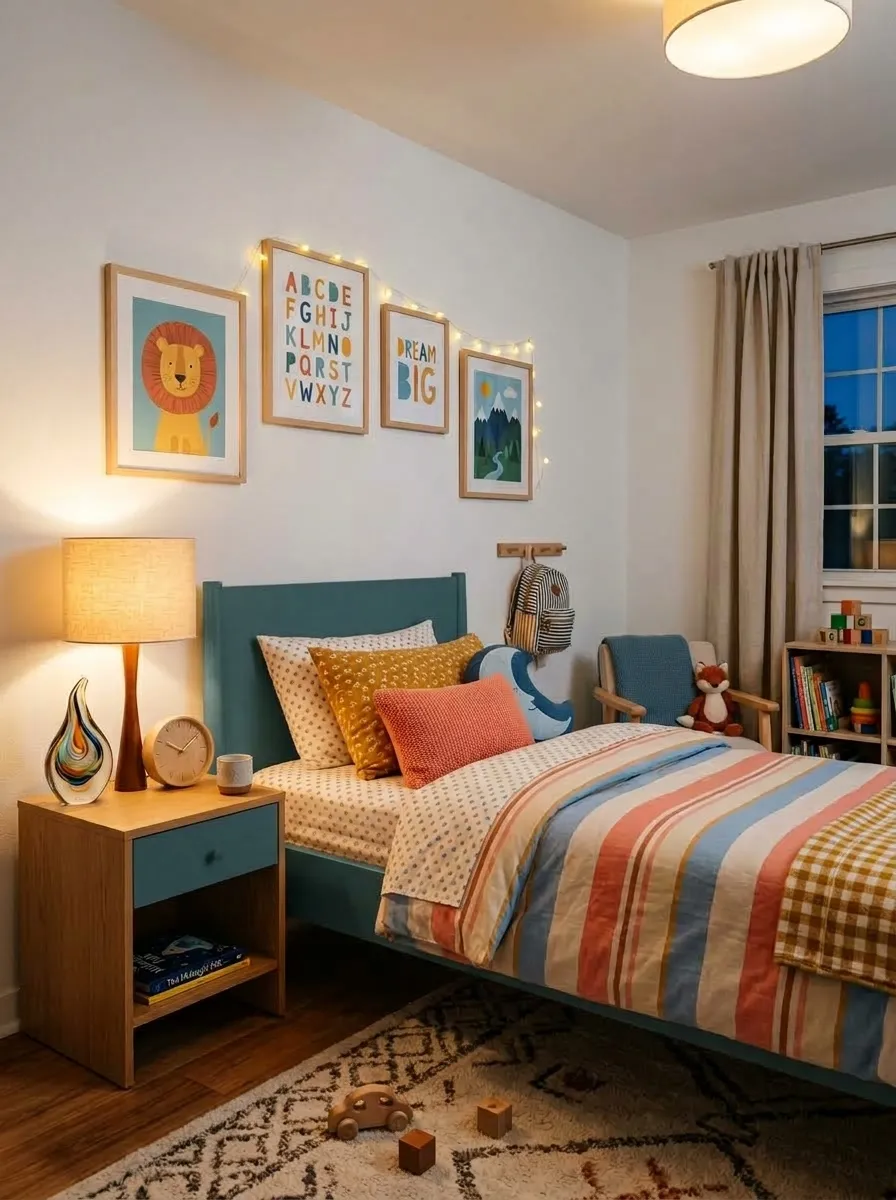
Low Bed Color Zone
Small rooms feel instantly calmer when the bed becomes the visual anchor instead of competing with scattered furniture. A low bed keeps sightlines open, while bright bedding adds personality without taking up extra floor space. This approach works especially well for small bedroom decor for kids.
Keep the surrounding furniture simple so the bed stays playful without making the room feel busy. Choose one cheerful color story, repeat it in two or three accents, and leave some wall space blank. The result feels fun, organized, and much easier for a child to enjoy daily.
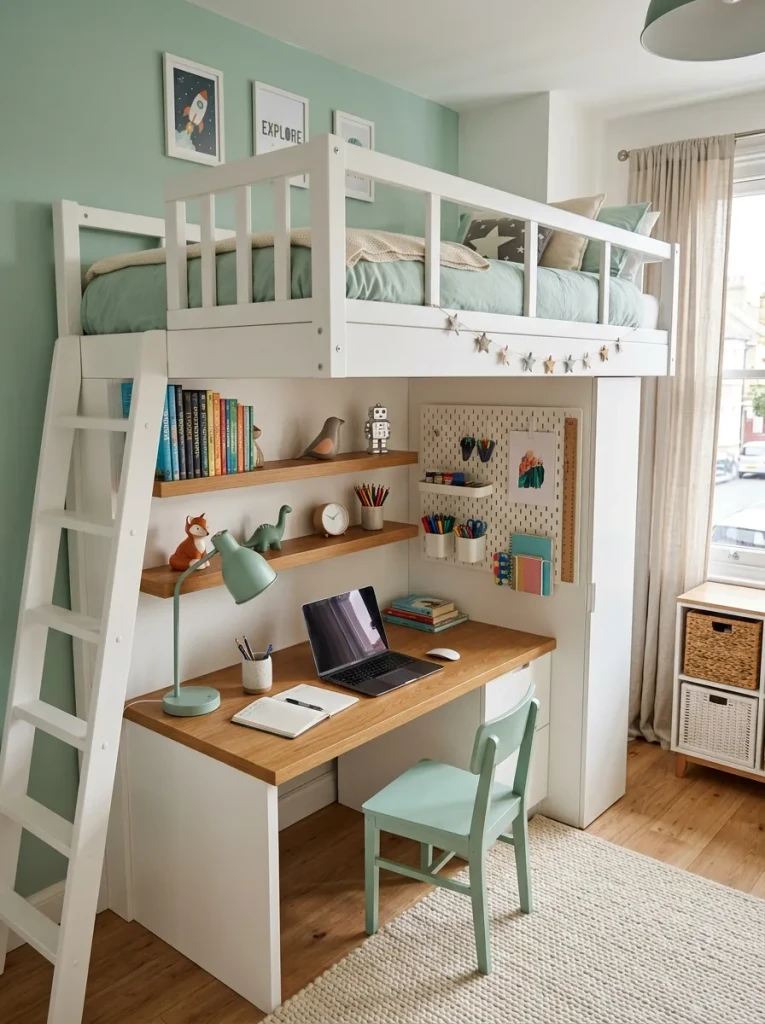
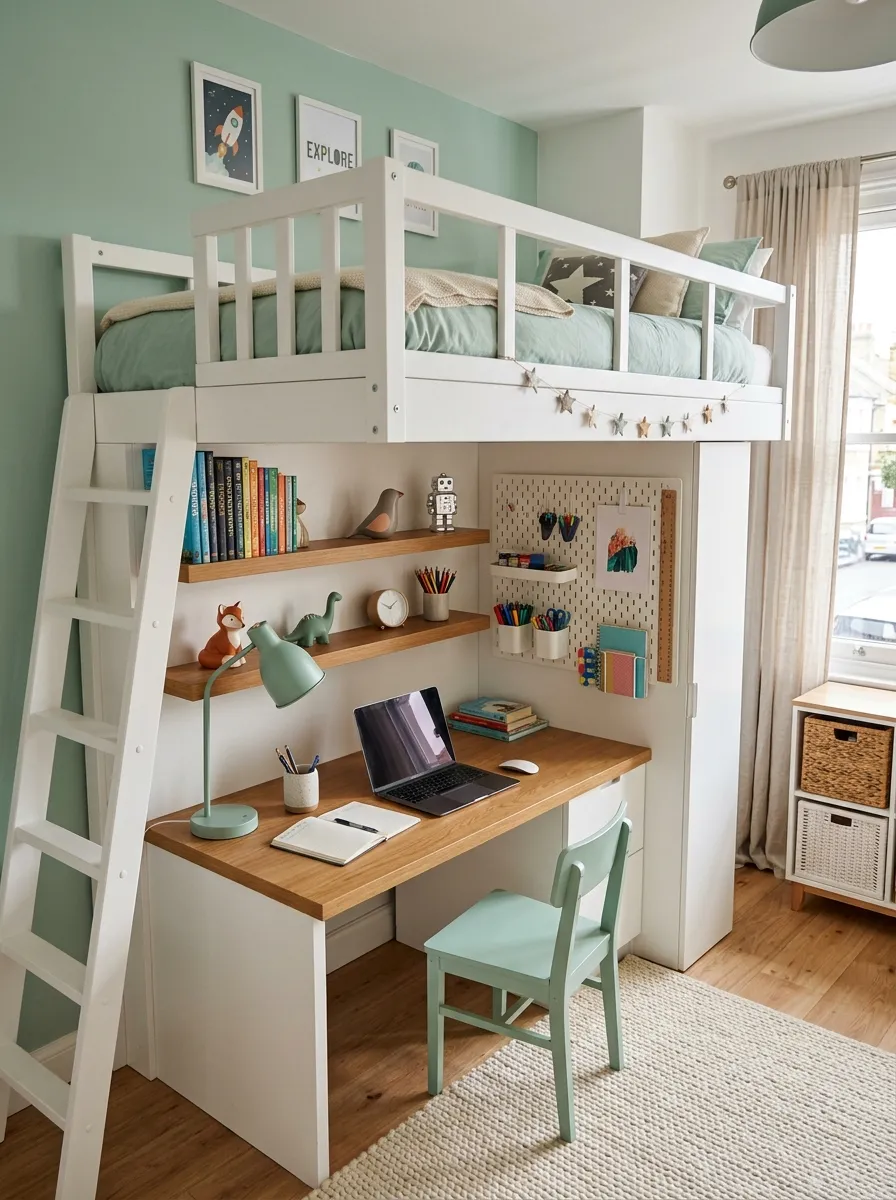
Loft Bed Study Nook
- When floor space disappears, look upward. A loft bed creates room underneath for homework, crafts, or quiet play.
- Choose a desk that fits fully beneath the bed frame so chair movement stays comfortable.
- Mount a slim pegboard above the desk for pencils, headphones, art supplies, and small baskets.
- Add a focused task lamp instead of relying only on the main ceiling light.
- Keep bulky toy storage elsewhere so the area below the bed remains open and easy to use.
A loft setup works because it turns one footprint into two useful zones. In my experience, the biggest improvement comes from keeping the desk area visually simple so it does not feel cramped. Choose only the essentials below, then let the upper bed remain the room’s main playful feature.
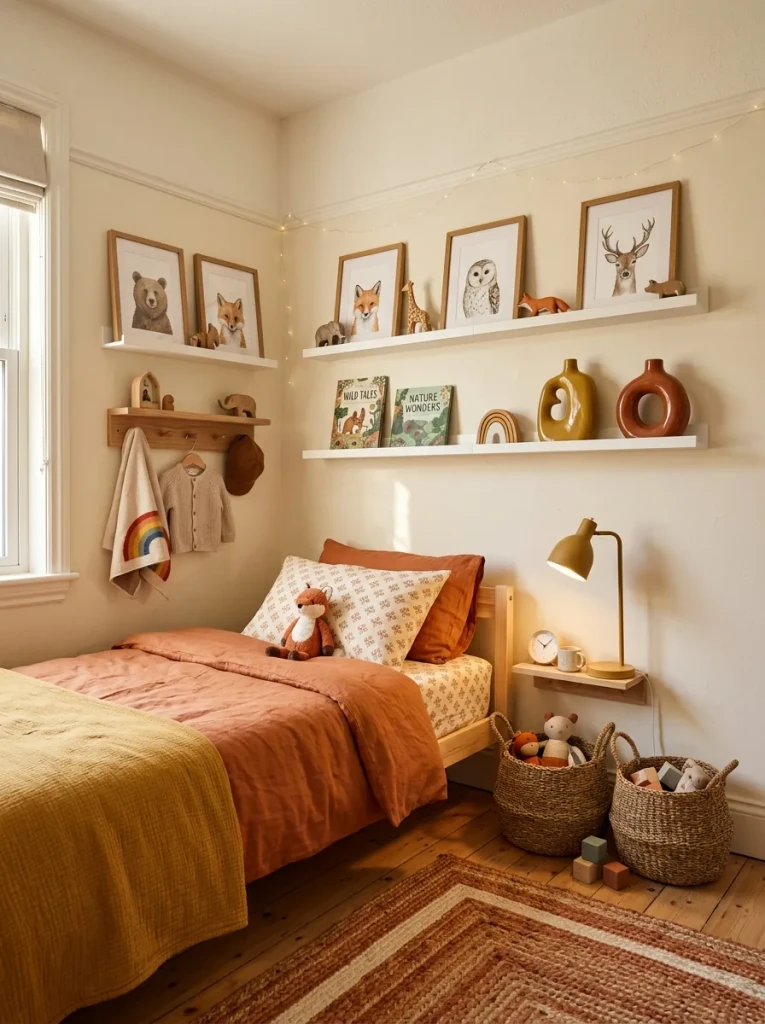
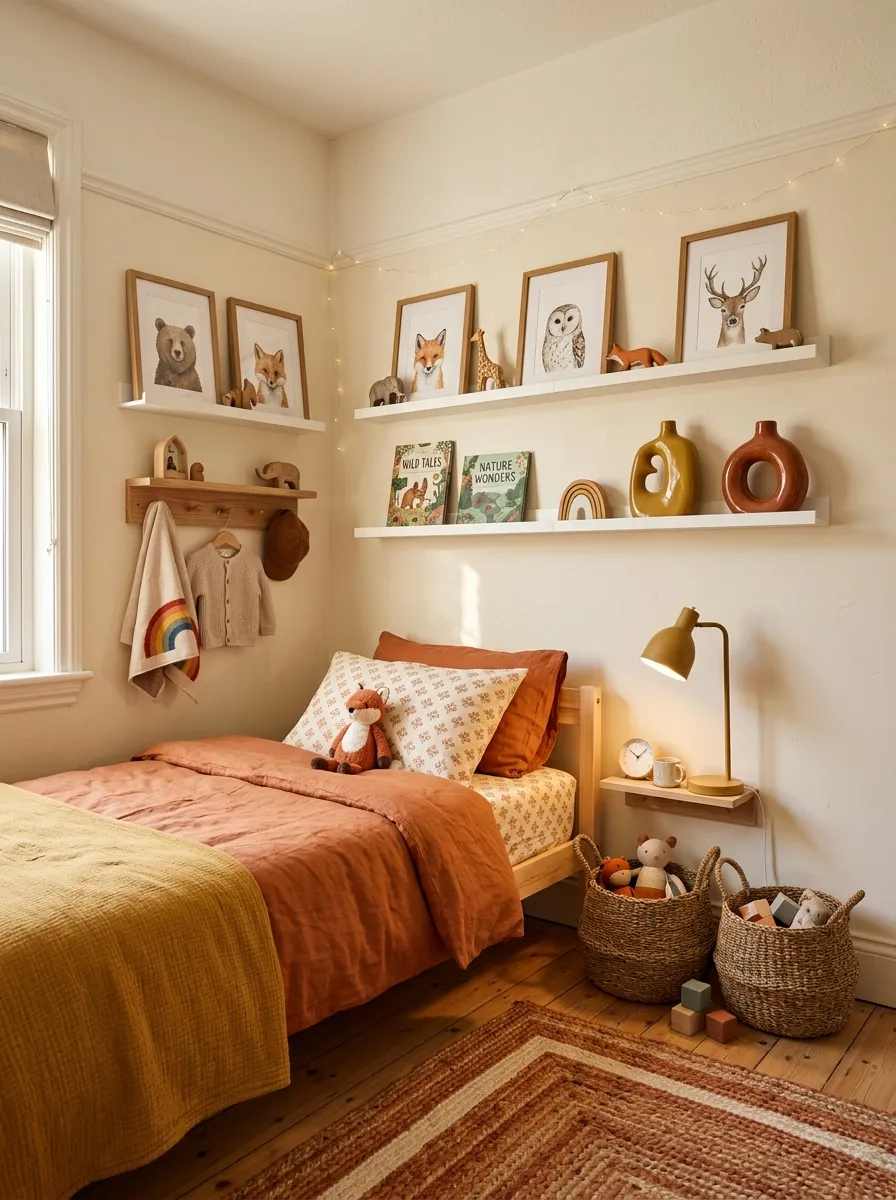
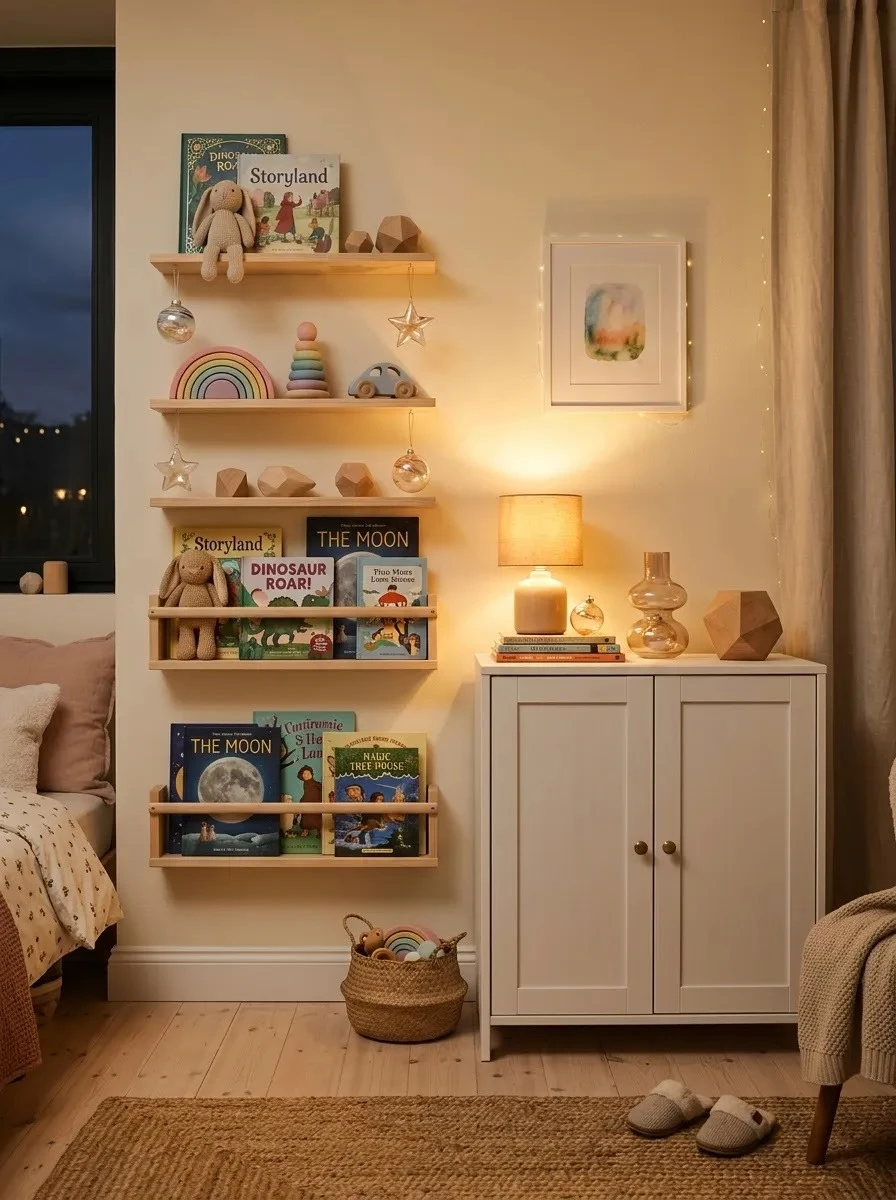
Floating Display Ledges
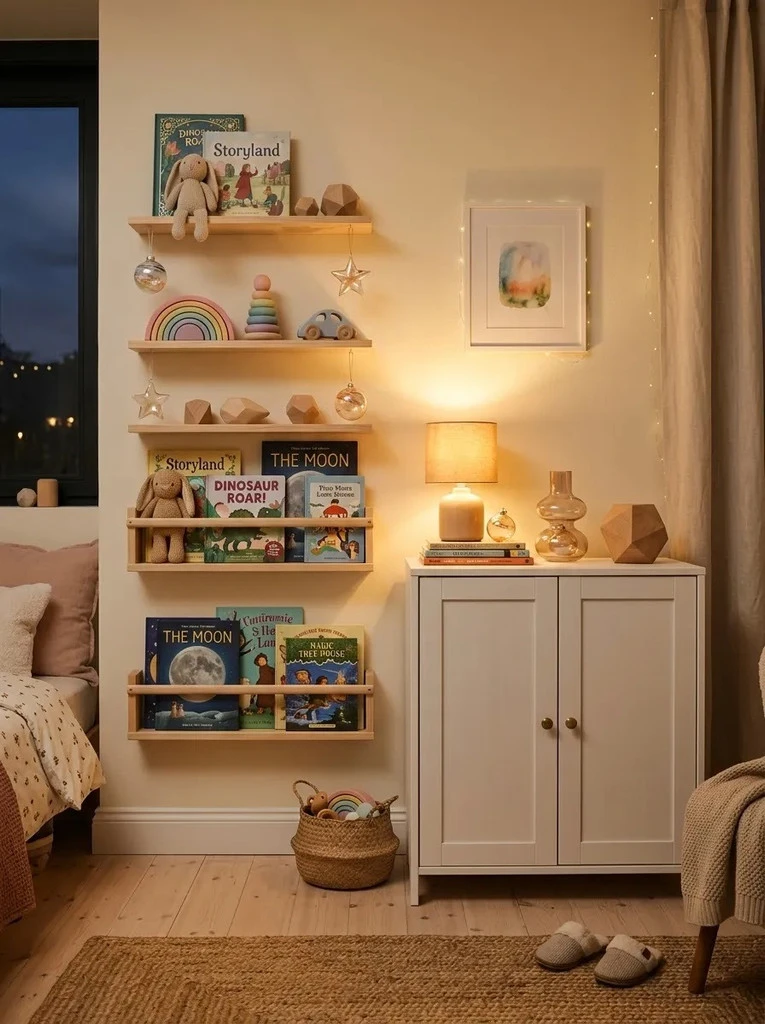
Let the walls do more of the decorating. Keep displays are shallow and lightweight with picture ledges, slim shelves, and flat artwork so personality is added without crowding the room or making everyday cleaning harder.
Blank walls can do much more than hold decoration. Slim ledges create a flexible display for books, drawings, and favorite characters while keeping floor space free. Rotate a few items every season or whenever interests change, and the room gets a fresh look without buying new furniture.
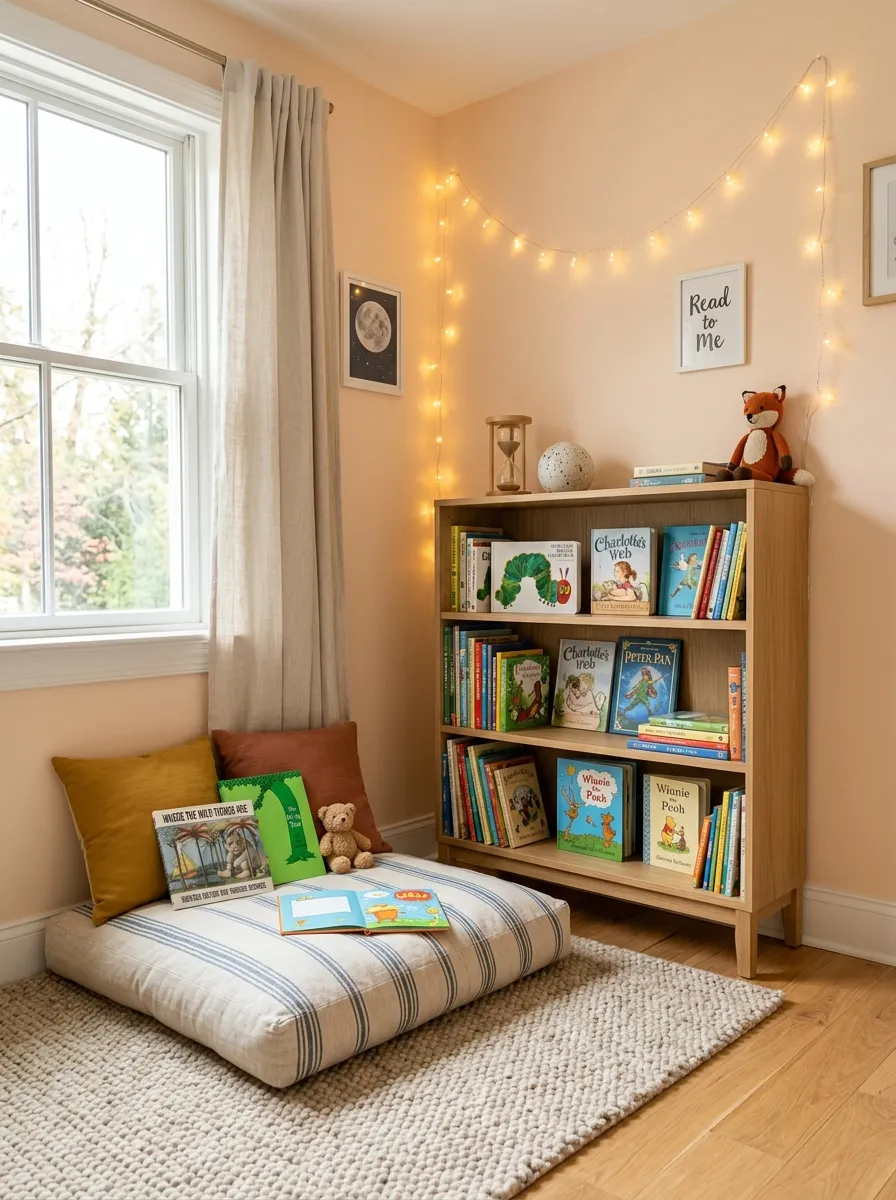
Cozy Reading Corner
BEFORE:
An unused bedroom corner often becomes a pile of toys, laundry, or random storage. The space feels wasted, and children have no clear spot for quiet time.
AFTER:
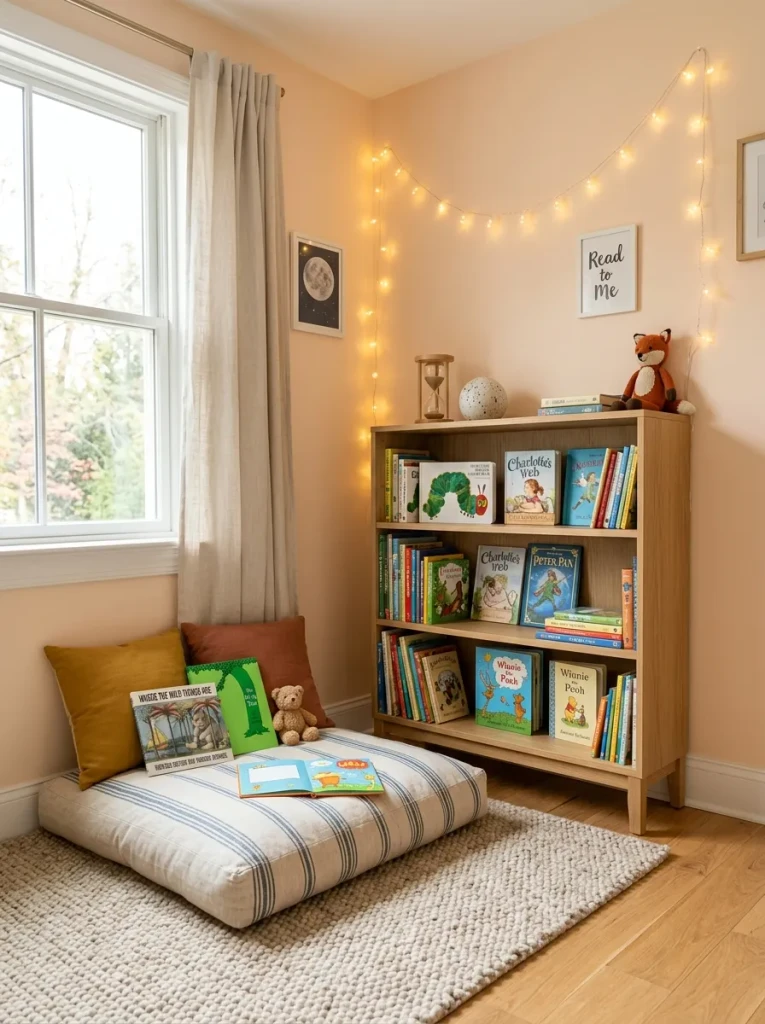
A floor cushion, slim book rack, and soft lighting turn that same corner into a dedicated reading nook. Books stay visible, the room gains purpose, and the setup uses very little floor space.
A small reading zone gives kids a cozy place to slow down without needing extra furniture. Keep favorite books at child height and limit the display to a manageable selection. I’ve seen this work especially well in tight bedrooms because the corner feels intentional while still staying flexible for play.
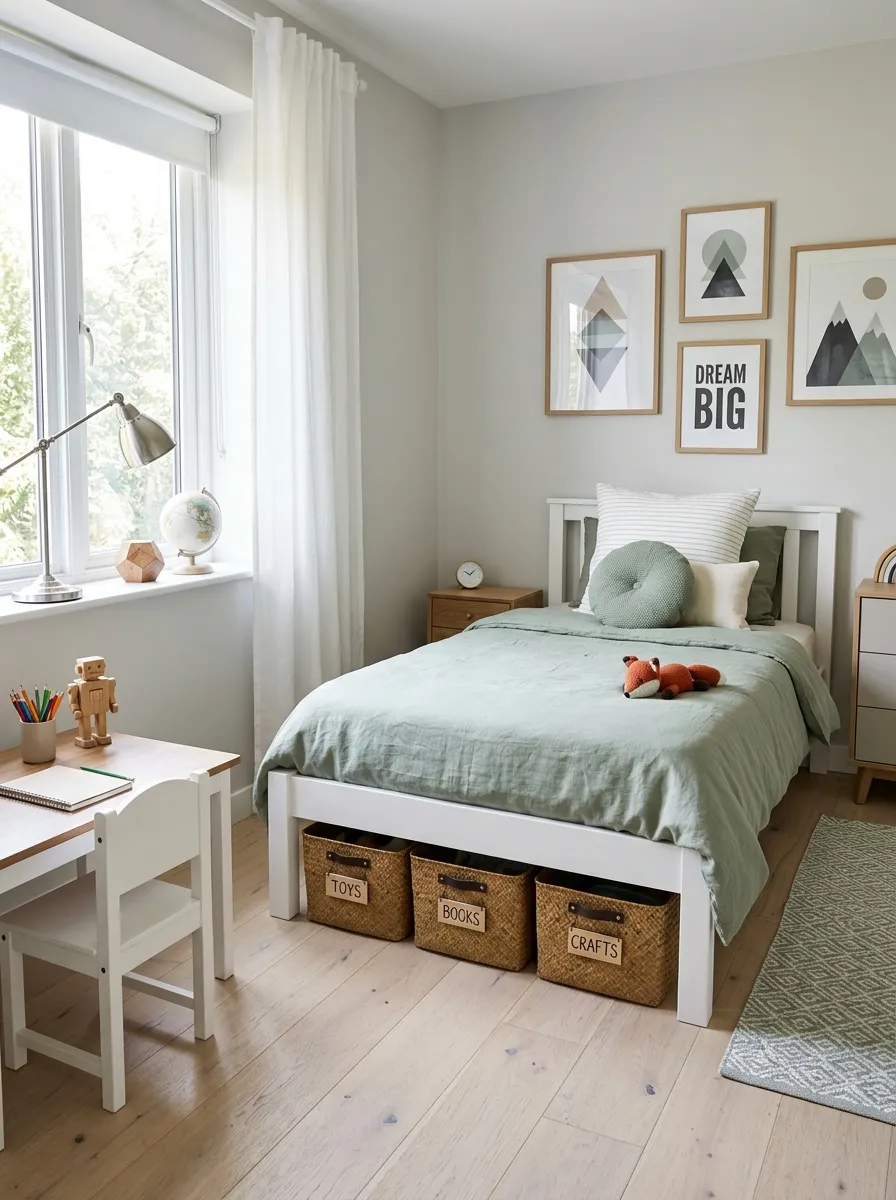
Slide-Away Storage Bins
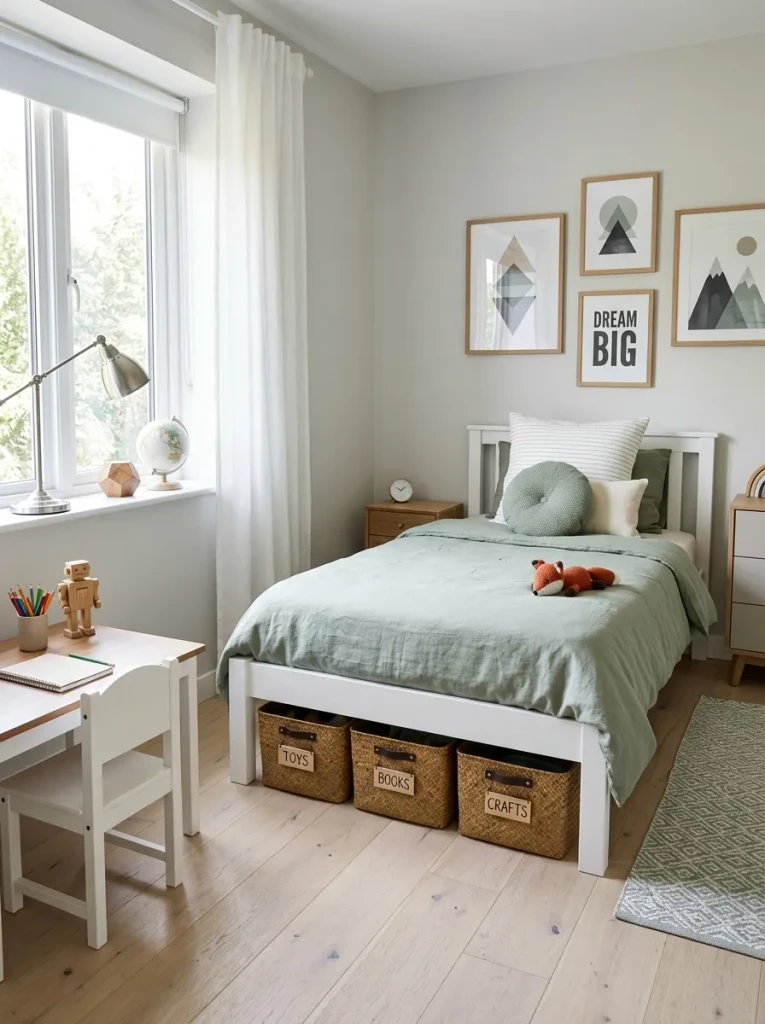
- Measure the clearance beneath the bed before buying containers so every bin slides in and out easily.
- Choose shallow boxes with handles for toys, seasonal clothes, craft supplies, or spare bedding.
- Group similar items together and label each container with simple words or picture symbols for younger children.
- Keep everyday items near the front and less used belongings toward the back.
Hidden storage makes a small room feel noticeably calmer because bulky items disappear without requiring another cabinet. Choose containers that match in height and shape for a cleaner look. This setup is especially useful for budget-conscious families who want better organization without replacing existing bedroom furniture.
Open Shelves vs Cabinets
| Feature | Open Shelves | Closed Cabinets |
| Best Use | Books and favorite toys | Clutter and mixed supplies |
| Visual Effect | Light and playful | Calm and streamlined |
| Daily Access | Quick and easy | Slightly less immediate |
| Cleaning | Needs regular tidying | Hides mess easily |
The smartest setup often combines both storage styles instead of choosing only one. Keep attractive books and toys on open shelves, then hide puzzles, craft supplies, and small pieces behind doors. This balance keeps children’s bedroom decor cheerful while preventing the room from looking crowded or difficult to maintain.
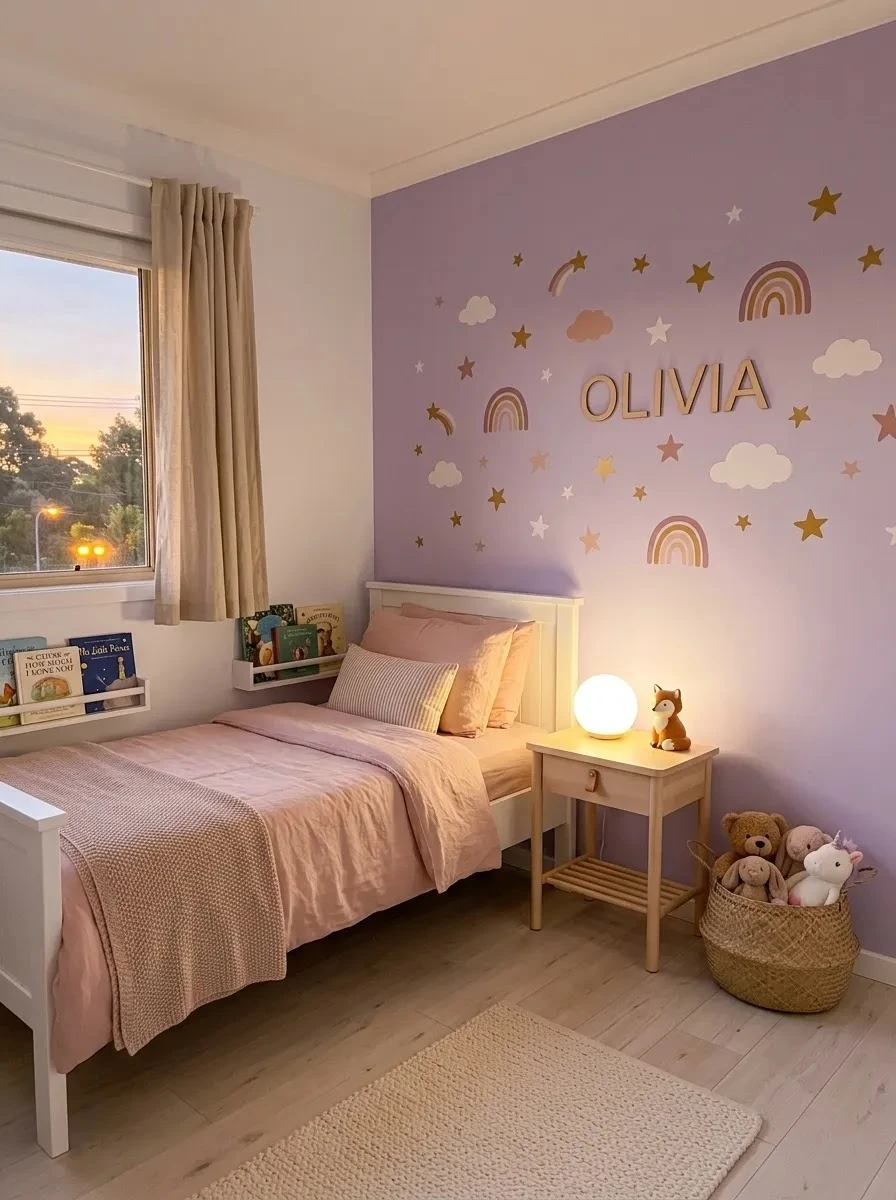
Playful Wall Decals
DO:
- Choose removable decals that will not damage painted walls.
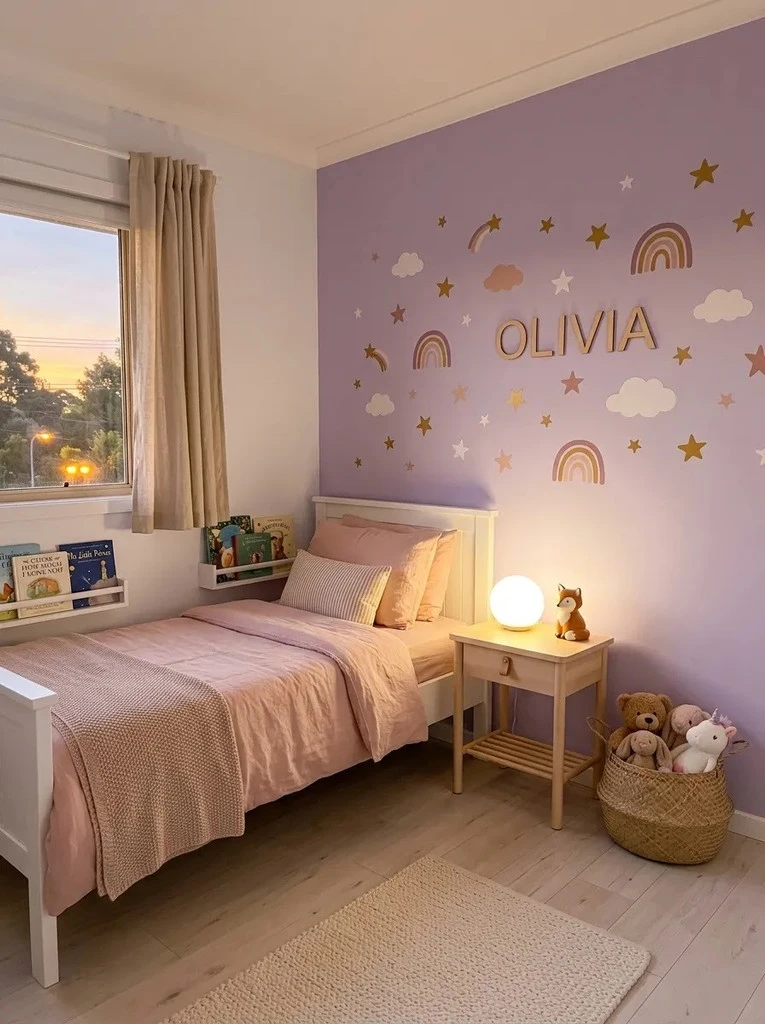
- Place larger shapes around the bed or reading area to create a clear focal point.
- Repeat two or three colors already used in the bedding.
- Let children help choose a theme they genuinely enjoy.
DON’T:
- Cover every wall with busy patterns.
- Mix too many unrelated colors and characters.
- Place decals on dusty or uneven surfaces.
- Position tiny stickers where younger children can easily peel them off.
Wall decals give a child’s room personality without the cost or commitment of wallpaper. They are especially practical for growing kids whose favorite themes change quickly. Keep the arrangement focused on one wall so the decoration feels playful rather than chaotic, while the rest of the bedroom stays visually calm.
Colorful Storage Baskets
Cost: Low to moderate
Time: About one hour
Skill Level: Beginner
Best For: Toys, books, clothes, and craft supplies
Colorful baskets turn everyday organization into part of the room’s decoration. Assign one basket to each category so children know exactly where items belong. In my experience, simple storage systems work better than complicated organizers because kids are more likely to use them independently and keep the floor clearer.
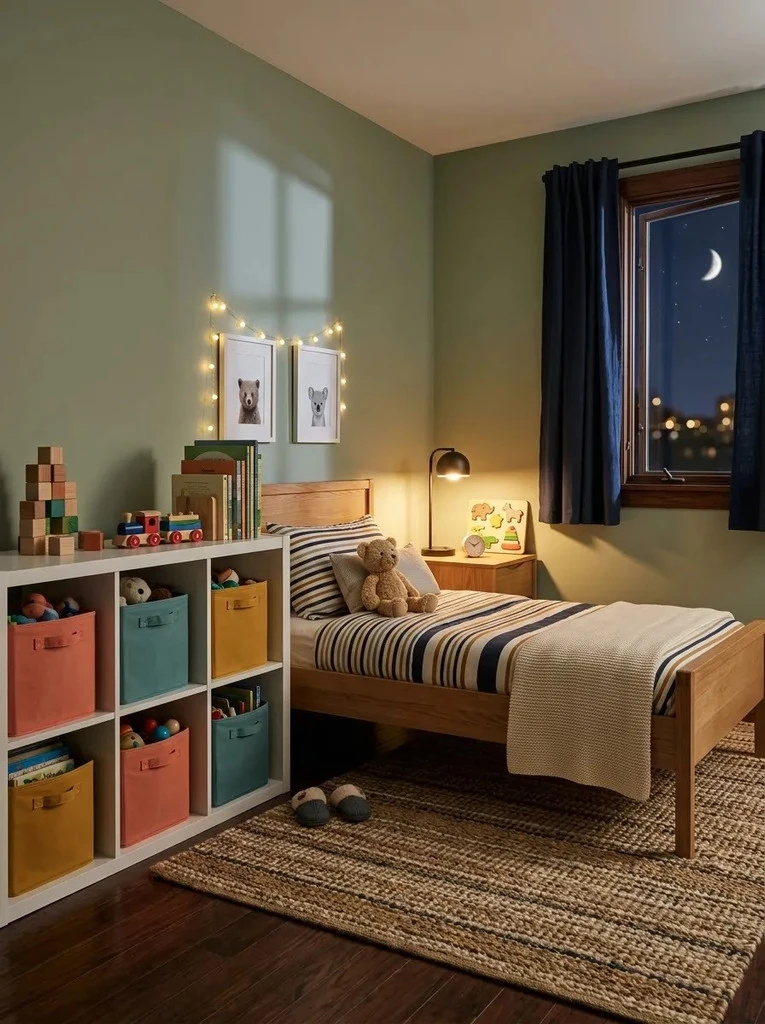
Soft Canopy Hideaway
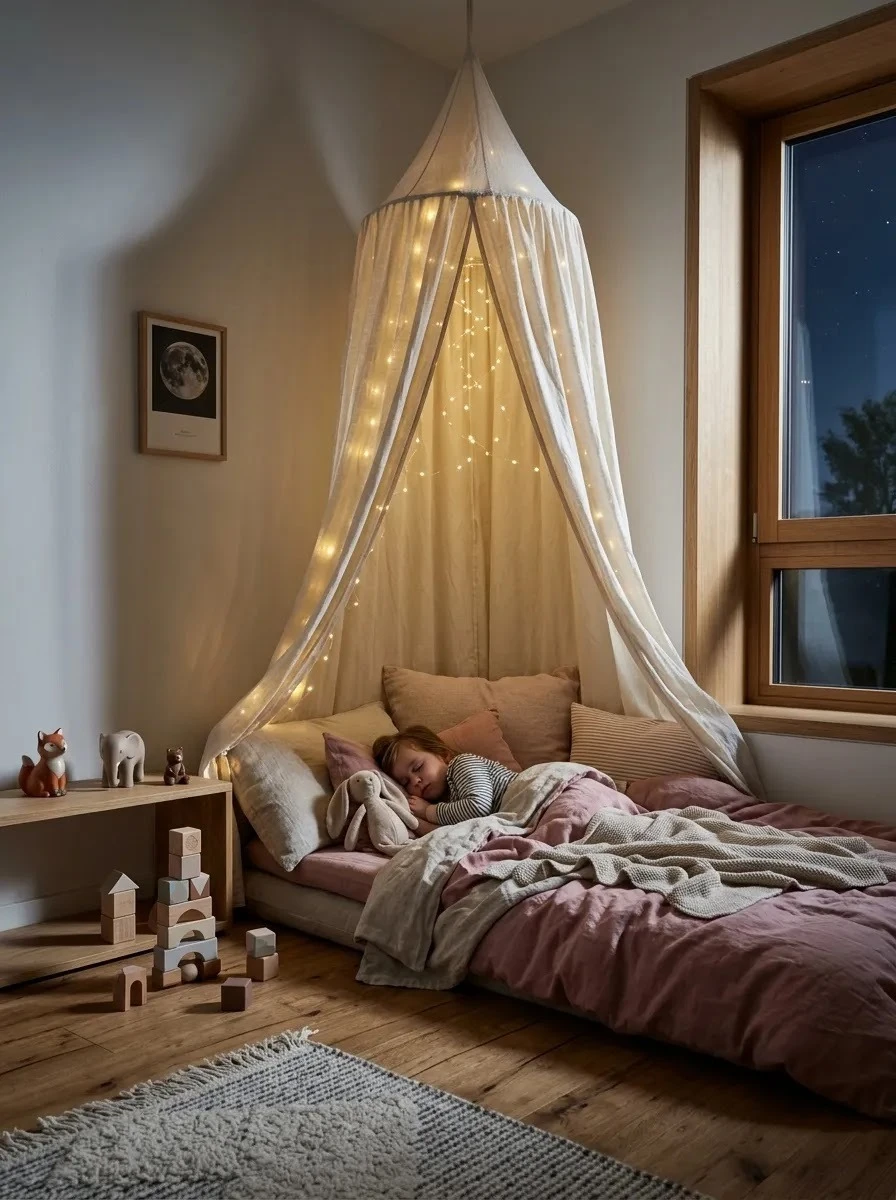
A fabric canopy creates a playful retreat without needing much floor space. Hang it securely above a reading cushion, beside the bed, or over a small corner mat. Soft cotton or muslin keeps the setup airy, while one or two washable pillows make the area comfortable without filling it with clutter.
For small bedroom decor for kids, this works best when the canopy stays visually light. Avoid heavy fabric or oversized frames that overwhelm the room. Choose a color that connects with the bedding or curtains, and leave enough open space around the hideaway for safe movement and easy cleaning.
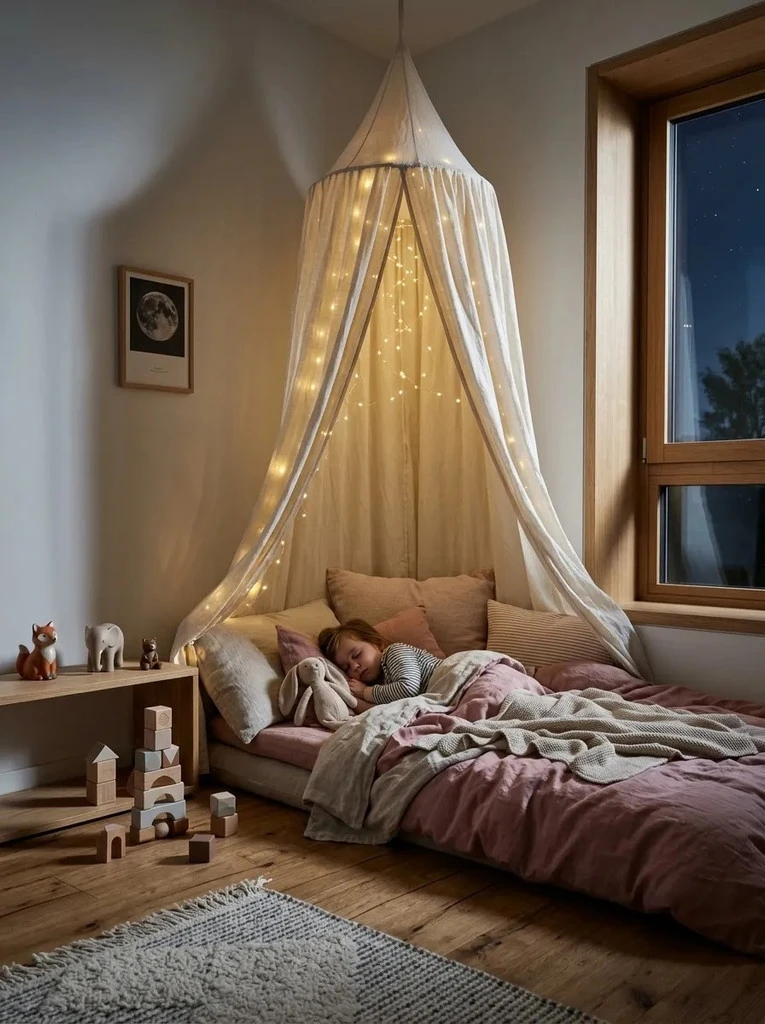
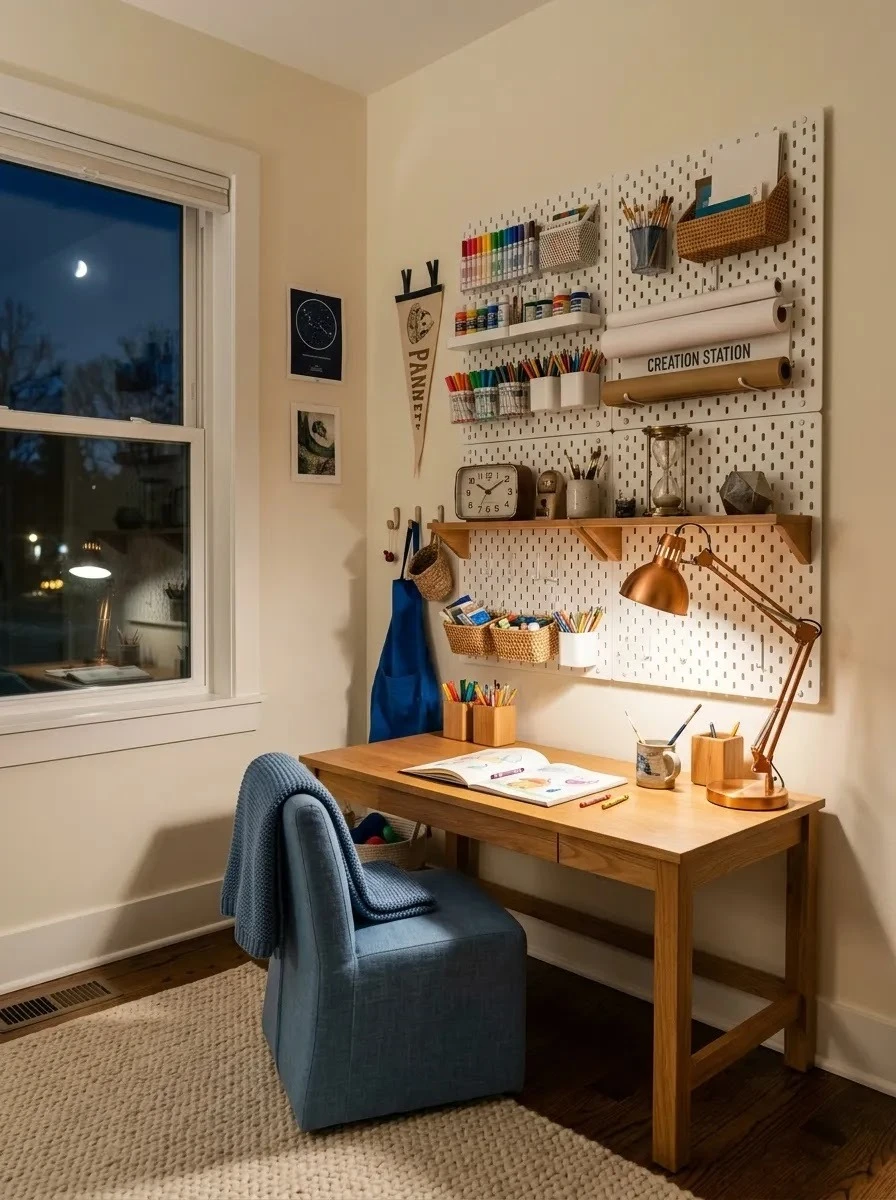
Pegboard Activity Wall
- Mount the pegboard at a height children can comfortably reach without climbing.
- Add lightweight cups and hooks for crayons, scissors, headphones, and small craft tools.
- Reserve one section for frequently used items and another for rotating displays.
- Match organizers to two or three room colors so the wall feels coordinated.
- Keep heavier objects on lower shelves instead of hanging them overhead.
A pegboard makes excellent use of vertical space while keeping everyday supplies visible and organized. It also adapts easily as a child grows, since hooks and containers can be moved whenever needs change. Keep the layout simple enough that putting things away remains quick and obvious.
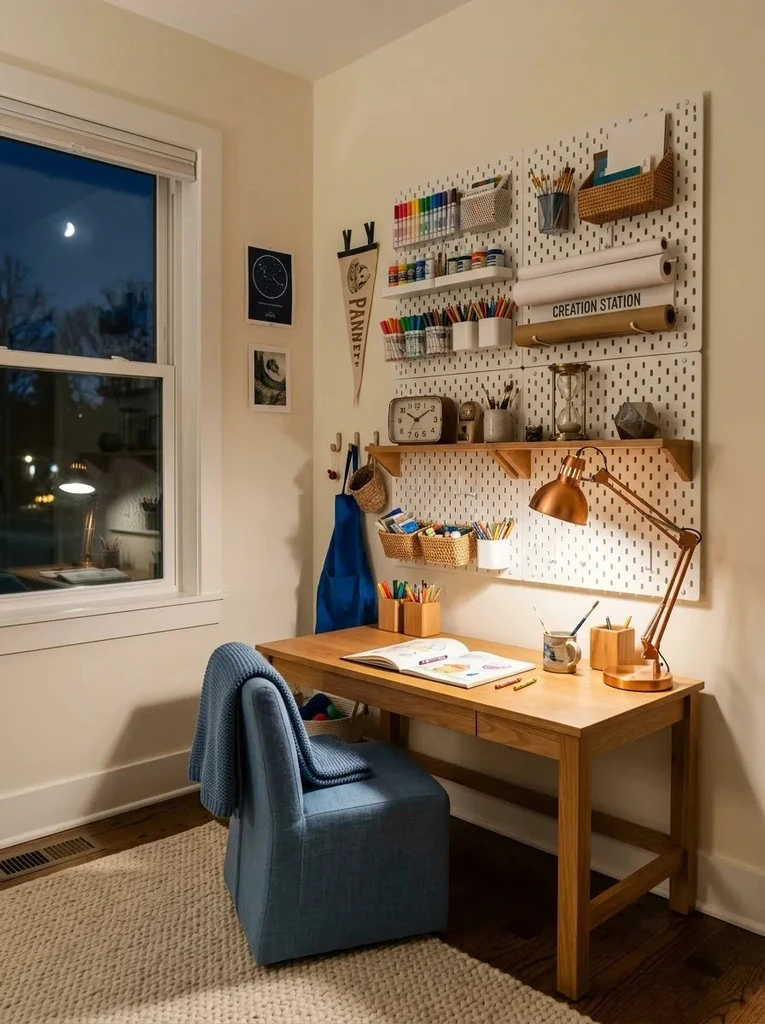
Bedside Book Pocket
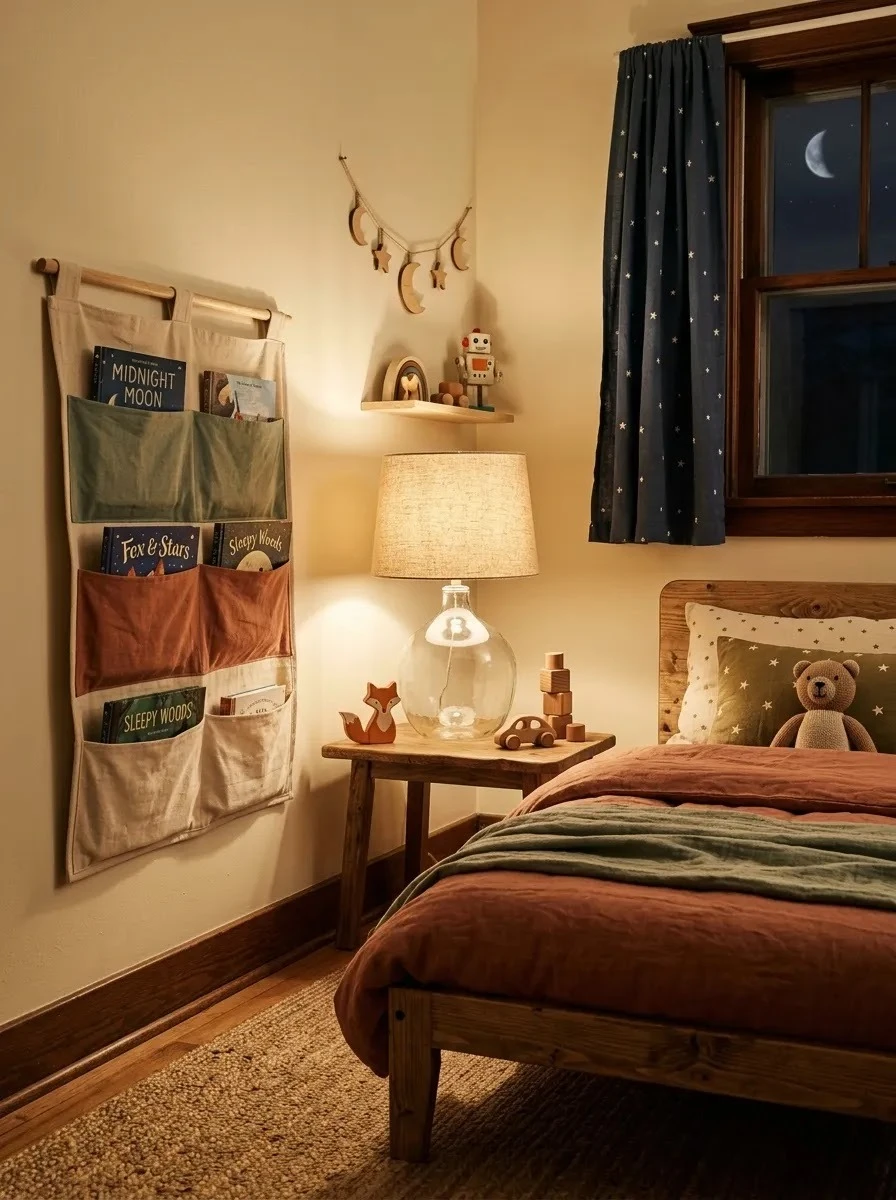
Choose a washable fabric pocket with several shallow compartments rather than one deep pouch. It keeps book covers visible and prevents smaller items from disappearing at the bottom.
A bedside pocket replaces a bulky nightstand while keeping bedtime essentials within easy reach. Store two or three favorite books, a small notebook, and other lightweight items inside. The setup works especially well beside beds placed against a wall, where traditional furniture would make the walkway feel too narrow.
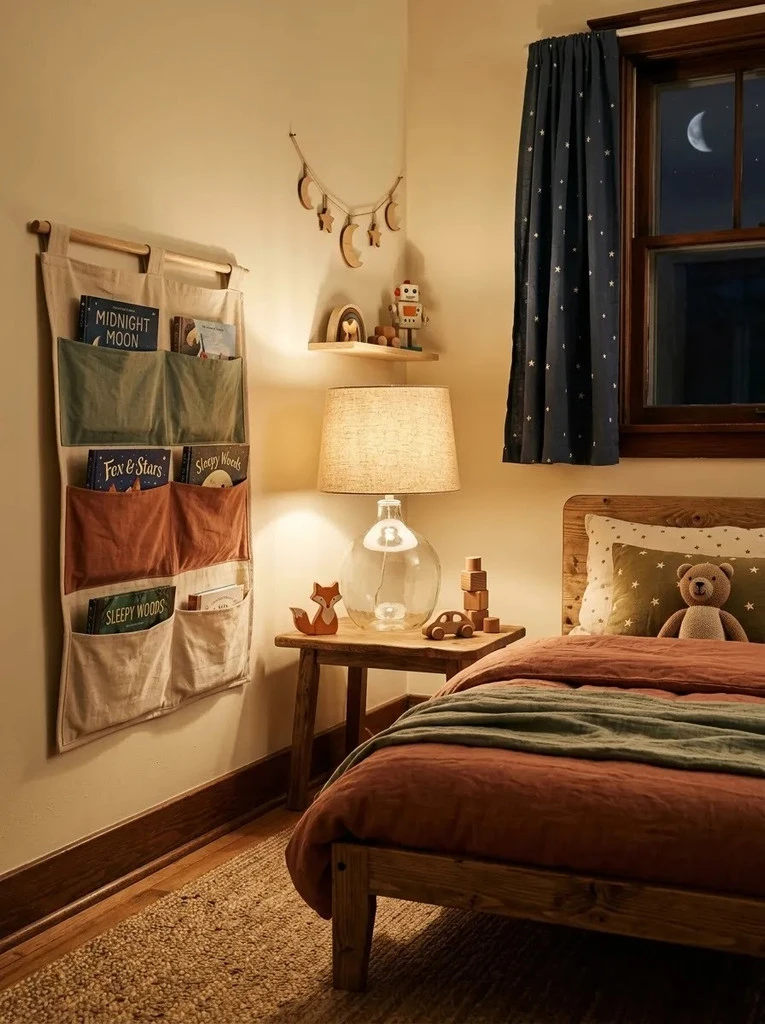
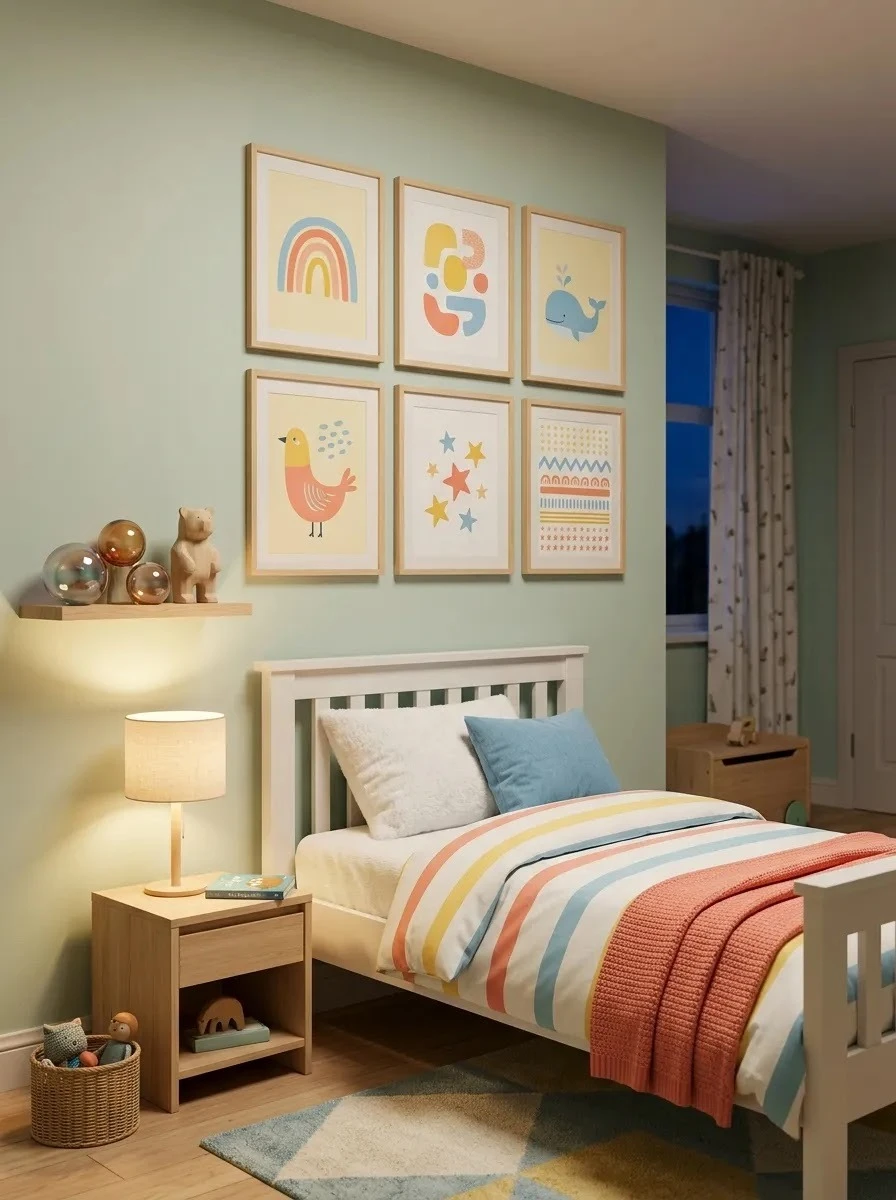
Mini Gallery Wall
BEFORE:
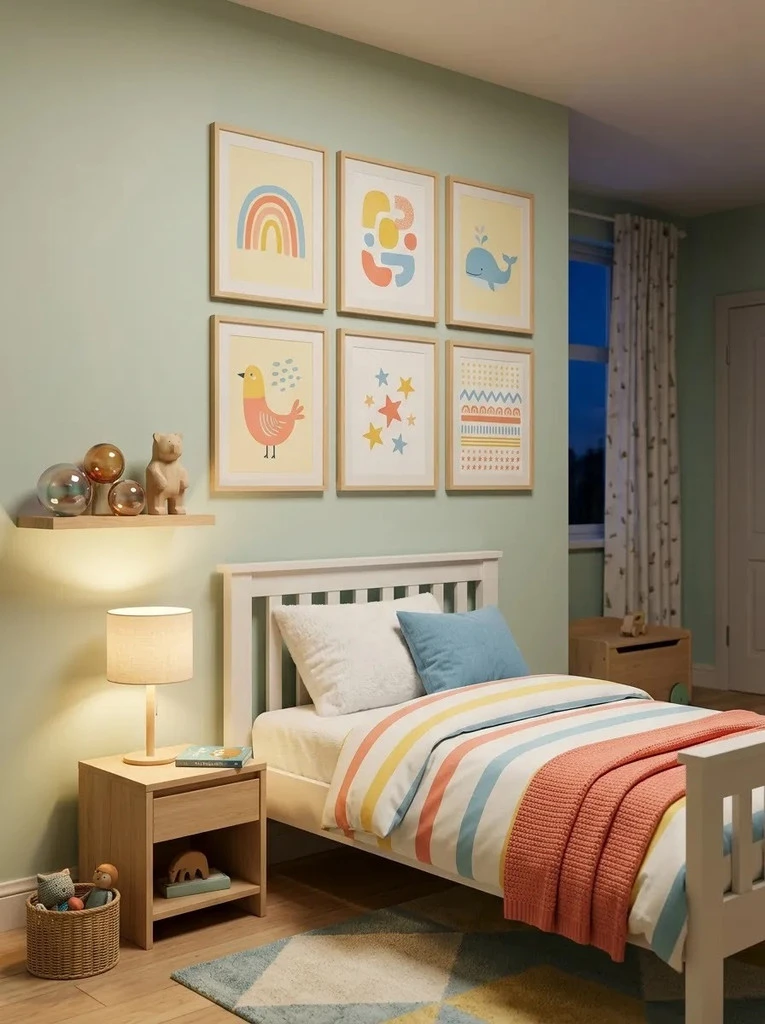
A blank wall above the bed can make a compact bedroom feel unfinished, even when the furniture is practical. Random posters taped across the room may also create visual clutter.
AFTER:
A small coordinated gallery creates one clear decorative focal point. Matching frame shapes and a limited color palette make children’s artwork, prints, and photos feel intentional without overwhelming the wall.
Keep the arrangement compact and centered over one main piece of furniture. Lightweight frames are easier to manage, and consistent spacing helps the display feel orderly. For an affordable update, mix printable artwork with a few of your child’s own drawings so the room feels personal without requiring expensive decor.
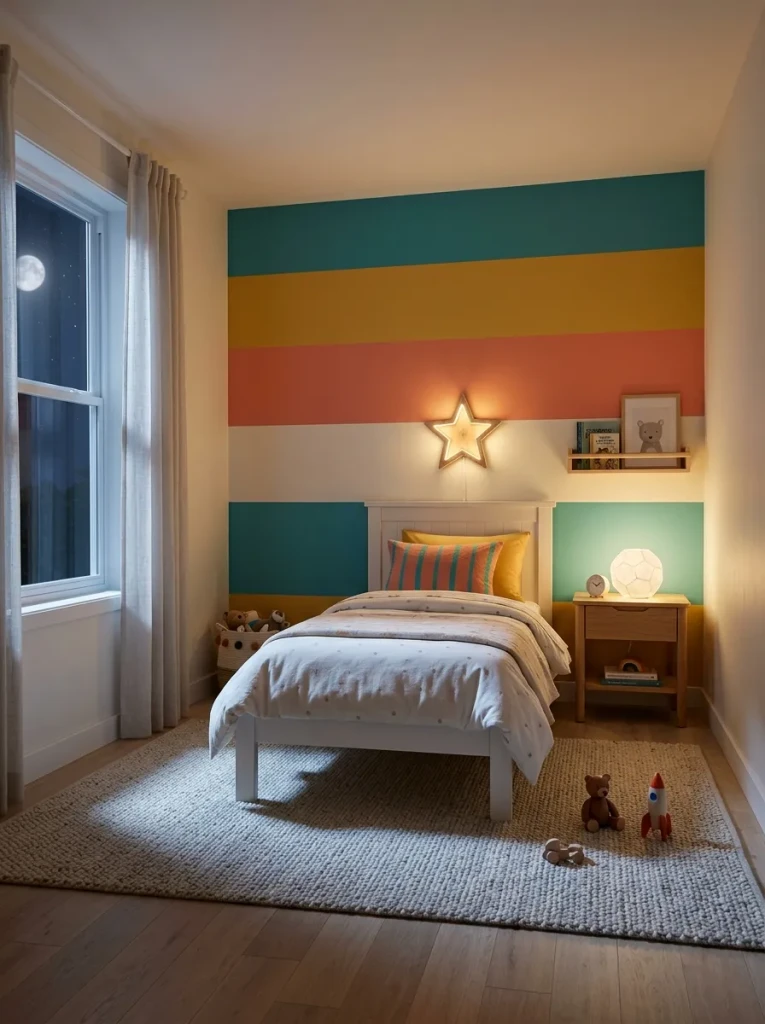
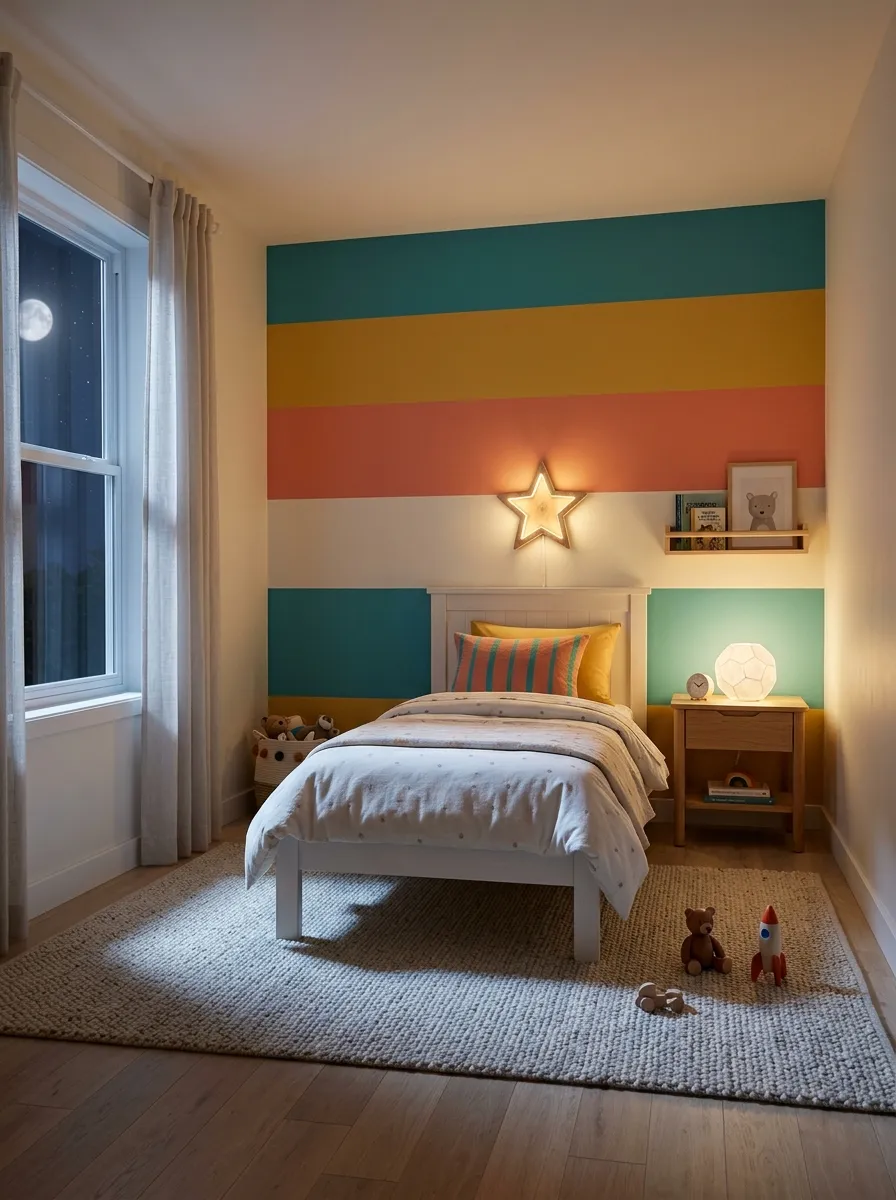
Striped Accent Wall
- Start with one wall that naturally draws attention, such as the space behind the bed.
- Choose three or four coordinating colors that already appear in the bedding, rug, or artwork.
- Mark even stripes with painter’s tape and use a level to keep every line straight.
- Paint lighter colors first, allow them to dry fully, then add darker shades.
- Remove the tape carefully before the final coat becomes completely hard.
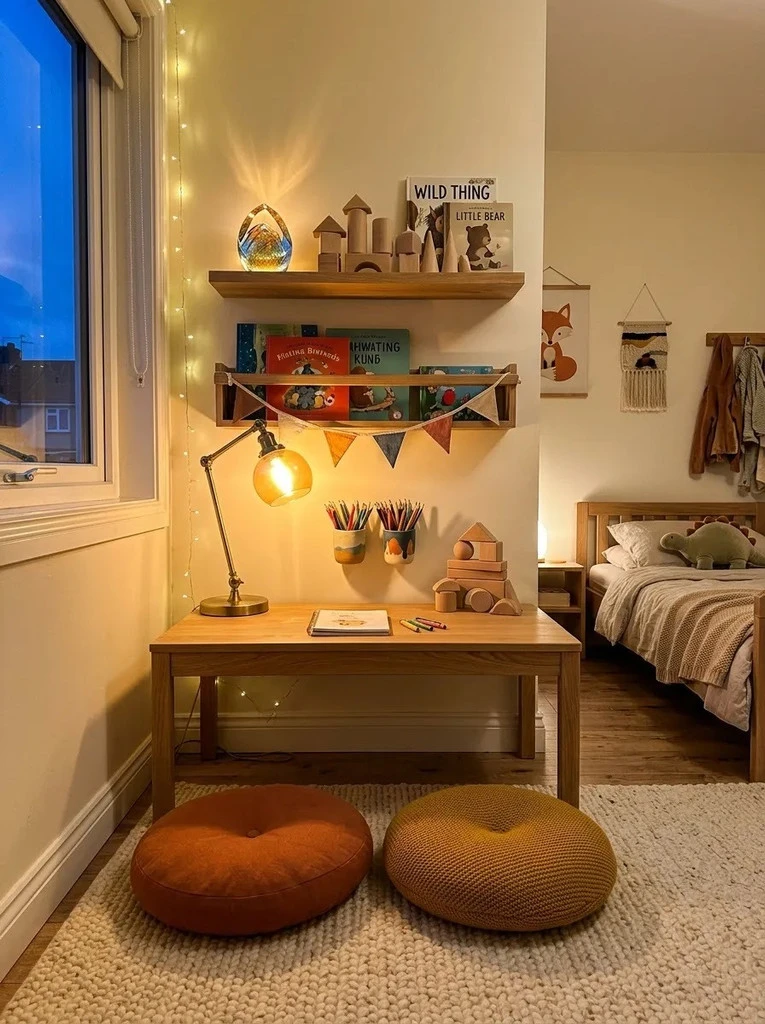
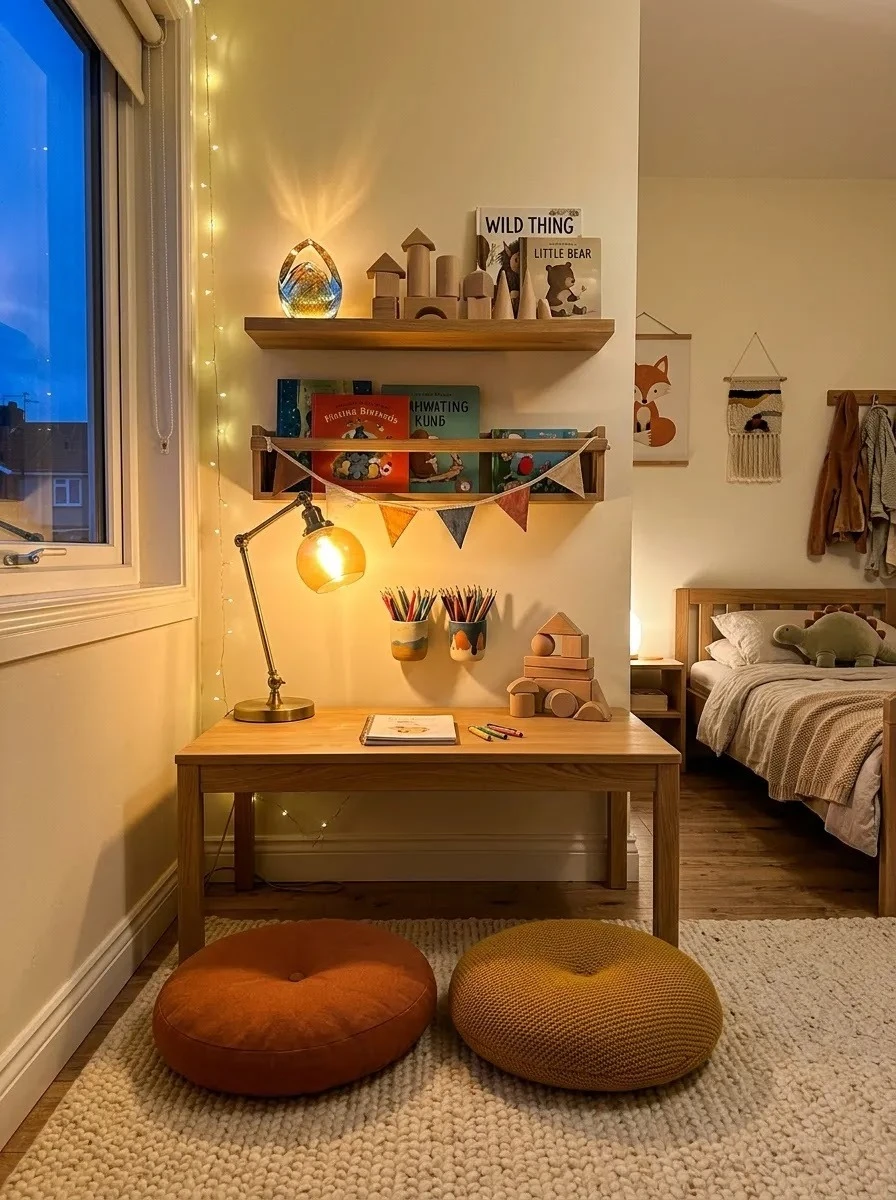
Floor Desk Station
| Feature | Standard Desk | Floor Desk |
| Space Needed | More floor area | Compact footprint |
| Seating | Chair required | Cushions or floor seat |
| Visual Height | Taller and heavier | Low and open |
| Best Use | Older children | Crafts and young kids |
A low activity desk keeps the room feeling open while giving younger children a defined place for drawing, puzzles, or homework practice. I’ve noticed these setups work best when supplies are stored directly above or beside the desk. That prevents art materials from spreading across the bedroom after every activity.
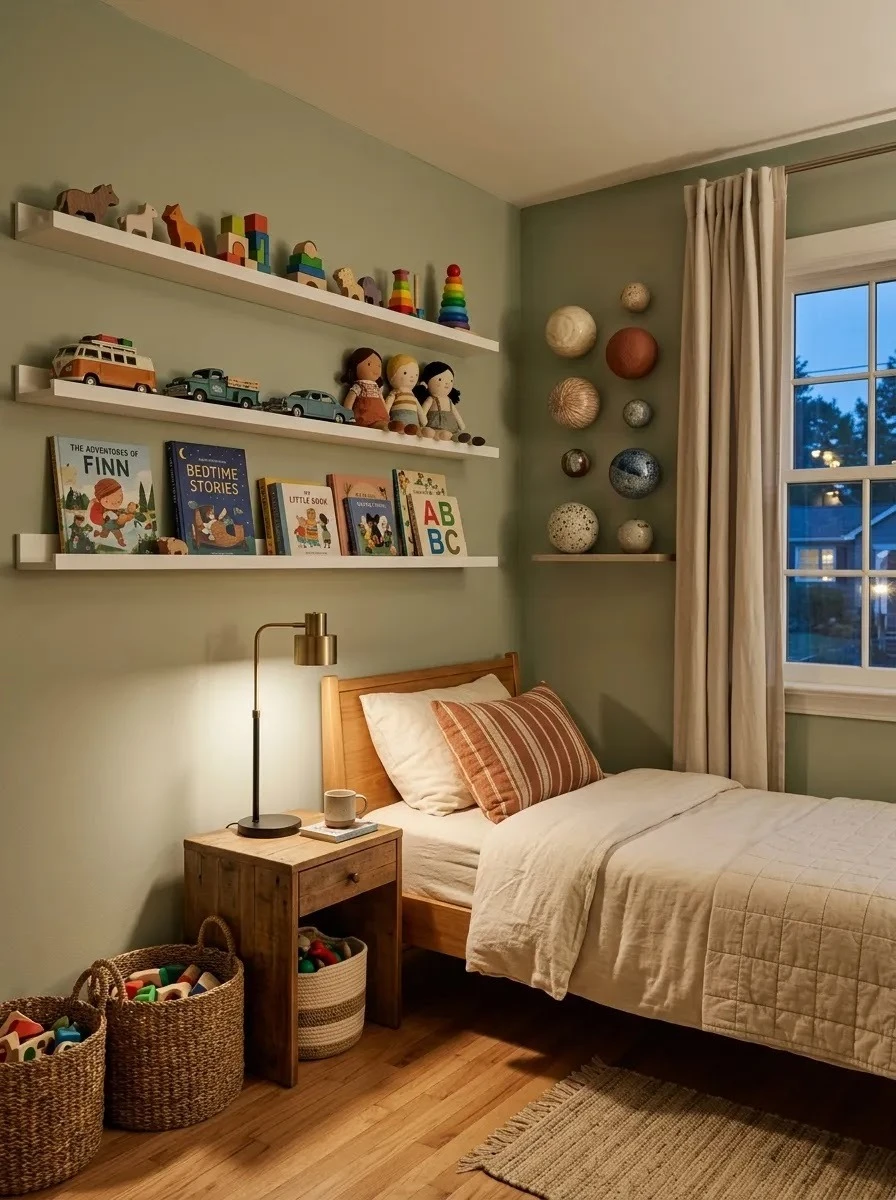
Toy Display Shelves
DO:
- Display only a small selection of favorite toys at one time.
- Install shallow shelves securely into suitable wall fixings.
- Keep frequently used toys within comfortable reach.
- Rotate displayed pieces every few weeks to renew interest.
DON’T:
- Overfill shelves until toys overlap or become difficult to remove.
- Place heavy objects on high shelves above the bed.
- Mix every toy color and category into one crowded display.
- Use deep shelving that reduces valuable walking space.
Turning favorite toys into decor helps reduce clutter while making the bedroom feel personal and playful. The key is restraint. Keep backup toys inside baskets or drawers and display only a few attractive pieces. Rotating them occasionally can also make familiar toys feel interesting again without spending money on something new.
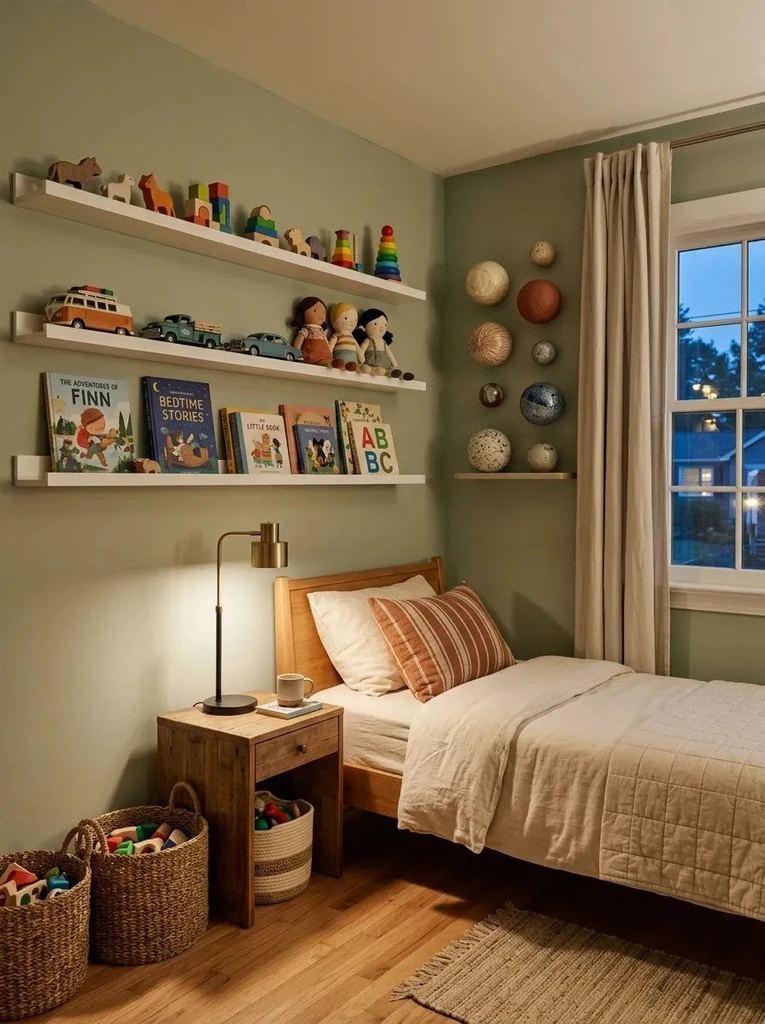
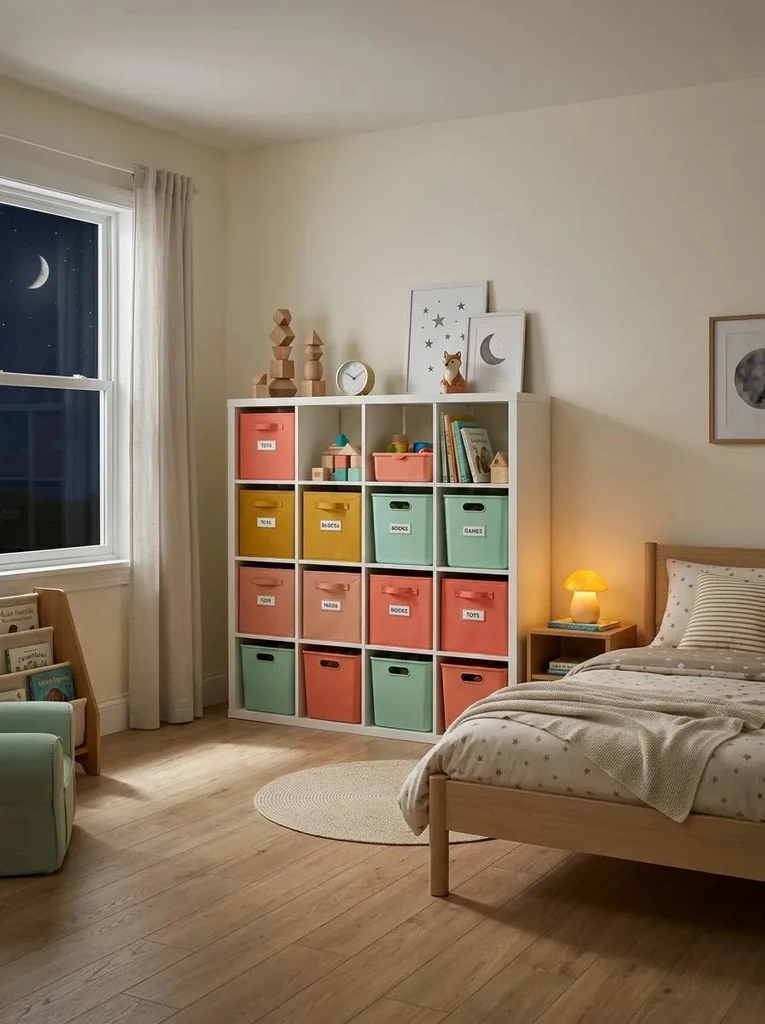
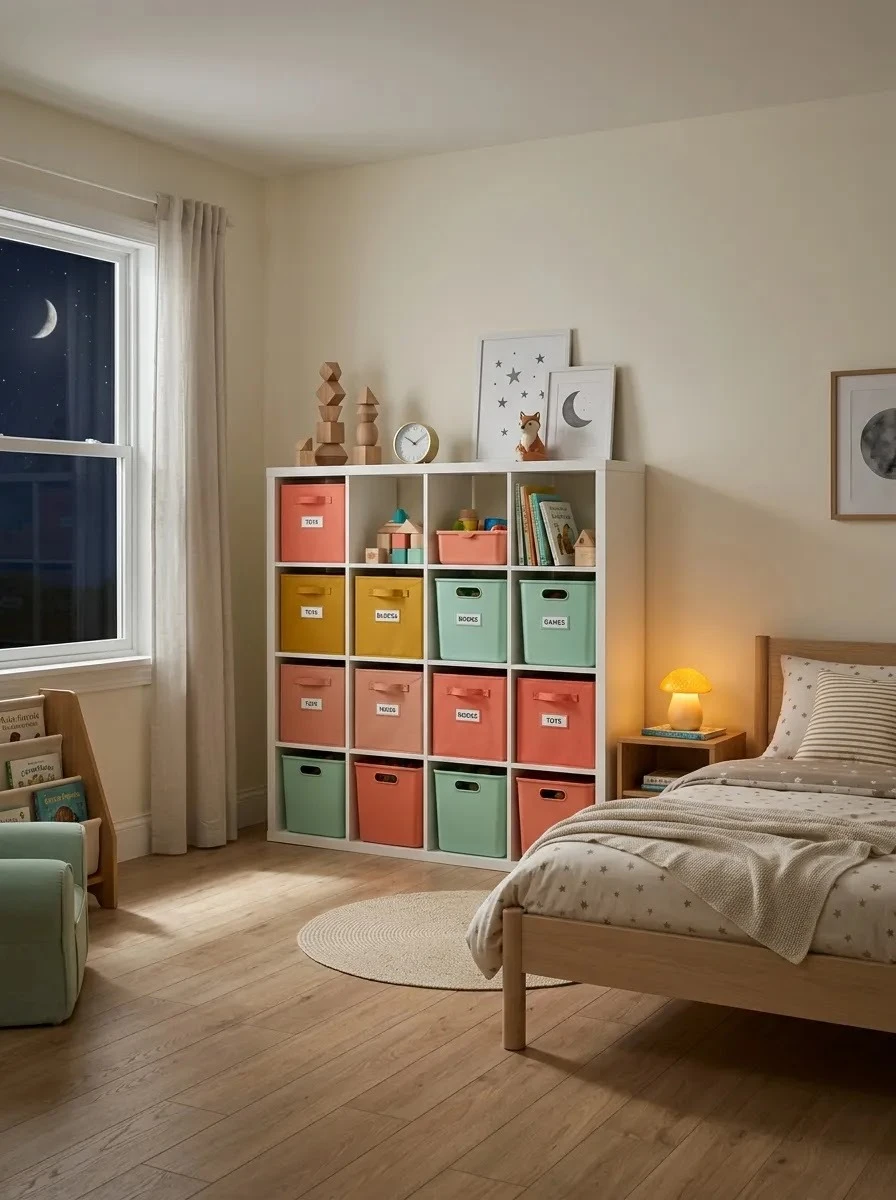
Color Coded Toy Zones
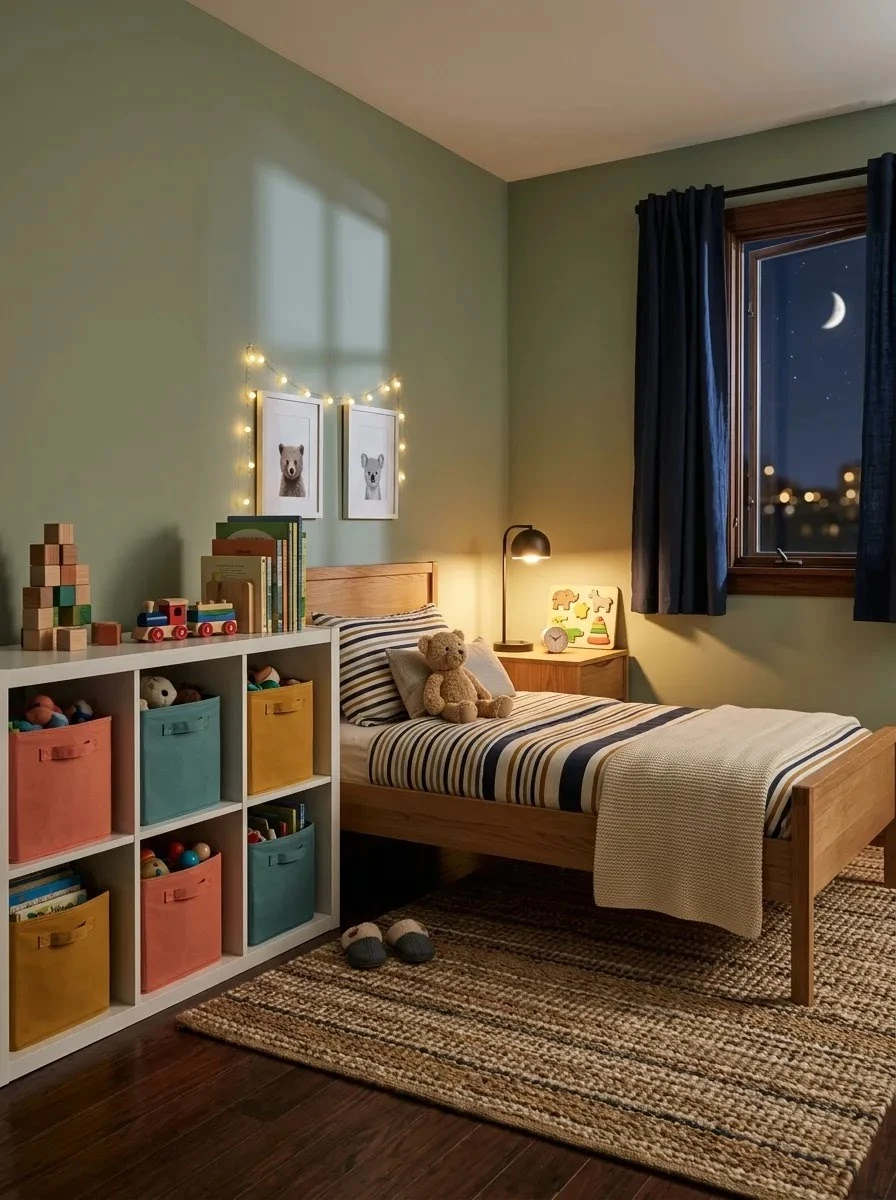
- Sort toys into simple groups such as blocks, dolls, art supplies, and puzzles.
- Give each category its own basket color so children can recognize where things belong quickly.
- Place everyday toys on the lowest shelves where little hands can reach them safely.
- Keep less frequently used items in upper containers or under-bed storage.Color coding makes cleanup easier because children do not need to read complicated labels or remember detailed organizing systems. Keep the number of categories small so the routine stays manageable. This setup is especially helpful in shared or compact rooms where loose toys can quickly make the floor feel crowded.
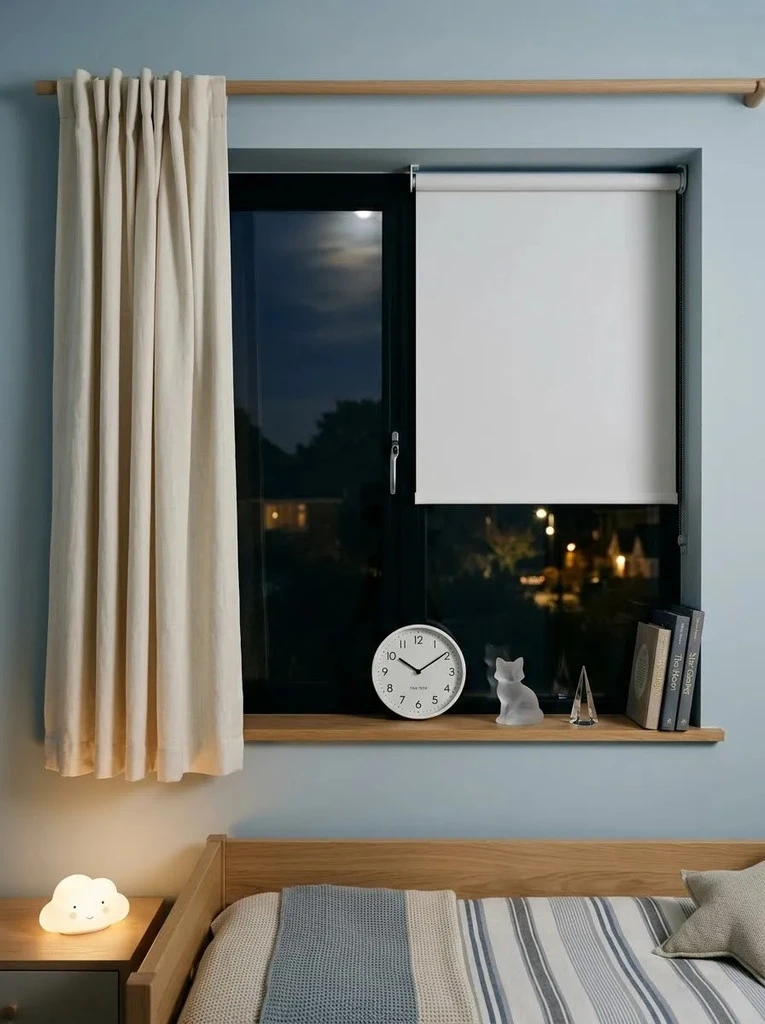
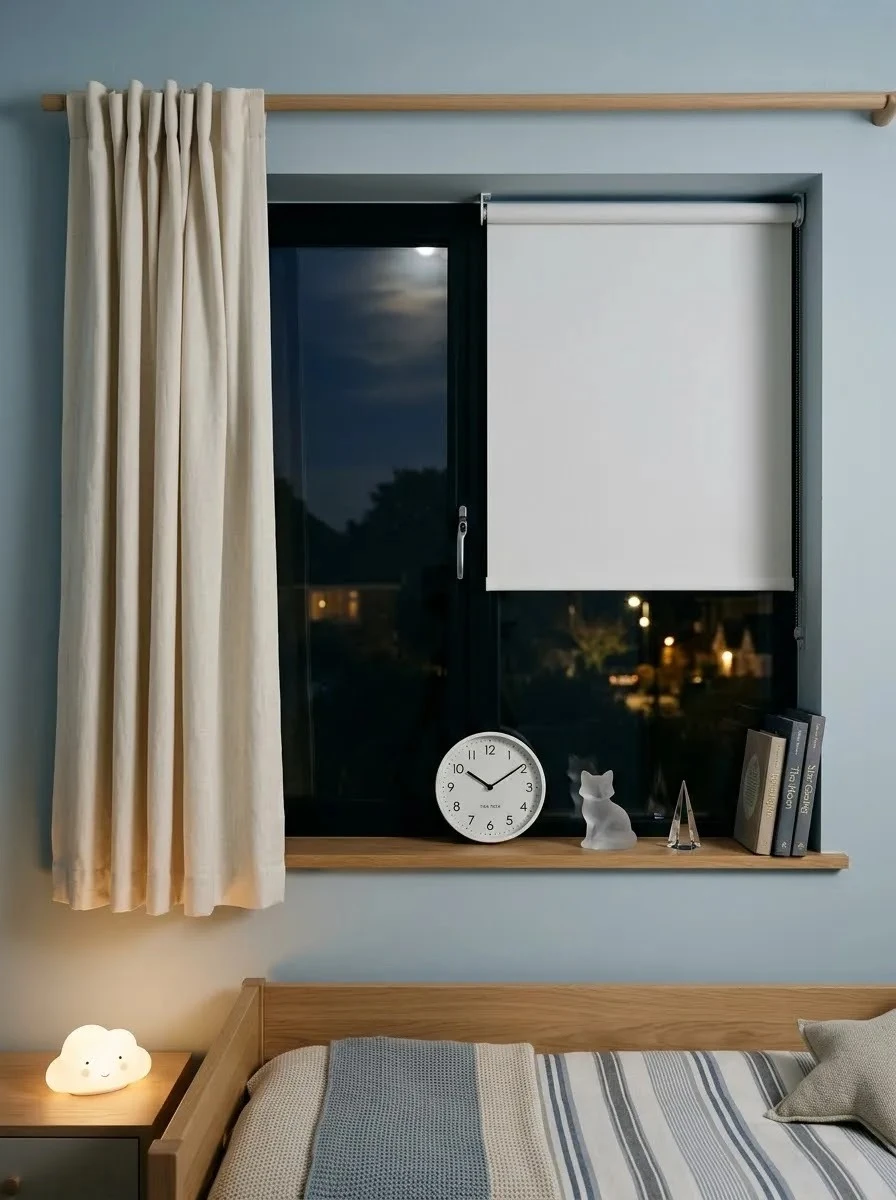
Curtains vs Blinds
| Feature | Soft Curtains | Roller Blinds |
| Visual Feel | Cozy and layered | Clean and minimal |
| Space Use | Needs wall width | Very compact |
| Light Control | Soft filtered glow | Easy adjustable coverage |
| Best For | Warm decorative rooms | Tight modern bedrooms |
Window treatments influence how spacious a small bedroom feels more than many people expect. Full curtains add softness, while a fitted blind keeps the window area streamlined.
Choose whichever supports the room layout, but avoid bulky layers around narrow windows because they can make the walls appear visually heavier.
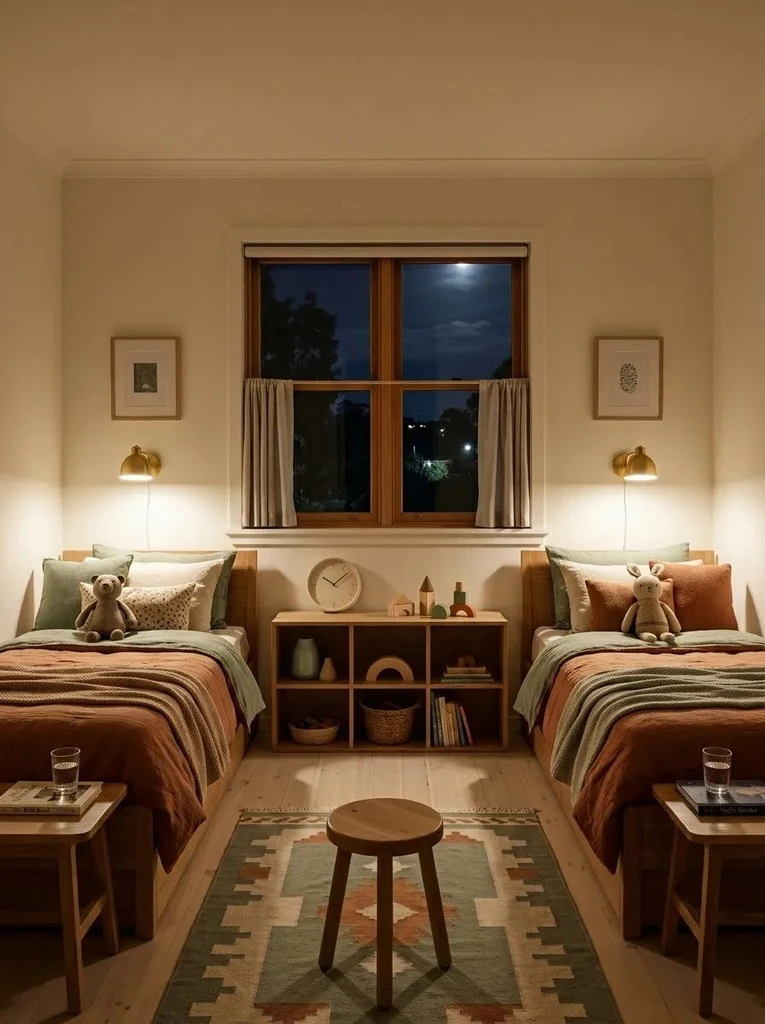
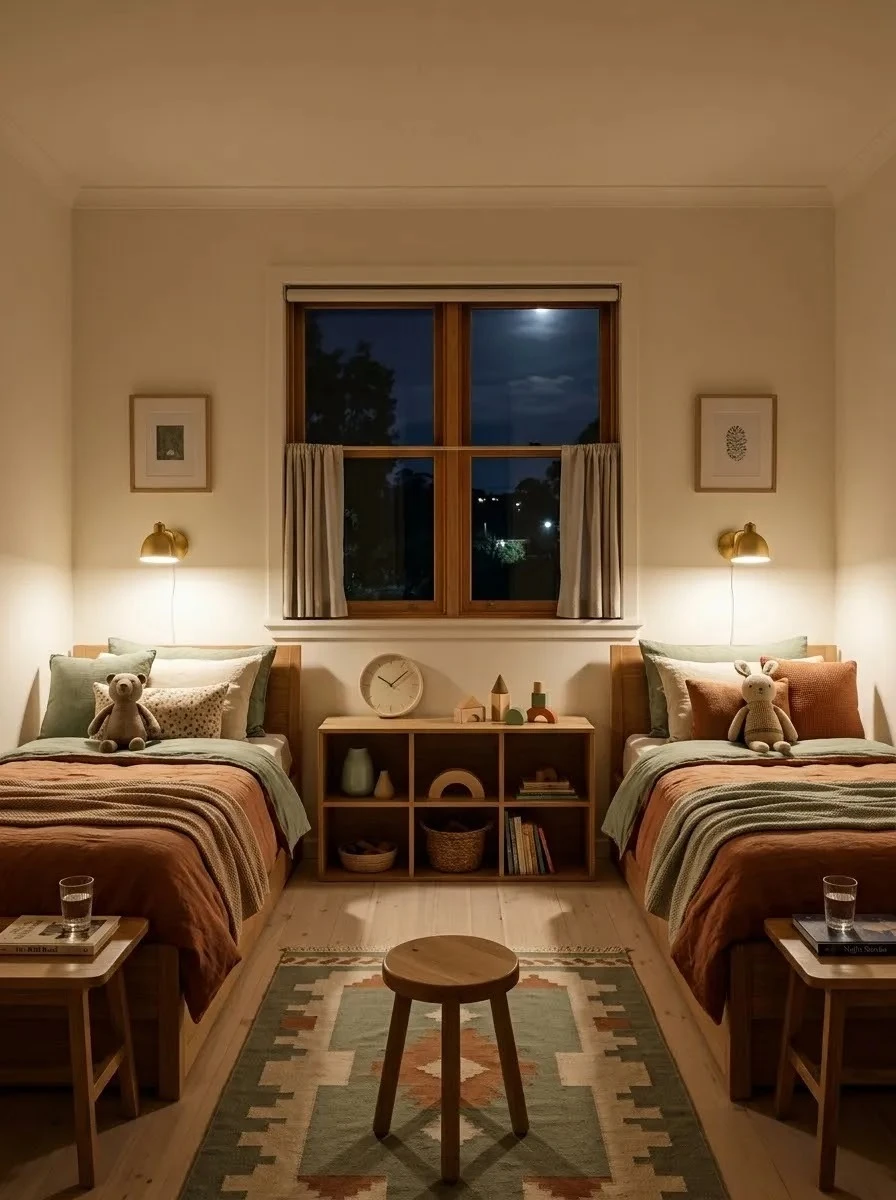
Shared Bedside Cubby
DO:
- Choose a narrow cubby that fits comfortably between both beds.
- Give each child one shelf or basket for personal belongings.
- Keep bedtime books and small essentials within easy reach.
- Secure taller storage securely if there is any risk of tipping.
DON’T:
- Fill the cubby with loose toys that create nightly clutter.
- Choose furniture wider than the available walkway.
- Store heavy objects where children can pull them down.
- Let one child’s belongings take over every compartment.
One shared cubby can replace two bedside tables and free valuable floor space in a small shared bedroom. Clear ownership also helps reduce arguments over storage. Give each child an equal section, then reserve one central shelf for shared books or a small night light that both can use.
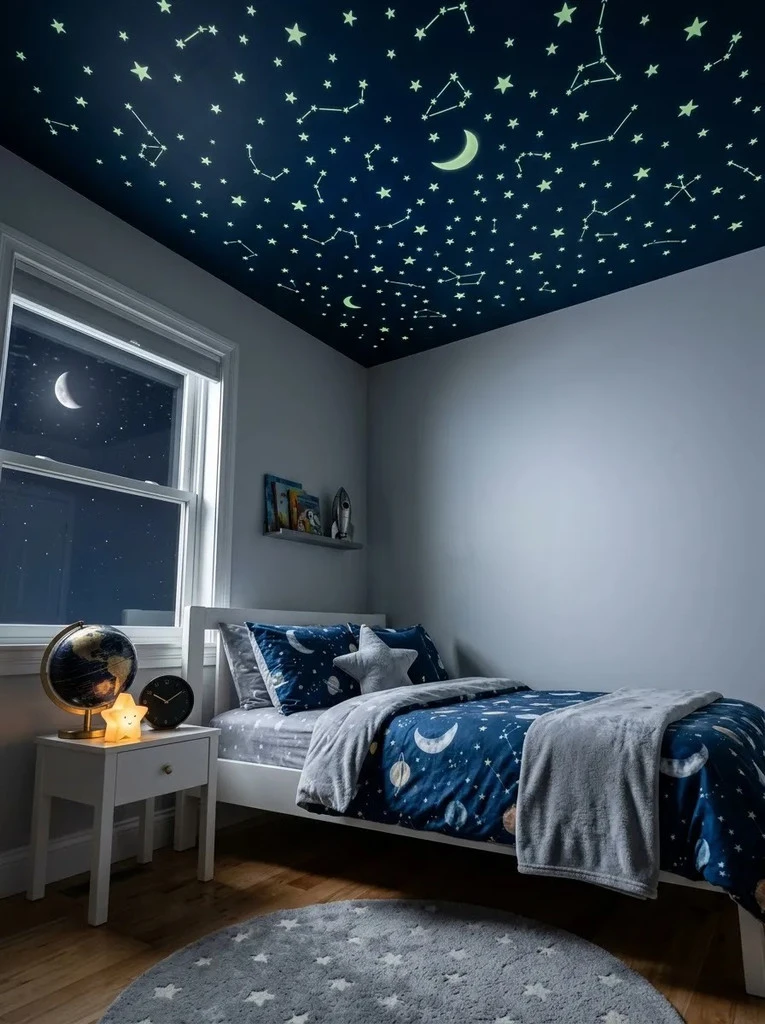
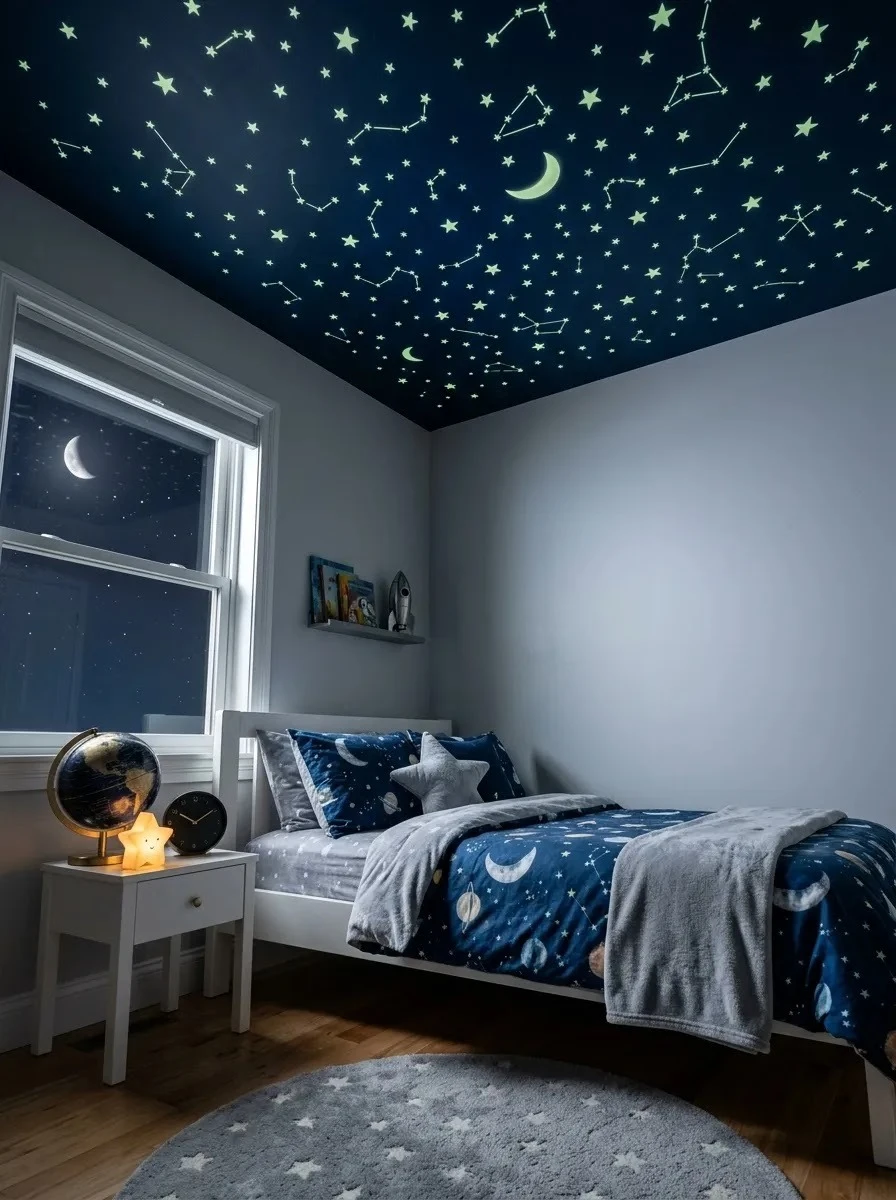
Glow Star Ceiling
Cost: Low, especially with removable adhesive stars
Time: Less than one hour
Skill Level: Beginner friendly
Best For: Kids who love space, stars, and bedtime themes
Ceiling decor creates excitement without using a single inch of valuable floor space. Keep the stars concentrated above the bed rather than covering every surface, and choose removable products suitable for painted ceilings. During the day, the room stays tidy and simple, while bedtime gains a playful surprise.
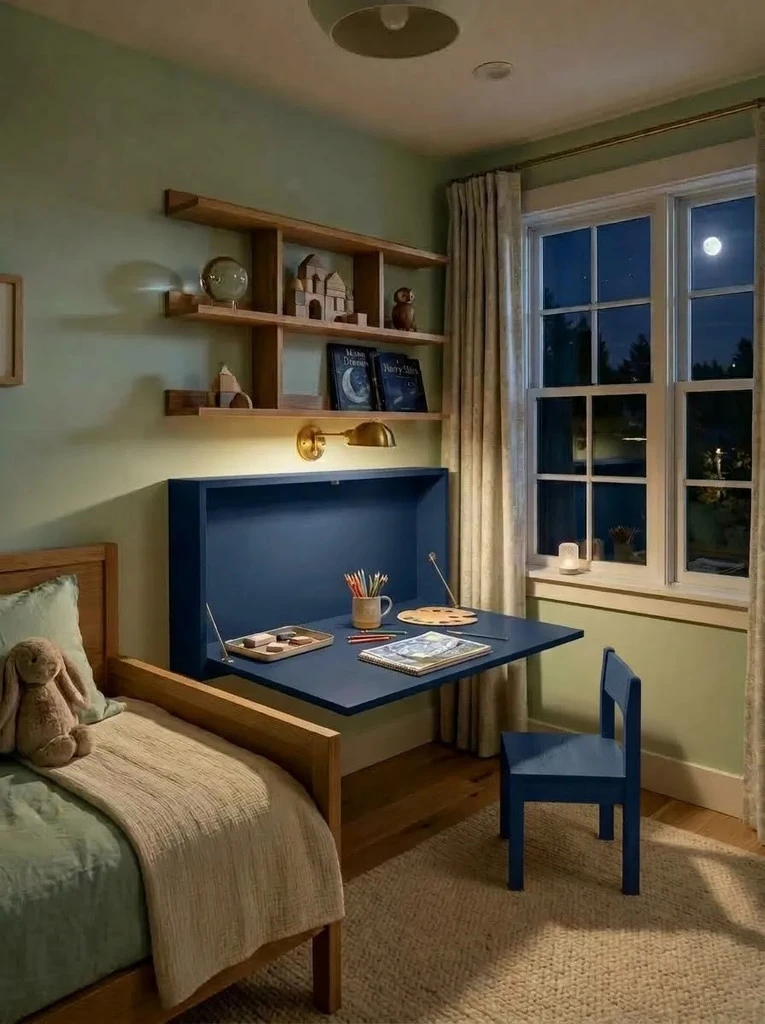
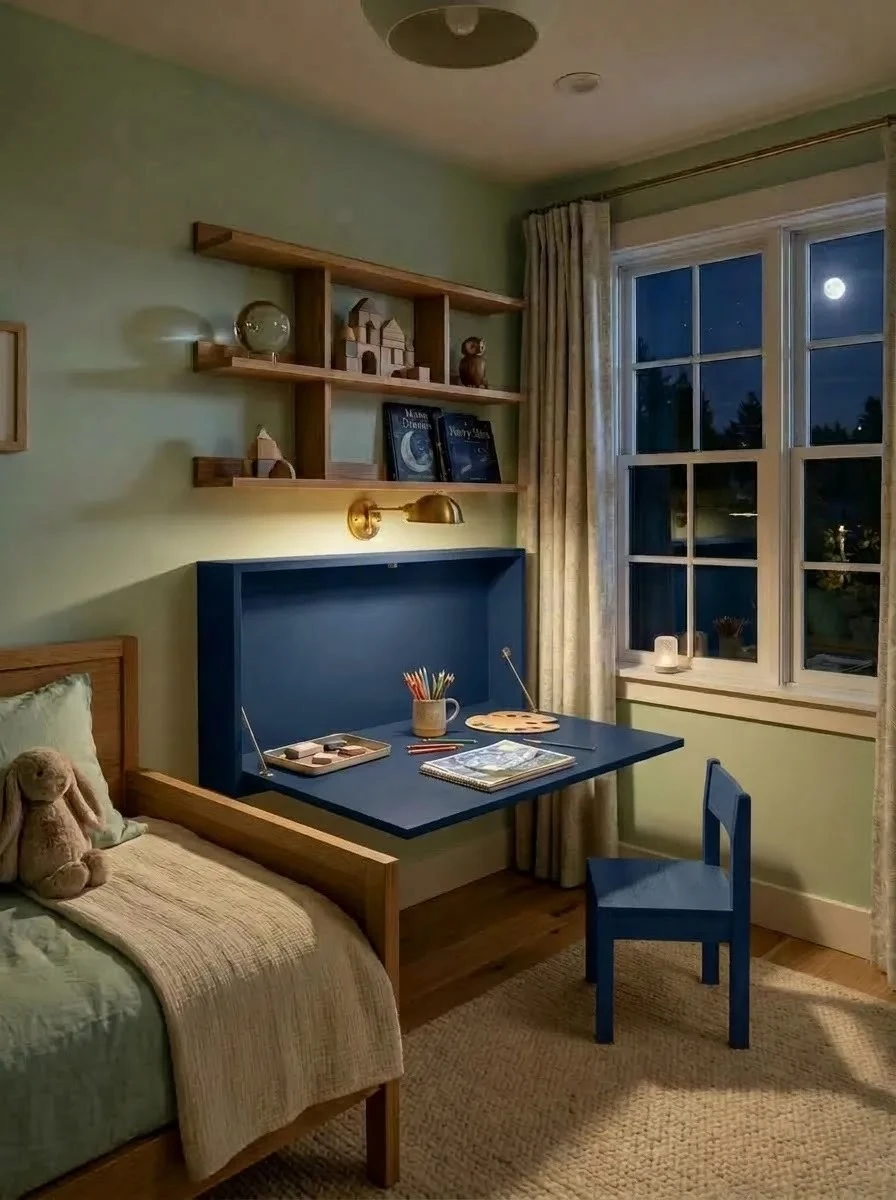
Fold Down Play Table
A fold down table gives children a proper surface for coloring, puzzles, and crafts without permanently occupying precious floor space. Mount it at a comfortable child-friendly height, then pair it with a lightweight stool that can slide beneath nearby furniture when the table is closed.
I’ve seen this setup work especially well in narrow bedrooms where a standard desk interrupts movement. Keep supplies in shallow wall containers beside the table and avoid overloading the surface. Once playtime ends, everything can be stored away and the tabletop folded flat, restoring valuable open space.
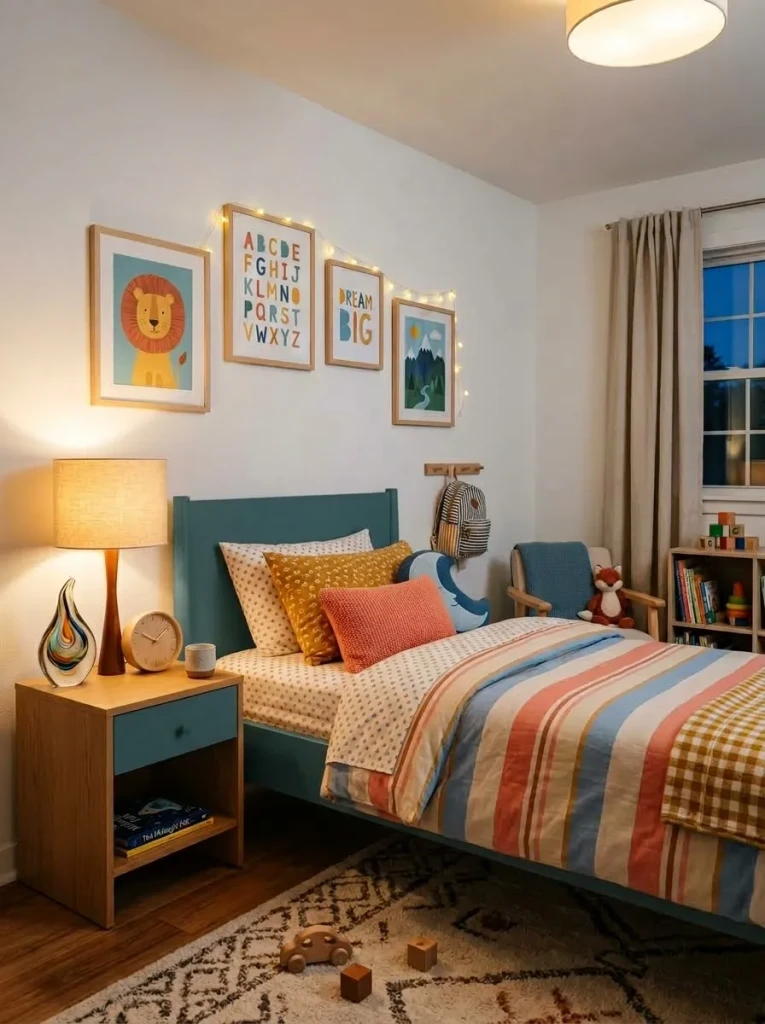
Mix and Match Bedding
- Start with one simple fitted sheet or duvet in a solid color to keep the bed visually grounded.
- Add one playful pattern, such as stripes, checks, stars, or tiny florals, rather than combining several bold prints.
- Repeat two bedding colors elsewhere through artwork, baskets, or a small rug.
- Choose washable cotton fabrics that can handle frequent spills, playtime, and everyday use.
- Limit decorative cushions so children can still make the bed without a complicated routine.
Bedding offers an affordable way to refresh a child’s room as tastes change. A controlled mix of colors and patterns adds personality without requiring new furniture or permanent decorating. Keep the largest bedding piece relatively simple, then use smaller layers for playful details that are easy to replace later.
CONCLUSION
Creating a playful kids bedroom does not require extra square footage or an expensive makeover. Thoughtful storage, colorful details, flexible furniture, and clever wall space can make a compact room feel far more functional and inviting. These small bedroom decor for kids ideas give you plenty of simple ways to start with what you already have. I’ve seen how even one practical change can make a room easier to use and enjoy every day. Save this post on Pinterest for your next decorating project, try the ideas that suit your space best, and share it with another parent looking for affordable bedroom inspiration.