
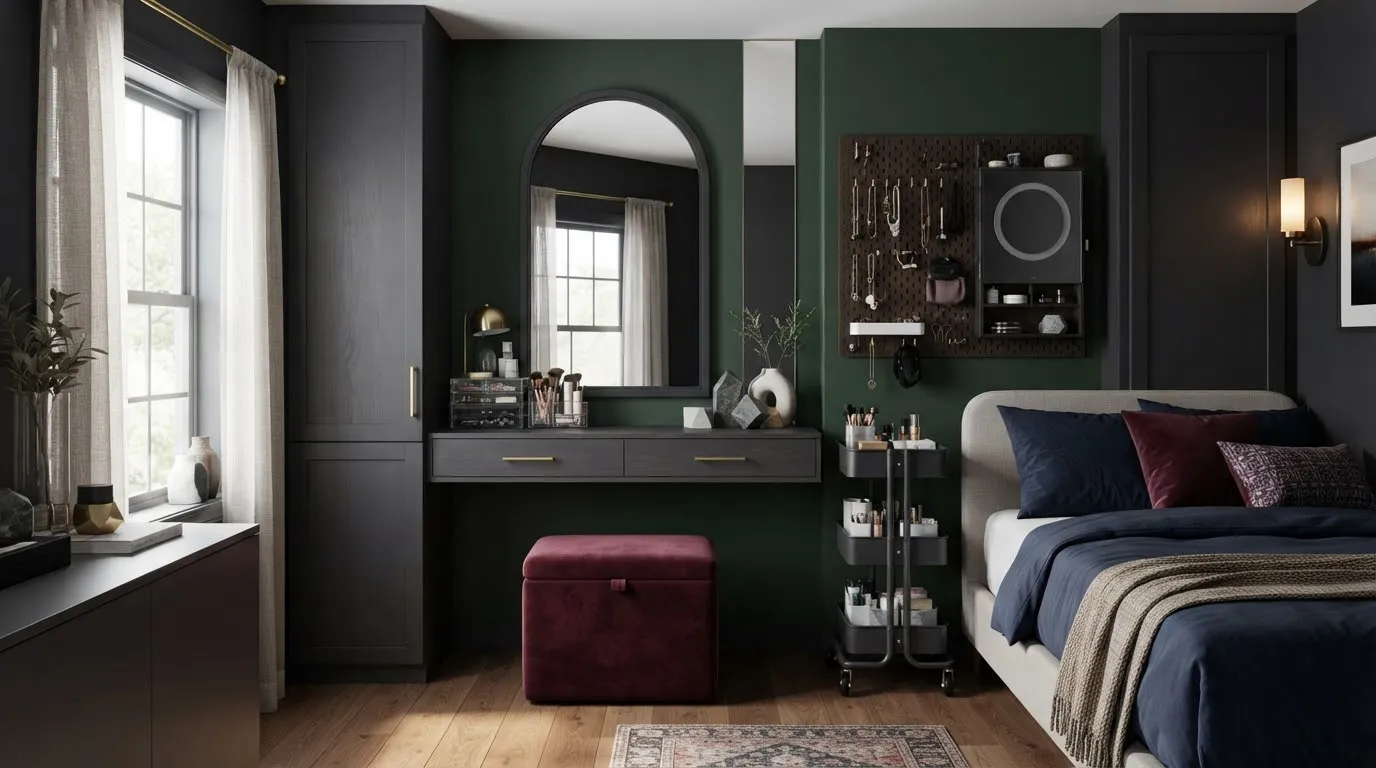
22 Genius Dressing Table Ideas for a Small Bedroom
A small bedroom can still give you a beautiful and practical place to get ready each day. Choosing the right dressing table for small bedroom layouts helps you create useful storage and a comfortable grooming area without making limited floor space feel crowded.
These 22 clever ideas show how floating vanities, narrow consoles, corner setups, hidden drawers, wall storage, and multifunctional furniture can make even awkward areas useful. In my experience, the smartest small bedroom designs are often the ones that make better use of walls and overlooked corners rather than adding more bulky furniture. Whether you are decorating on a tight budget or refreshing an existing room, these practical ideas can help you build a dressing area that feels organized, stylish, comfortable, and easy to use every day.
Wall Mounted Vanity
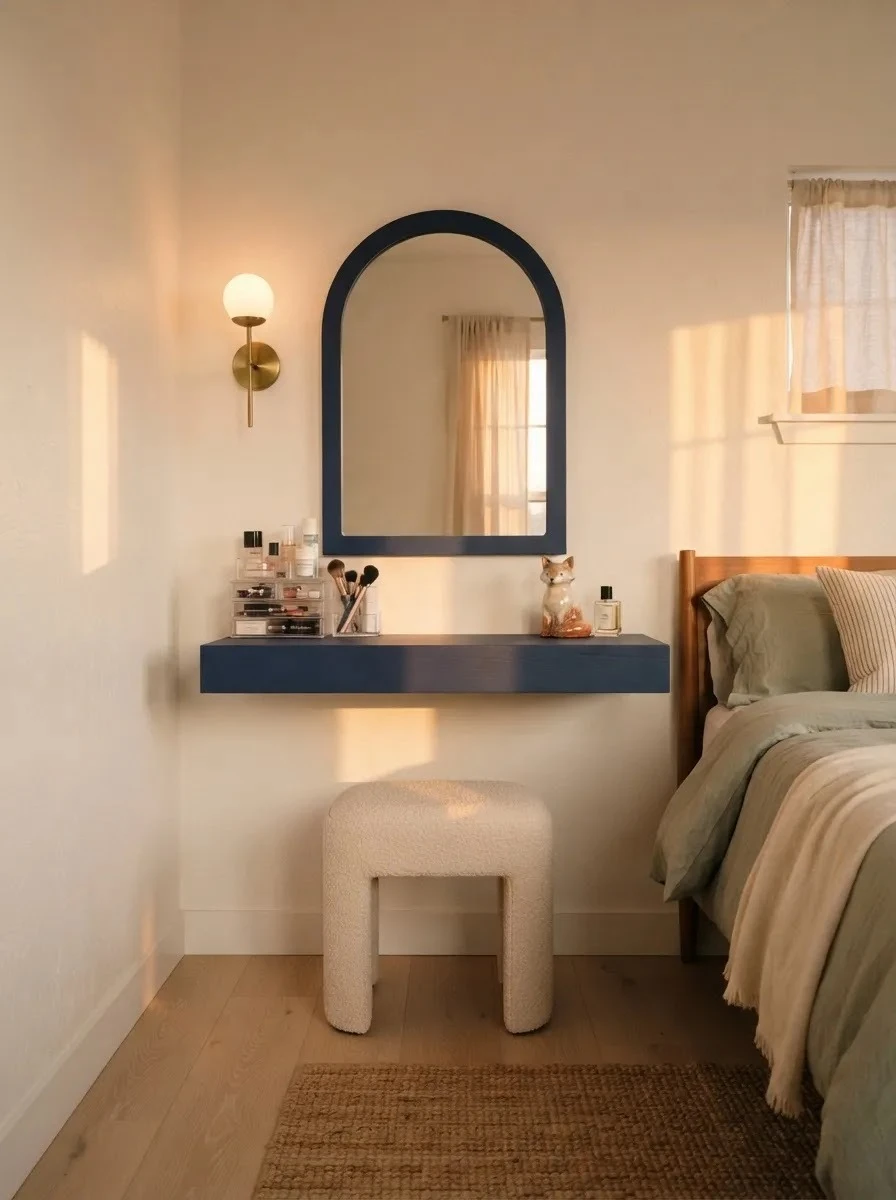
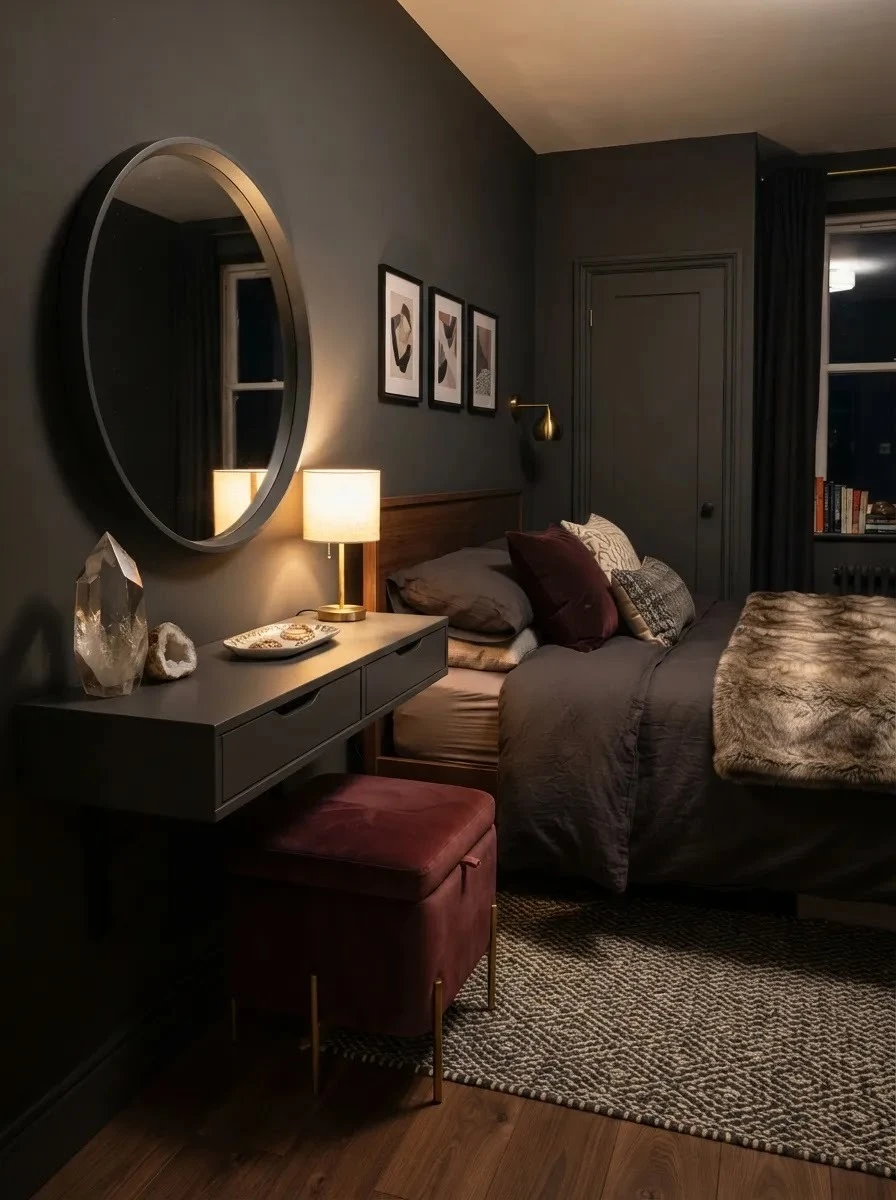
A wall mounted vanity can instantly free up valuable floor space while still giving you a practical place to get ready. For a dressing table for small bedroom layouts, choose a shallow design around 12 to 16 inches deep so walkways stay clear and the room feels less crowded.
Keep daily essentials inside one slim drawer, then use a small tray for perfume, jewelry, or skincare. I’ve noticed that leaving most of the surface empty makes compact bedrooms feel calmer and more organized. Pair it with a stool that slides completely underneath when not in use.
Corner Dressing Nook
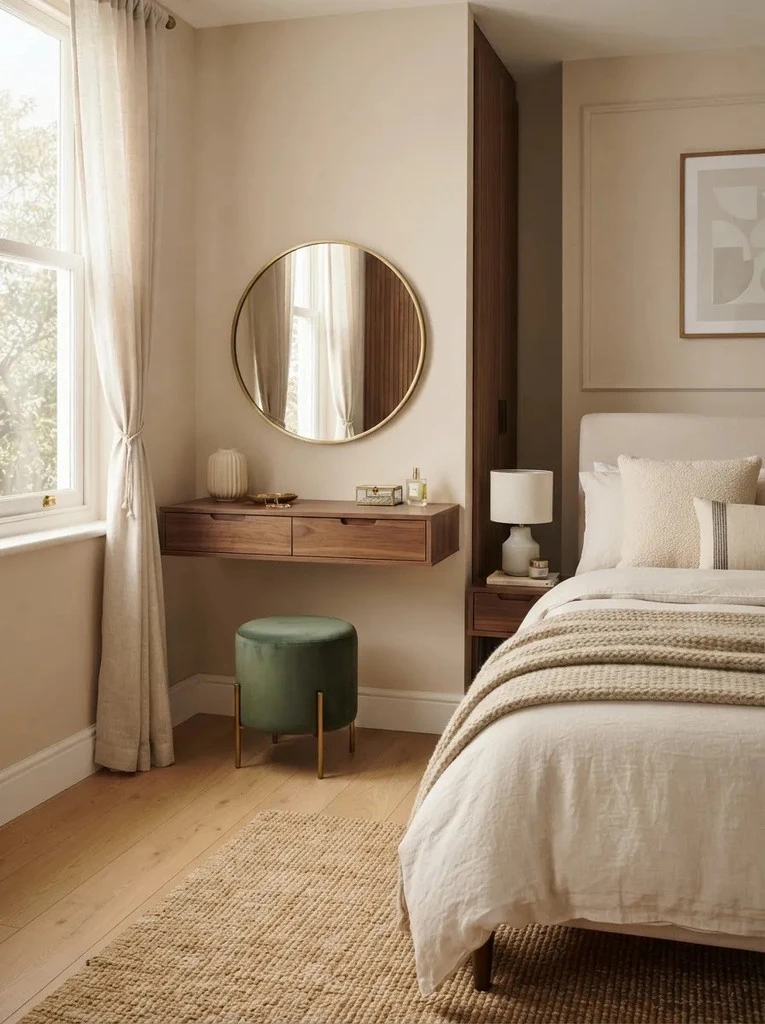
- Measure the unused corner first and leave enough space for the stool to pull out comfortably.
- Choose a triangular or rounded vanity that follows the corner rather than projecting far into the room.
- Mount the mirror on the wall instead of placing a bulky standing mirror on the tabletop.
- Use one narrow drawer or a small basket underneath for brushes, cosmetics, and hair accessories.
- Add a wall sconce to provide useful light without taking up valuable surface space.
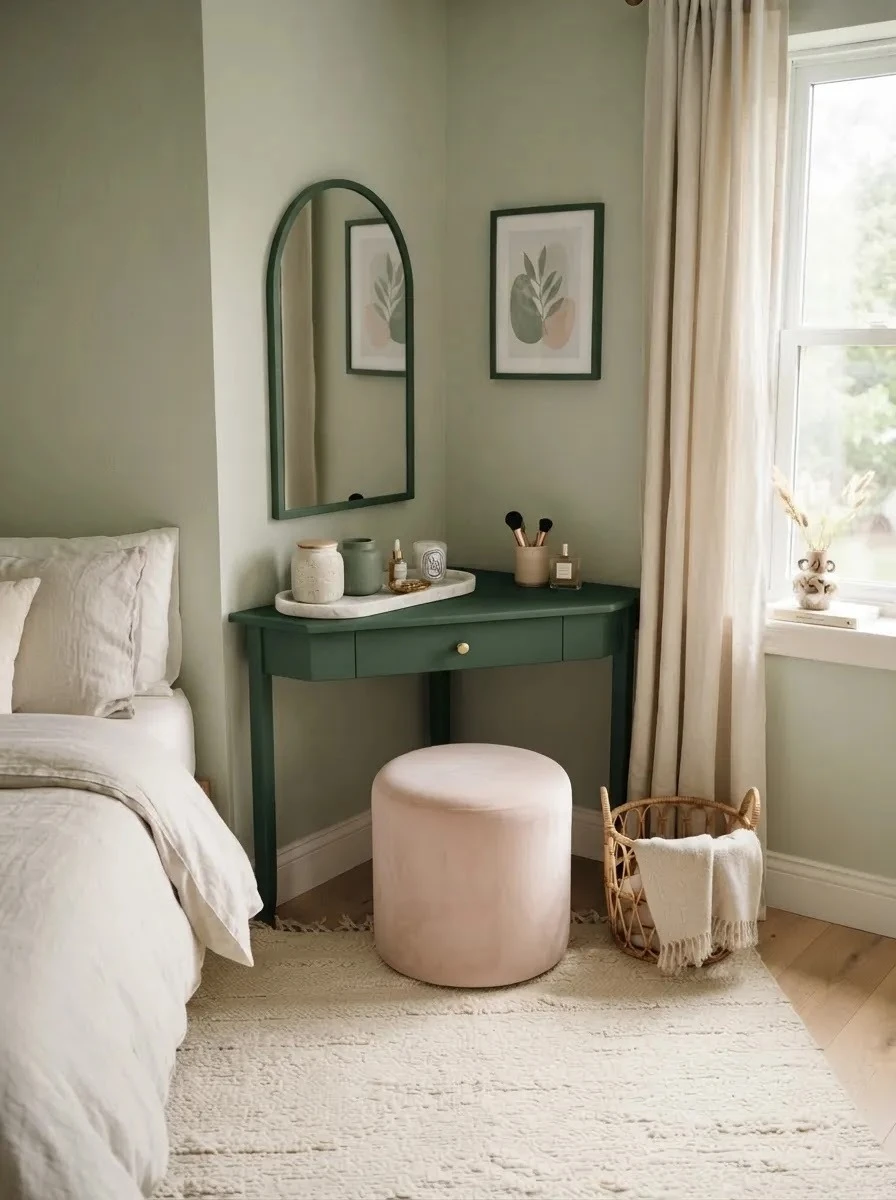
An overlooked corner can become one of the hardest-working spots in a small bedroom. Keeping the furniture fitted closely to the walls protects the center of the room for movement. A soft-edged table also reduces visual bulk, which helps the setup feel intentional rather than squeezed into leftover space.
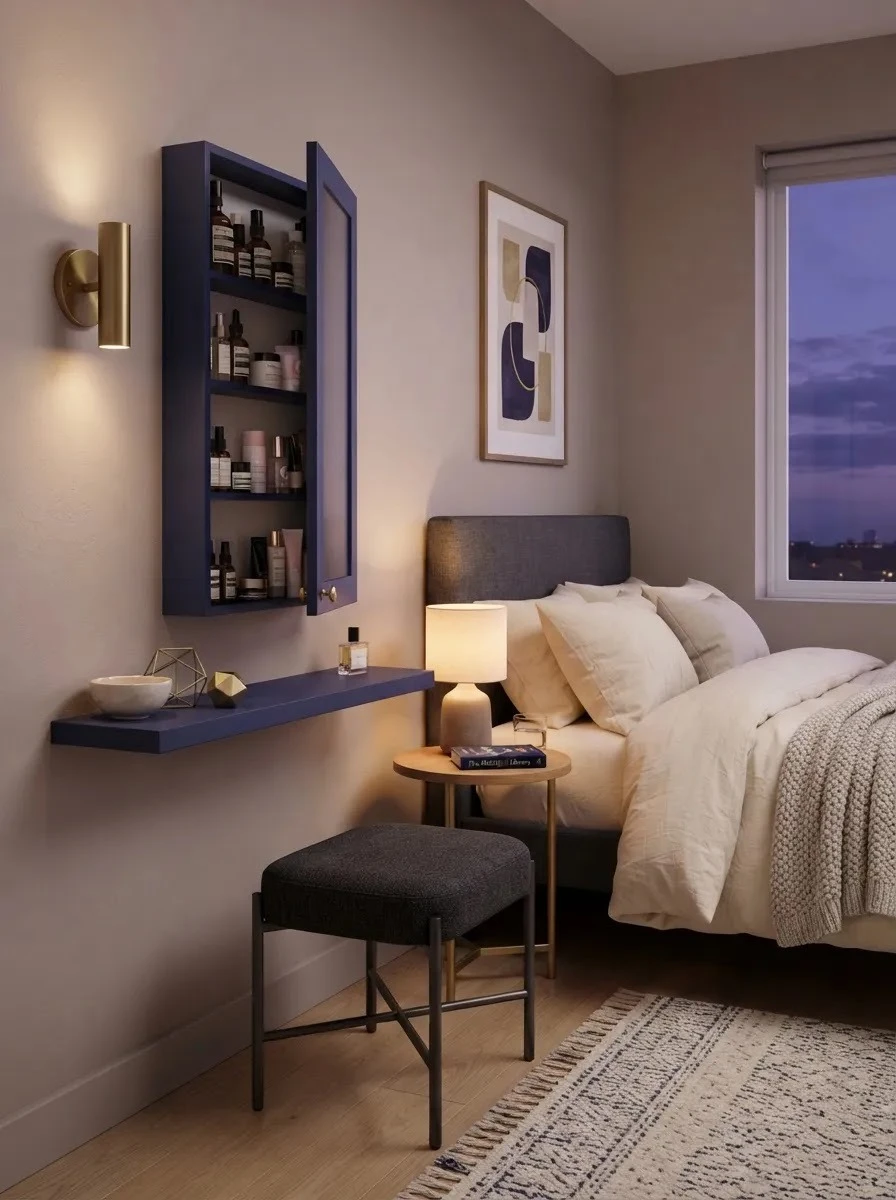
Floating Shelf Vanity
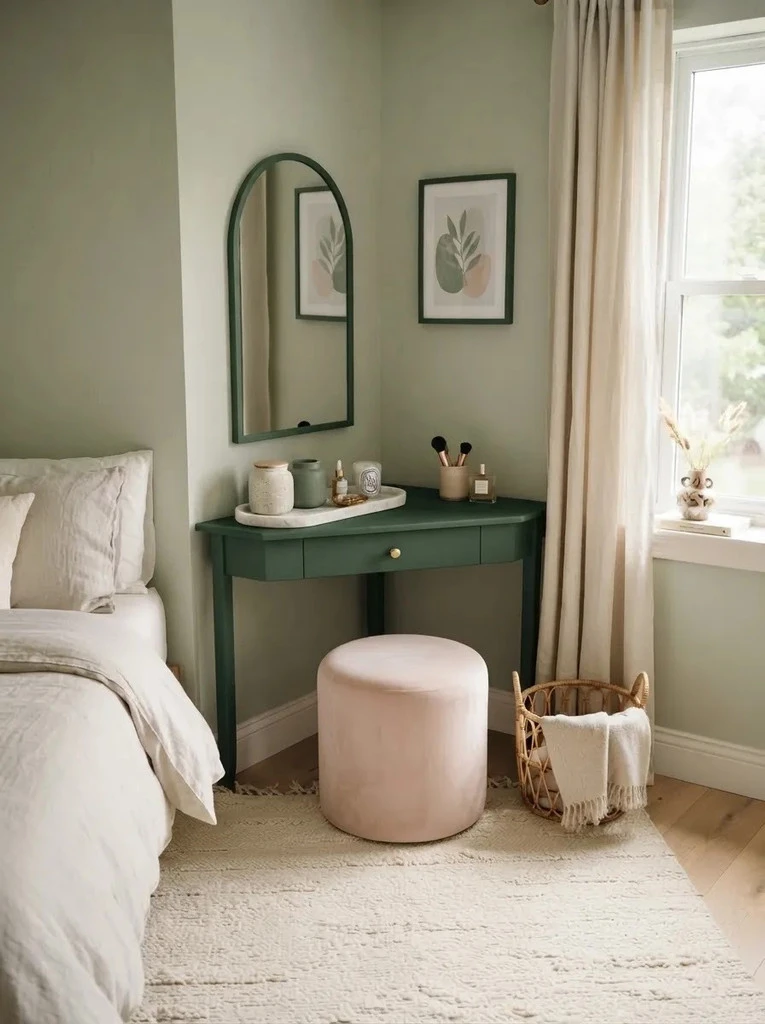
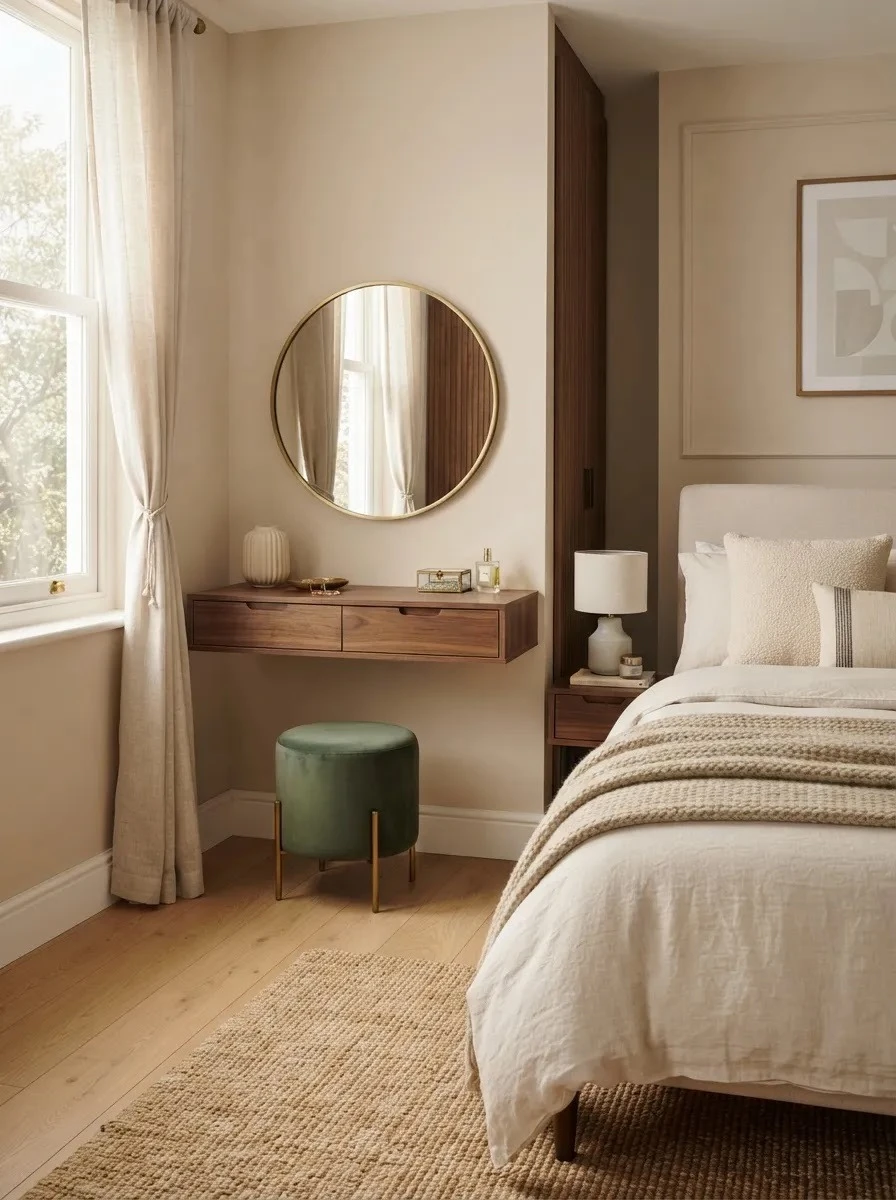
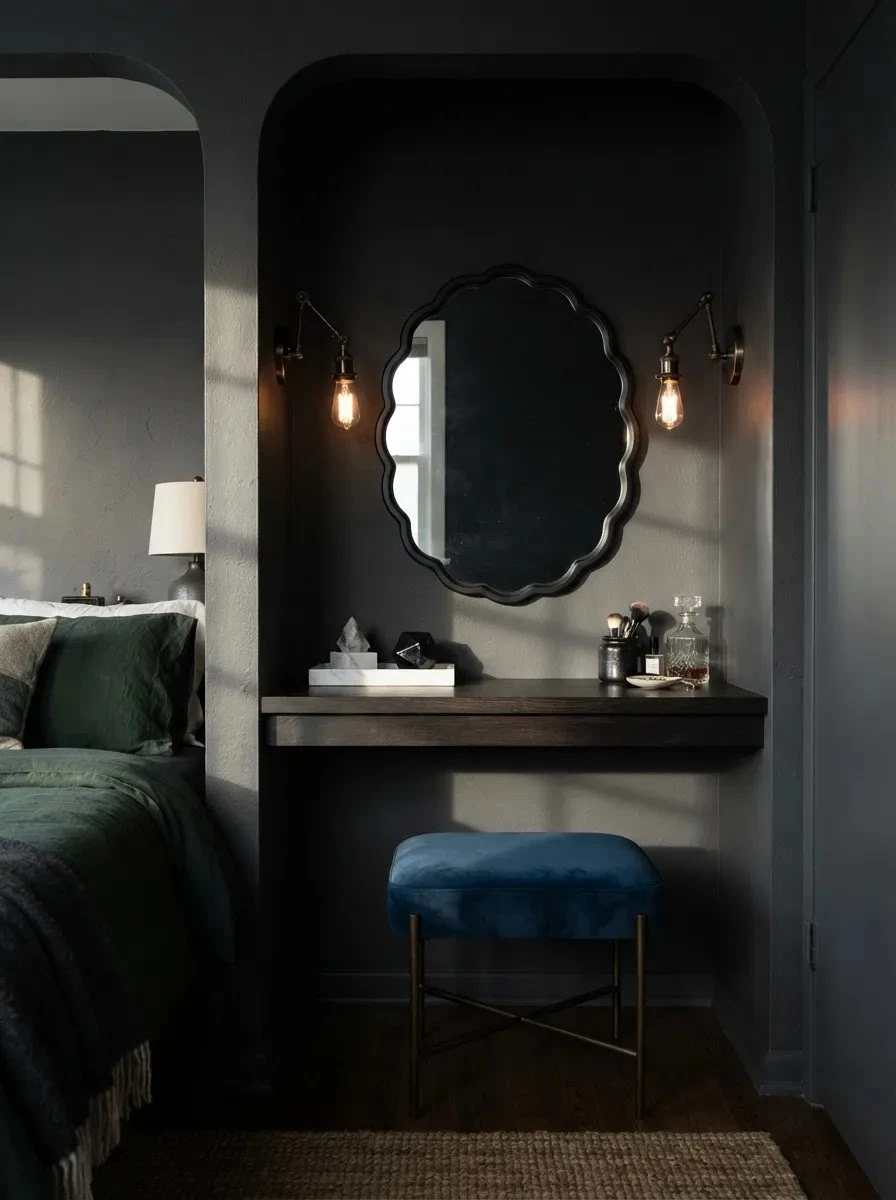
Install the shelf at a comfortable seated height, usually around 29 to 30 inches from the floor. Choose strong wall brackets and secure them into studs or suitable wall anchors, especially if you plan to store heavier beauty products.
Floating shelves work especially well where a standard vanity would make the room feel cramped. Keep the shelf about 10 to 14 inches deep and add a small drawer box or lidded organizer underneath. The open floor below keeps the room visually lighter and makes vacuuming or cleaning much easier.
Window Side Vanity
BEFORE:
A dark corner makes makeup application difficult and often requires extra lamps that crowd the tabletop. Poor lighting can also make colors appear different once you step outside.
AFTER:
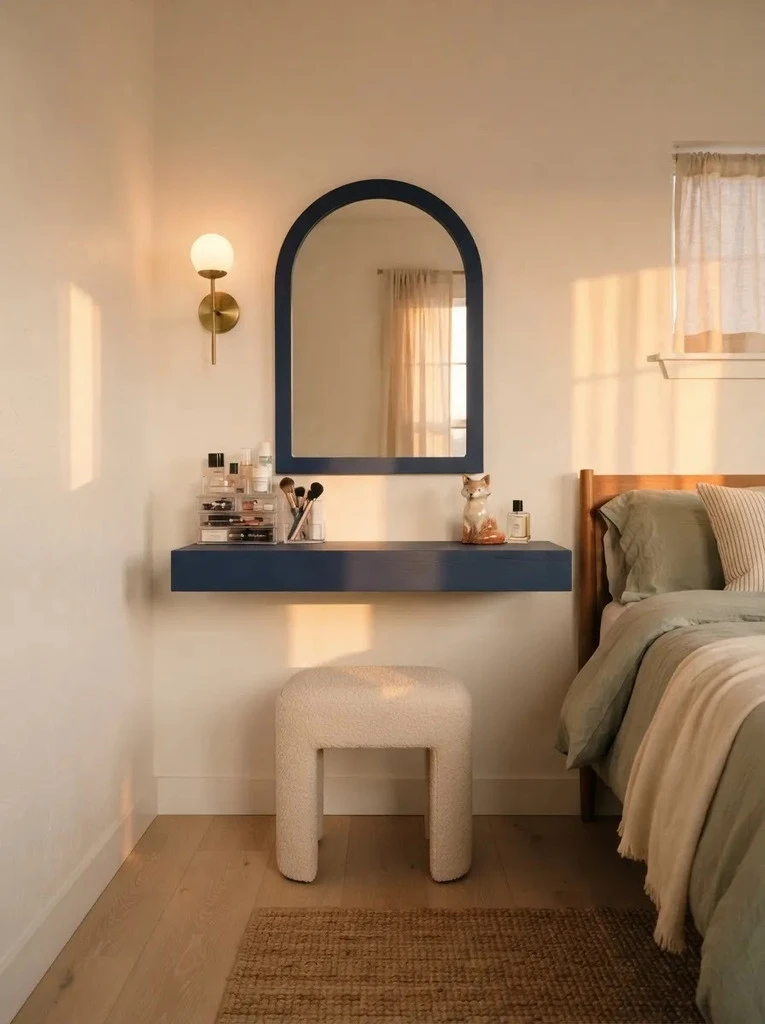
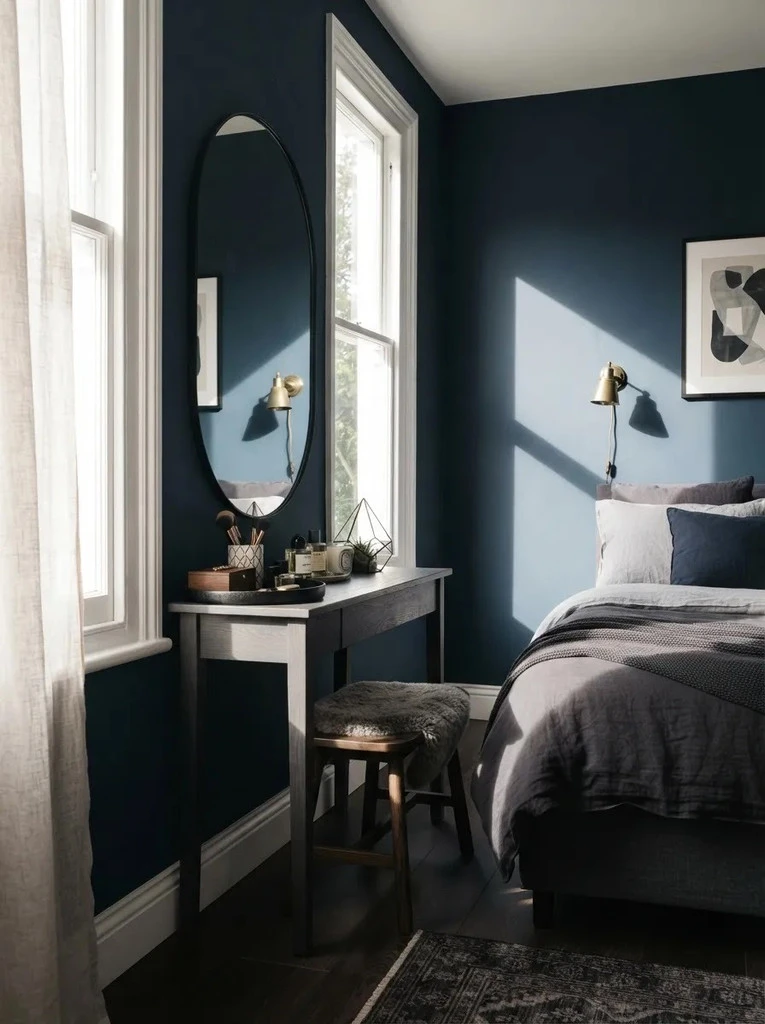
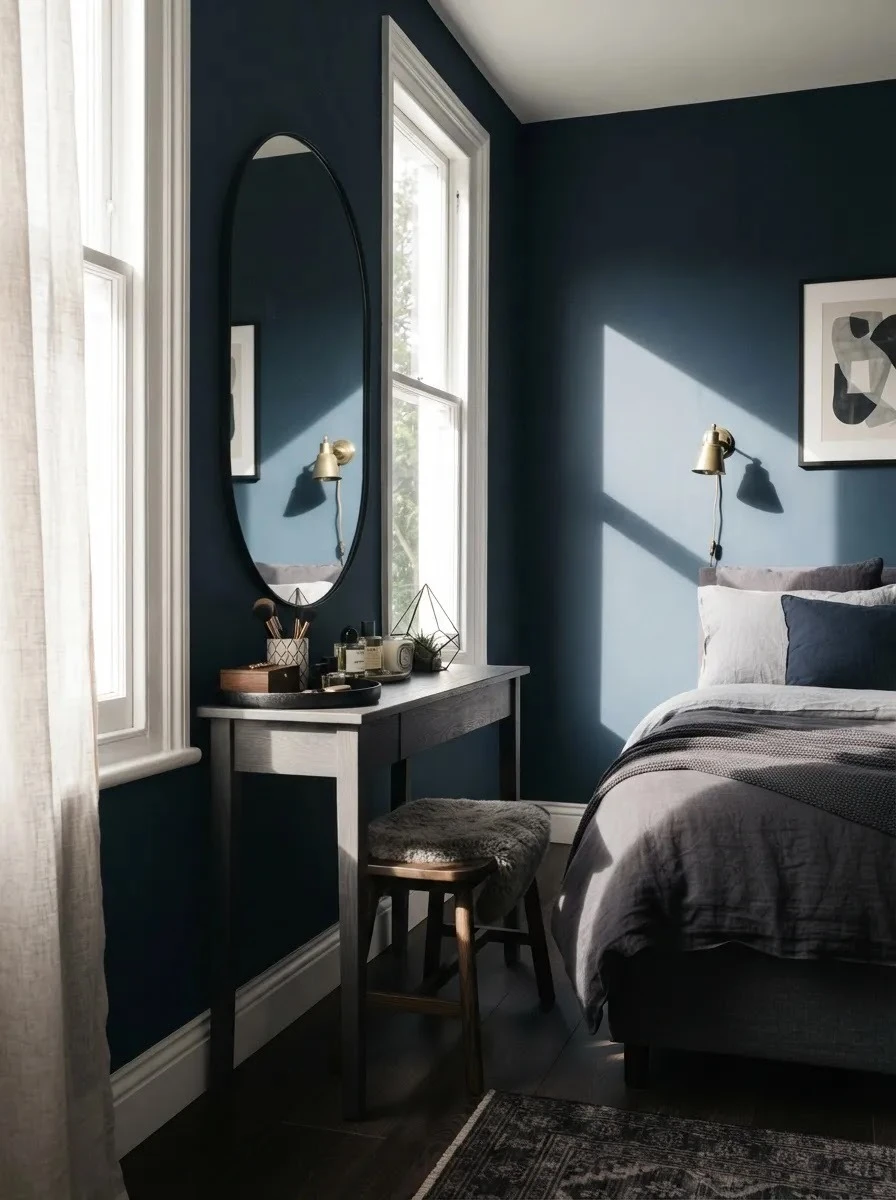
Placing the vanity beside a window brings soft natural light across your face. The setup feels brighter, fresher, and less dependent on bulky lighting fixtures.
Natural light is especially useful for everyday makeup, skincare, and hair styling. Position the mirror beside the window rather than directly opposite harsh sunlight to reduce glare. In my experience, sheer curtains give the best balance because they soften strong daylight while keeping the dressing area bright enough for detailed tasks.
Drawer Unit Vanity
- Choose a narrow drawer unit that fits comfortably without blocking doors, wardrobes, or walkways.
- Add a smooth tabletop if the drawer unit needs more usable surface space.
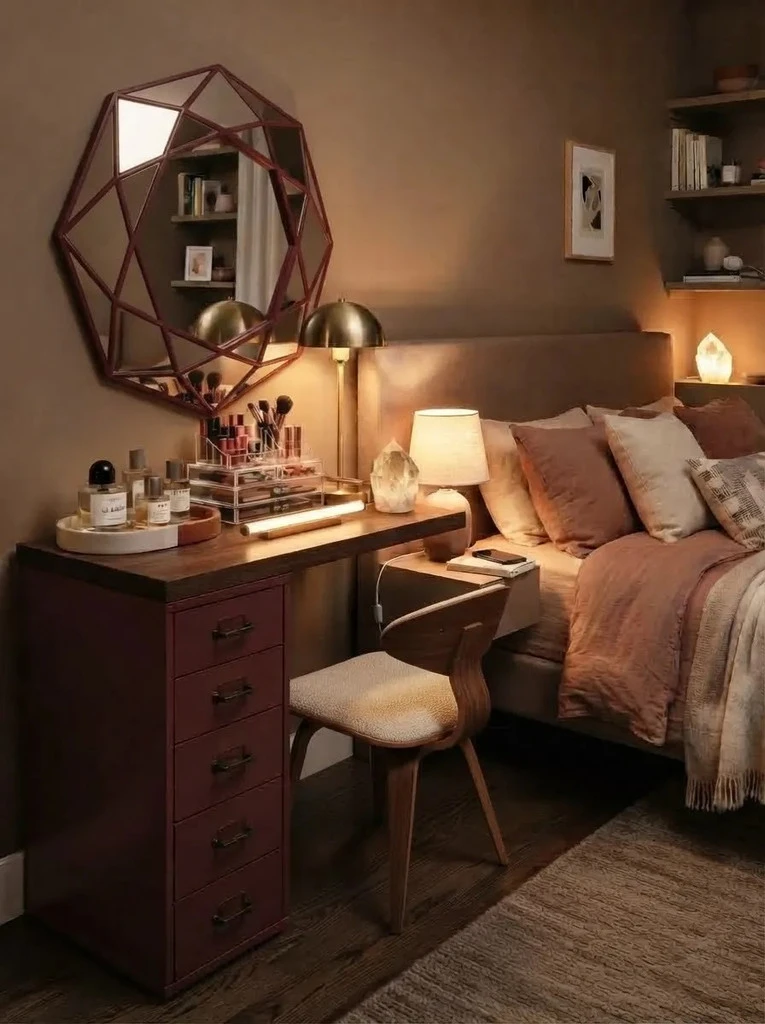
- Mount a mirror above it to keep the top clear for daily essentials.
- Divide drawers with small trays so cosmetics, jewelry, and hair tools stay separated.
- Slide a compact stool underneath whenever the vanity is not being used.
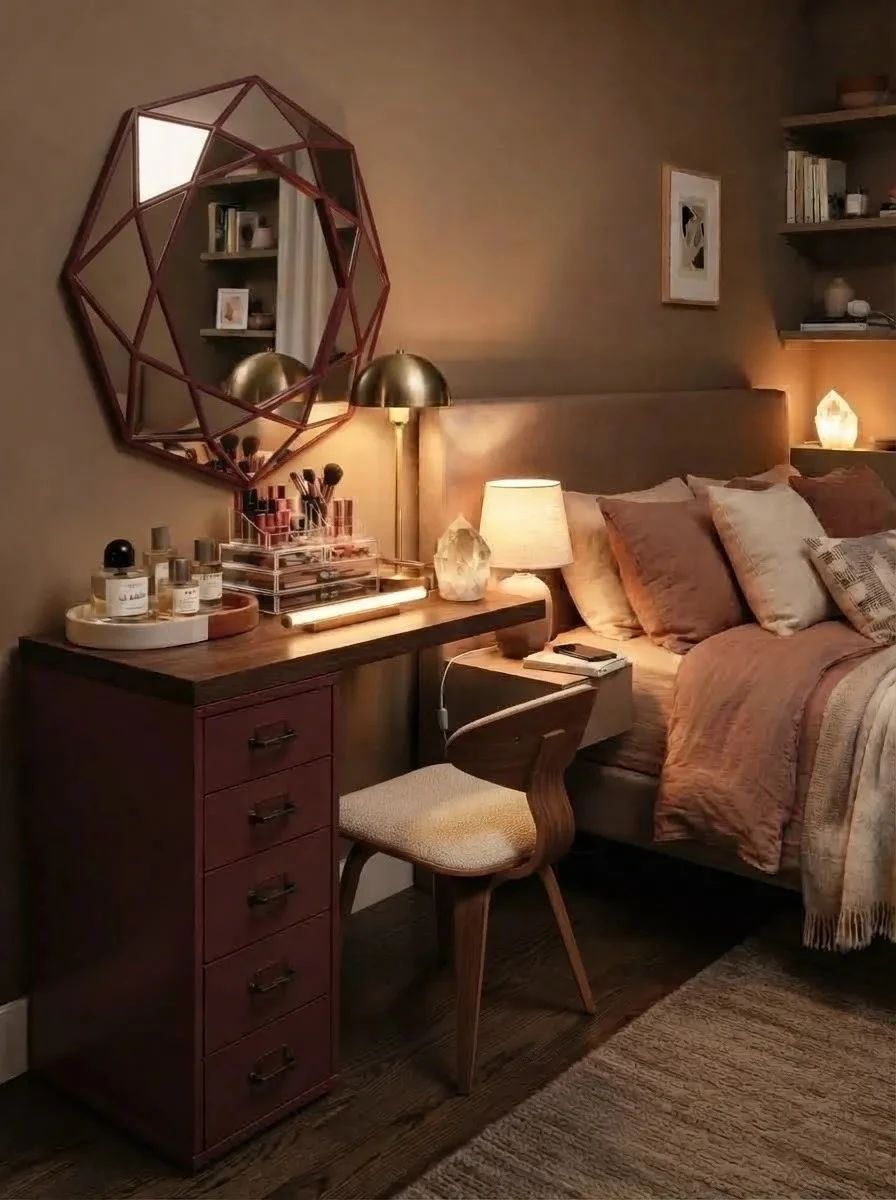
Storage-heavy setups work well for anyone who owns more beauty products than countertop space allows. Assign each drawer a clear purpose, such as makeup, skincare, hair tools, or accessories. Keeping categories separate prevents clutter from spreading across the surface and makes your morning routine quicker because everything has a predictable place.
Desk Vanity Combo
| Feature | Separate Furniture | Desk Vanity Combo |
| Floor Space | Requires two furniture pieces | Uses one compact surface |
| Daily Use | Each piece has one purpose | Switches between work and grooming |
| Storage | May need extra organizers | Drawers can serve both routines |
| Best Setup | Larger bedrooms | Tight multifunctional bedrooms |
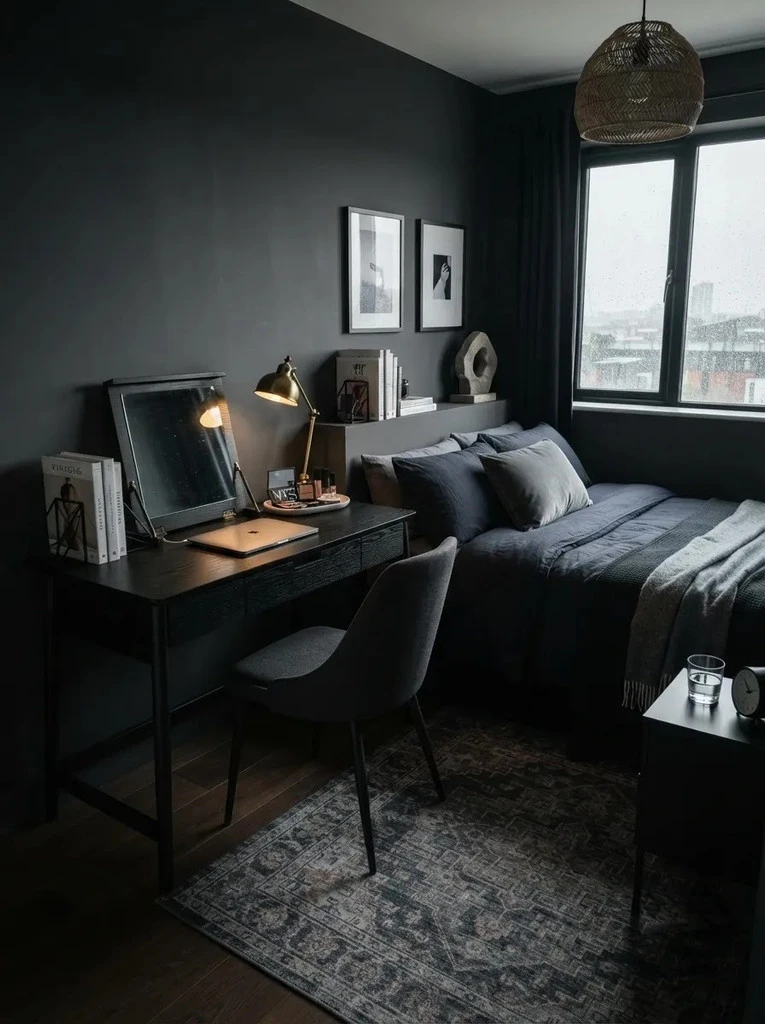
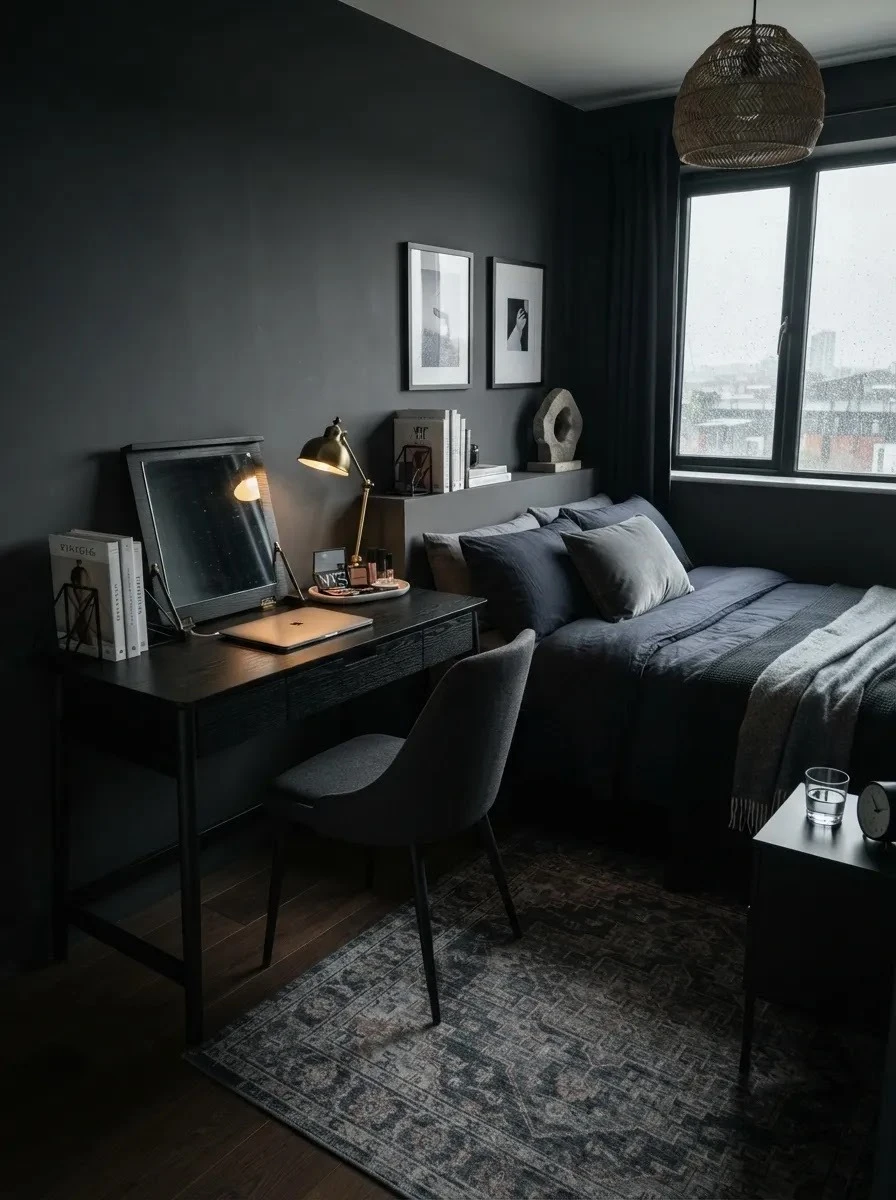
A dual-purpose surface is especially practical in bedrooms where every square foot matters. Keep work supplies in one drawer and beauty items in another, then use a portable mirror that can be stored after getting ready. Choose a comfortable chair instead of a vanity stool if the desk will support longer work sessions.
Mirror Cabinet Vanity
DO
- Choose a shallow cabinet so it does not project too far above the vanity.
- Store frequently used skincare and makeup on the easiest shelves to reach.
- Keep heavier bottles on lower shelves for better balance and safer access.
- Add soft internal lighting if the bedroom has limited natural light.
DON’T
- Overfill the cabinet with products you rarely use.
- Install it so low that the doors interfere with the vanity surface.
- Leave wet beauty tools inside enclosed storage.
- Choose oversized doors that feel bulky in a narrow room.
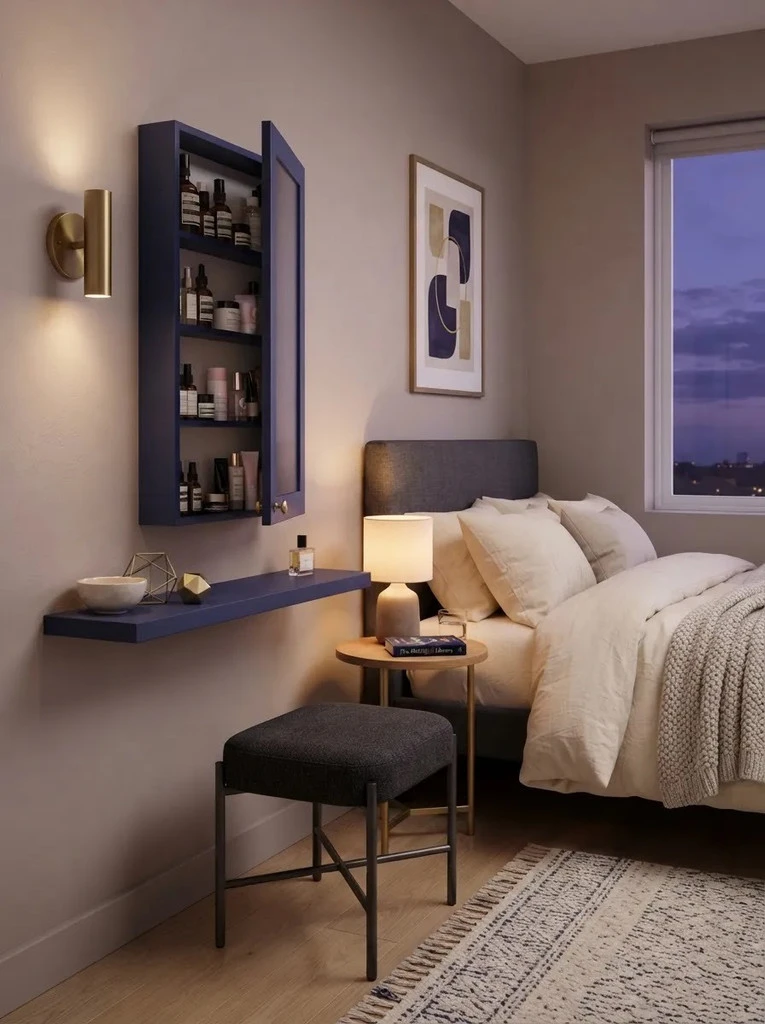
Hidden storage keeps visual clutter away while placing everyday essentials within easy reach. A mirrored cabinet also replaces the need for a separate mirror, which saves valuable wall space. For the neatest result, organize products by routine and leave a little empty space so shelves remain easy to use.
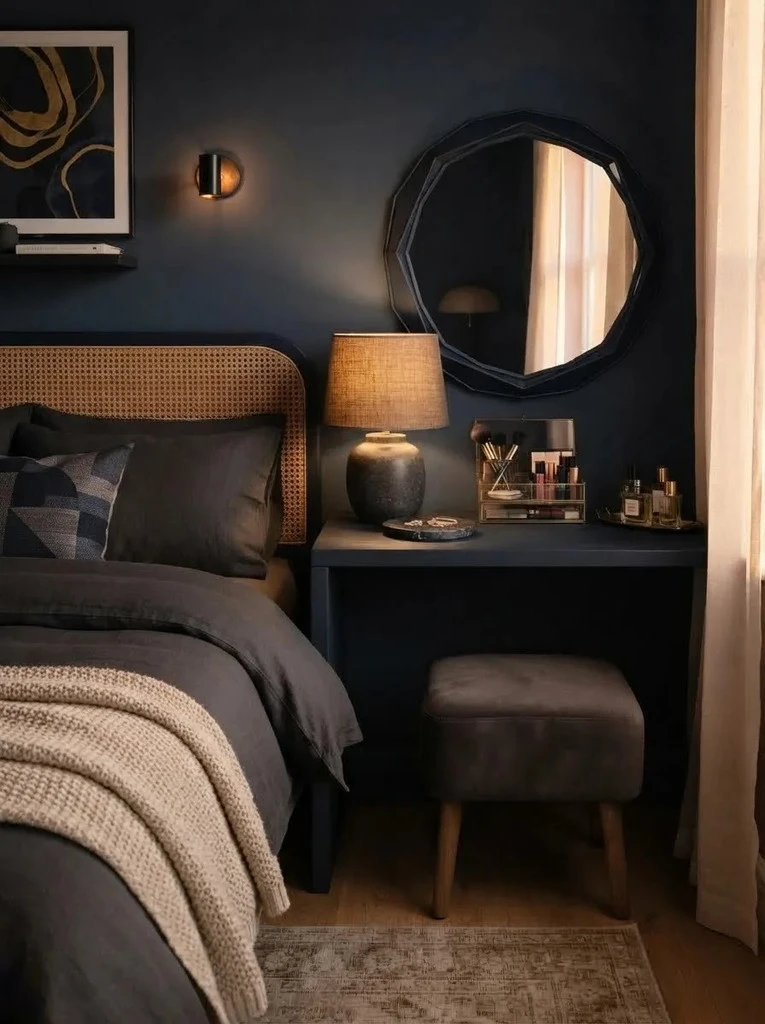
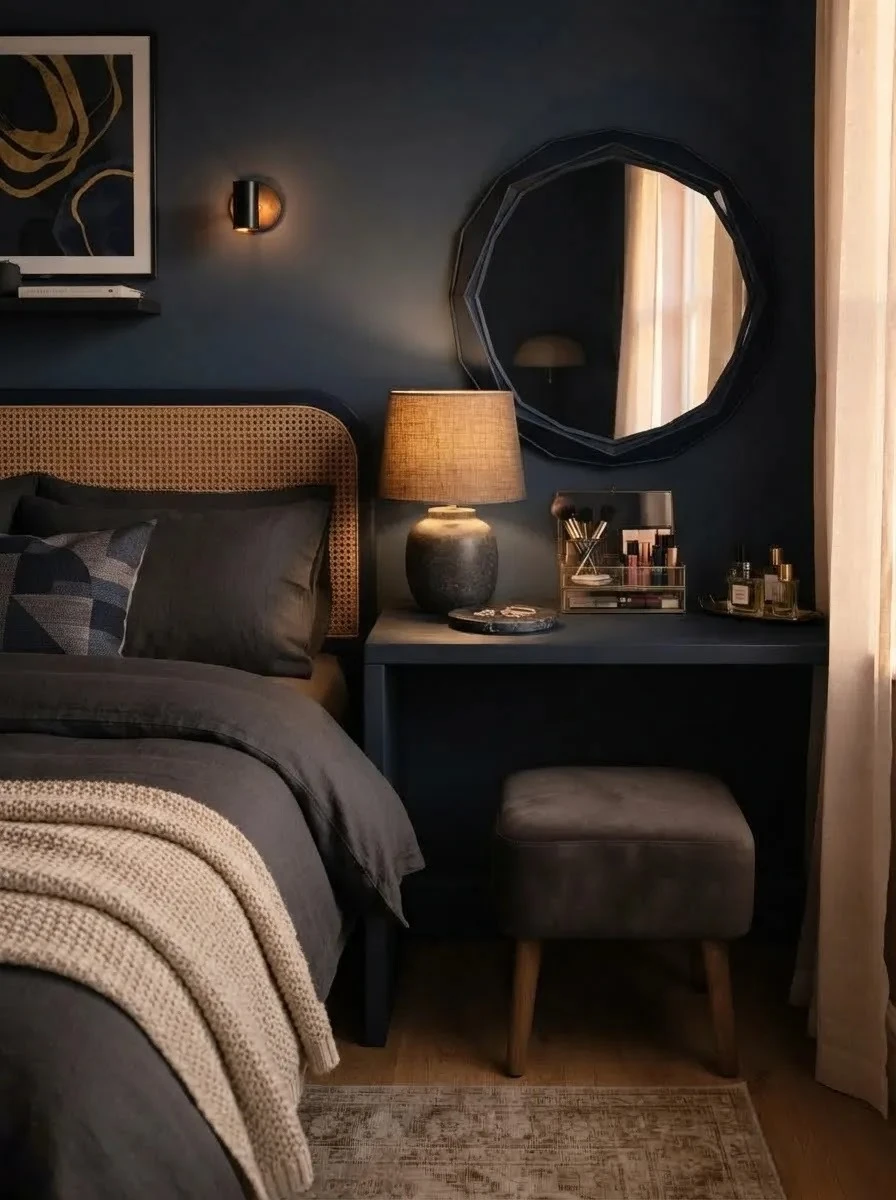
Bedside Vanity Combo
Best For: Bedrooms with very limited floor space
Cost: Low to moderate
Skill Level: Beginner friendly
Works In: Rental rooms, guest rooms, and compact primary bedrooms
One hardworking furniture piece can handle both nighttime storage and morning grooming without making the bedroom feel overloaded. Choose a bedside table wide enough for a small organizer and lamp, then mount the mirror above it. Keep nighttime essentials in one drawer and beauty products in another to prevent the setup from becoming messy.
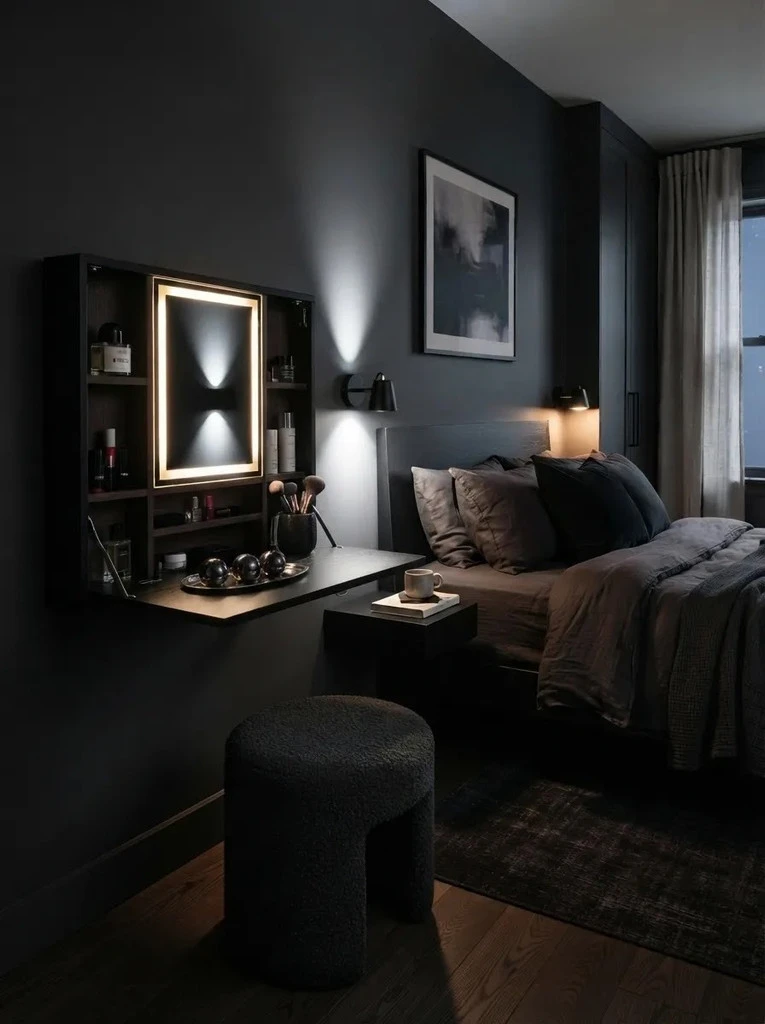
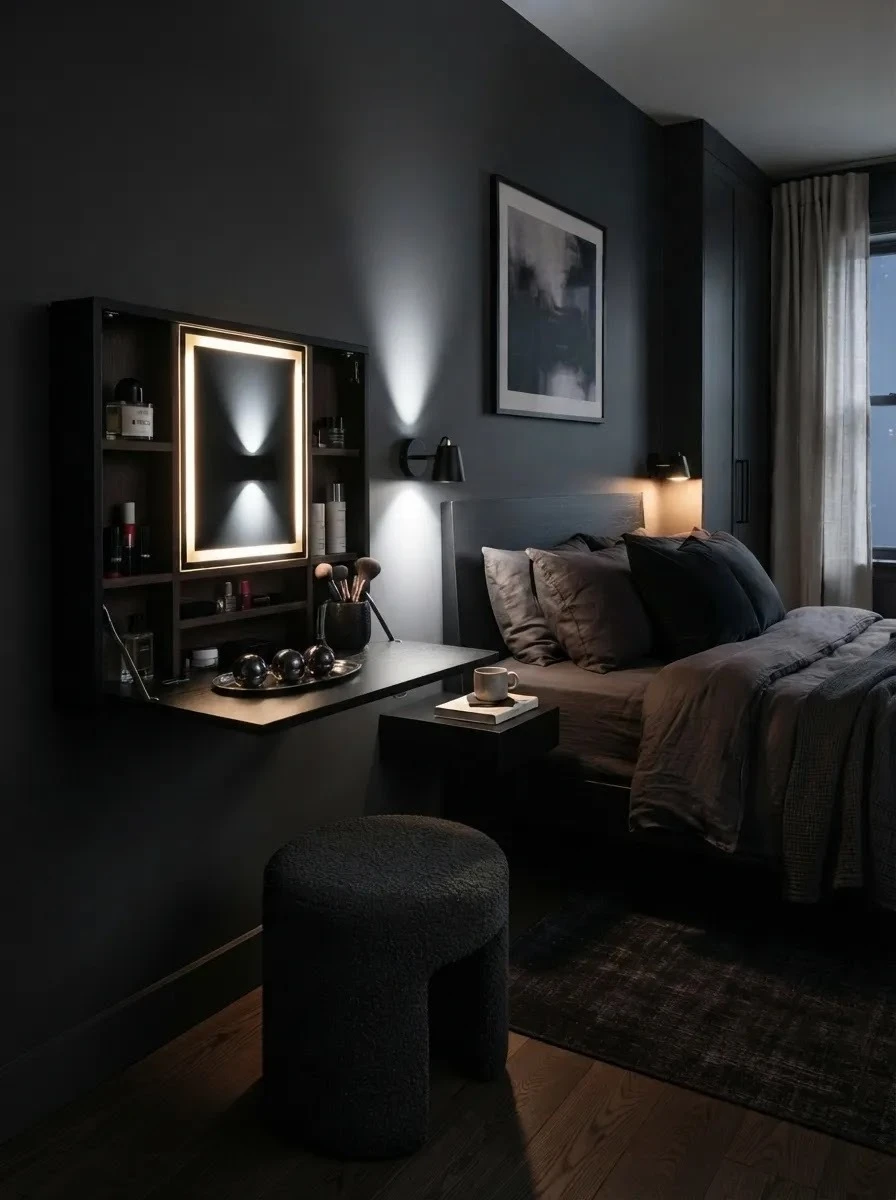
Fold Down Vanity
A fold down vanity gives you a useful getting-ready surface only when you actually need it. Once closed, it sits nearly flat against the wall, leaving more room for walking, laundry baskets, or daily movement. This makes it especially practical beside wardrobes or near the foot of a bed.
I’ve seen this work well in very compact rooms where a permanent tabletop would feel intrusive. Choose a model with built-in compartments so cosmetics stay contained when the panel closes. Pair it with a lightweight stool that can tuck under a console, bedside table, or nearby shelf after use.
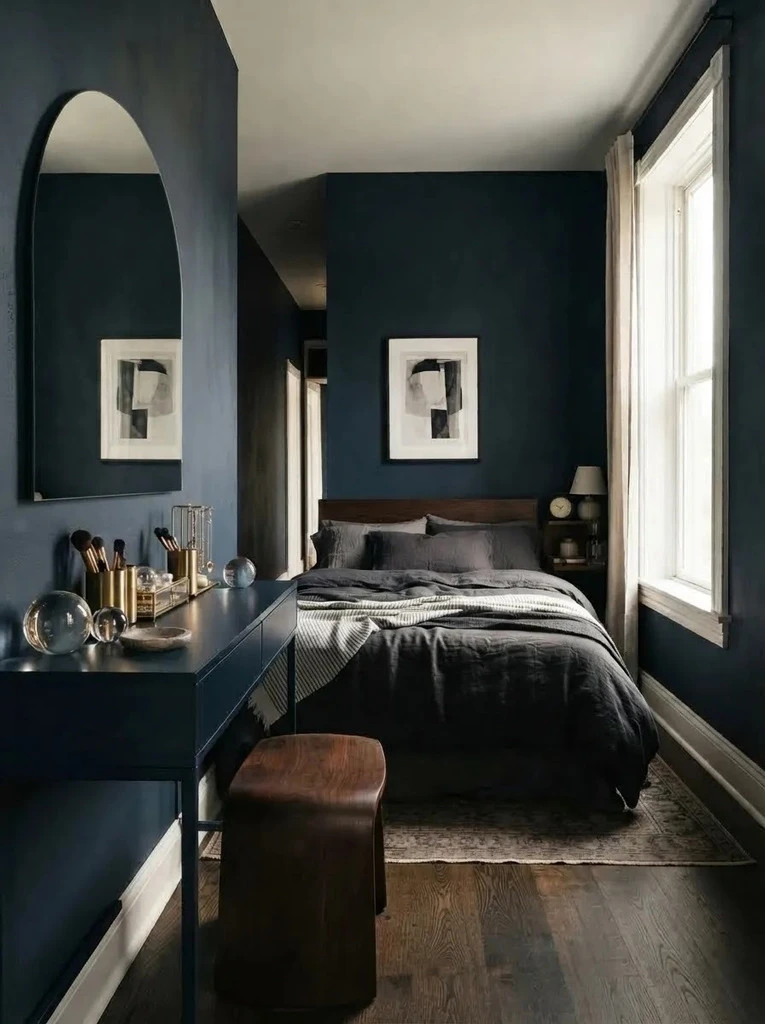
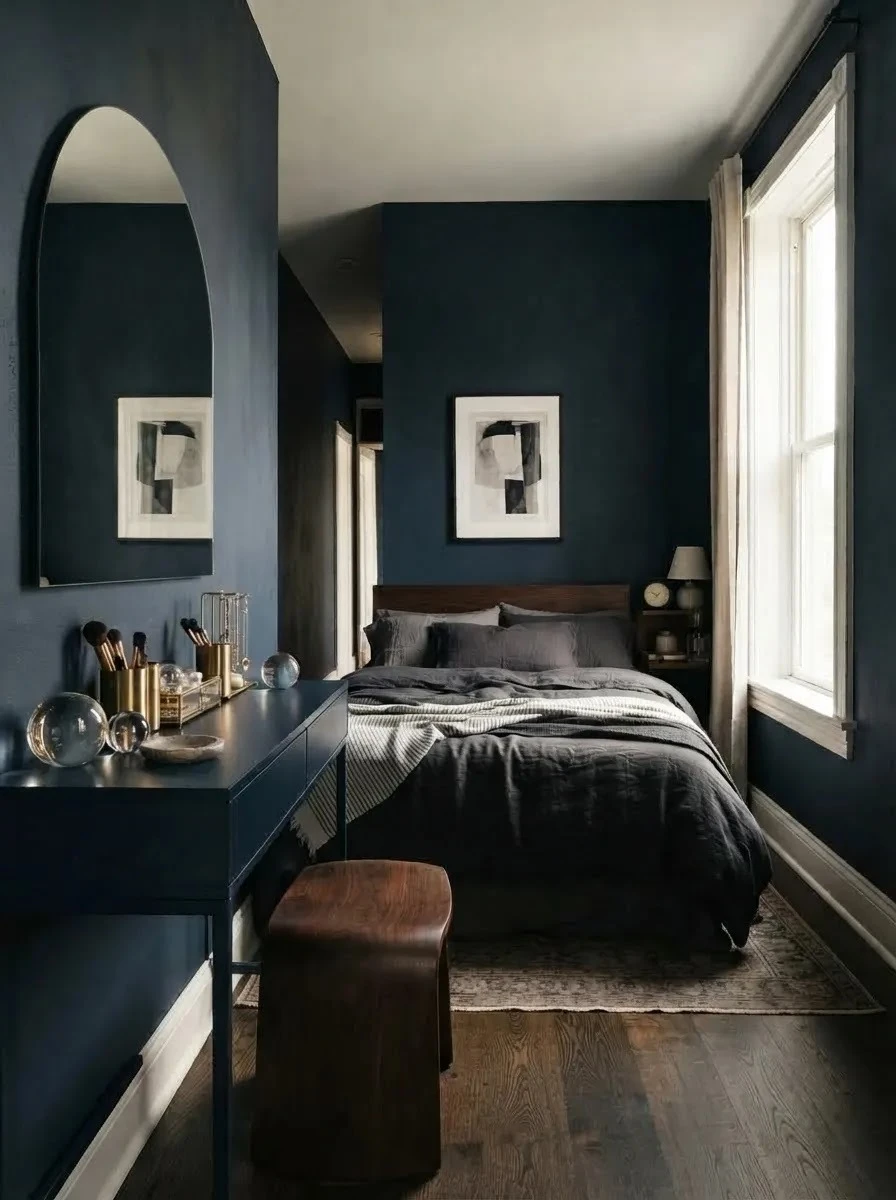
Slim Console Vanity
- A shallow console instantly creates a grooming zone without taking over the walkway.
- Choose a table around 10 to 14 inches deep so the room remains easy to move through.
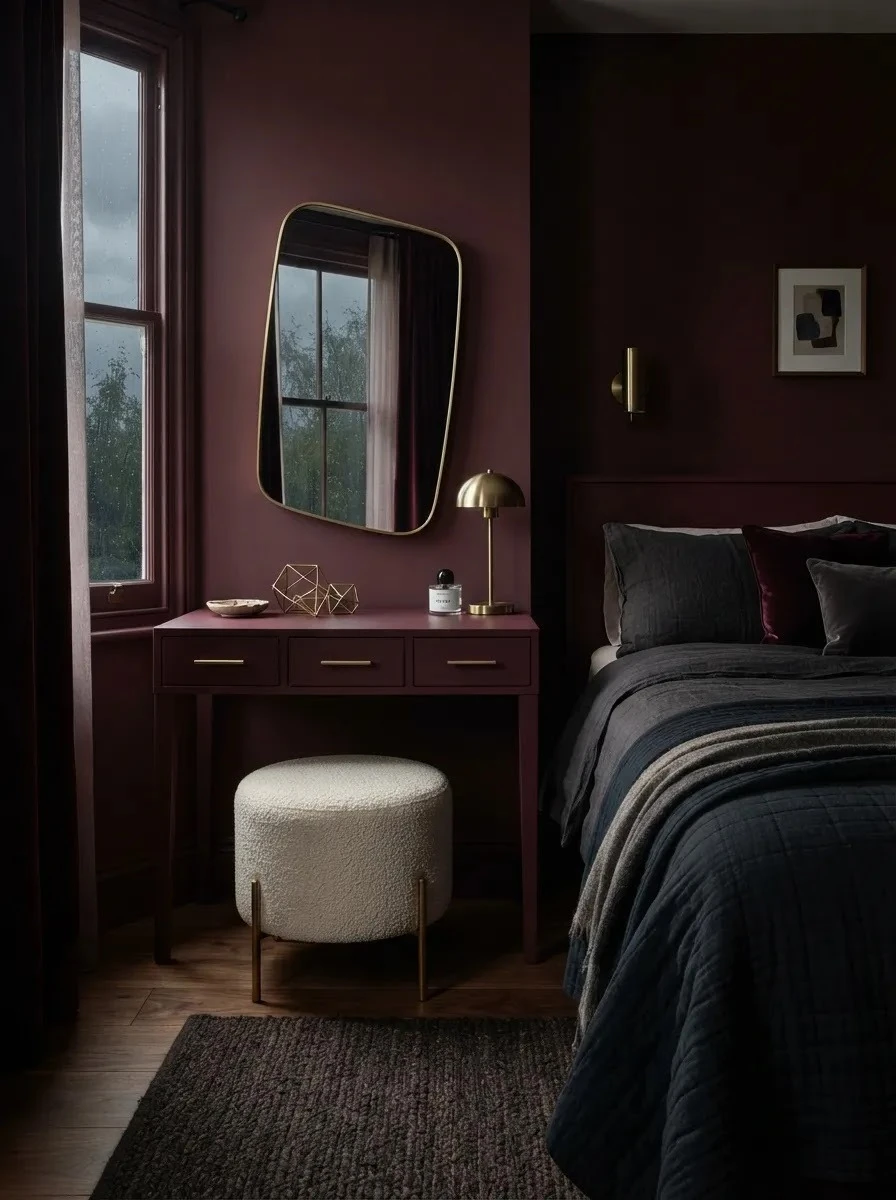
- Mount the mirror directly above the console to preserve valuable tabletop space.
- Keep cosmetics inside matching trays or small boxes instead of spreading them across the surface.
- Slide a backless stool completely underneath after getting ready.
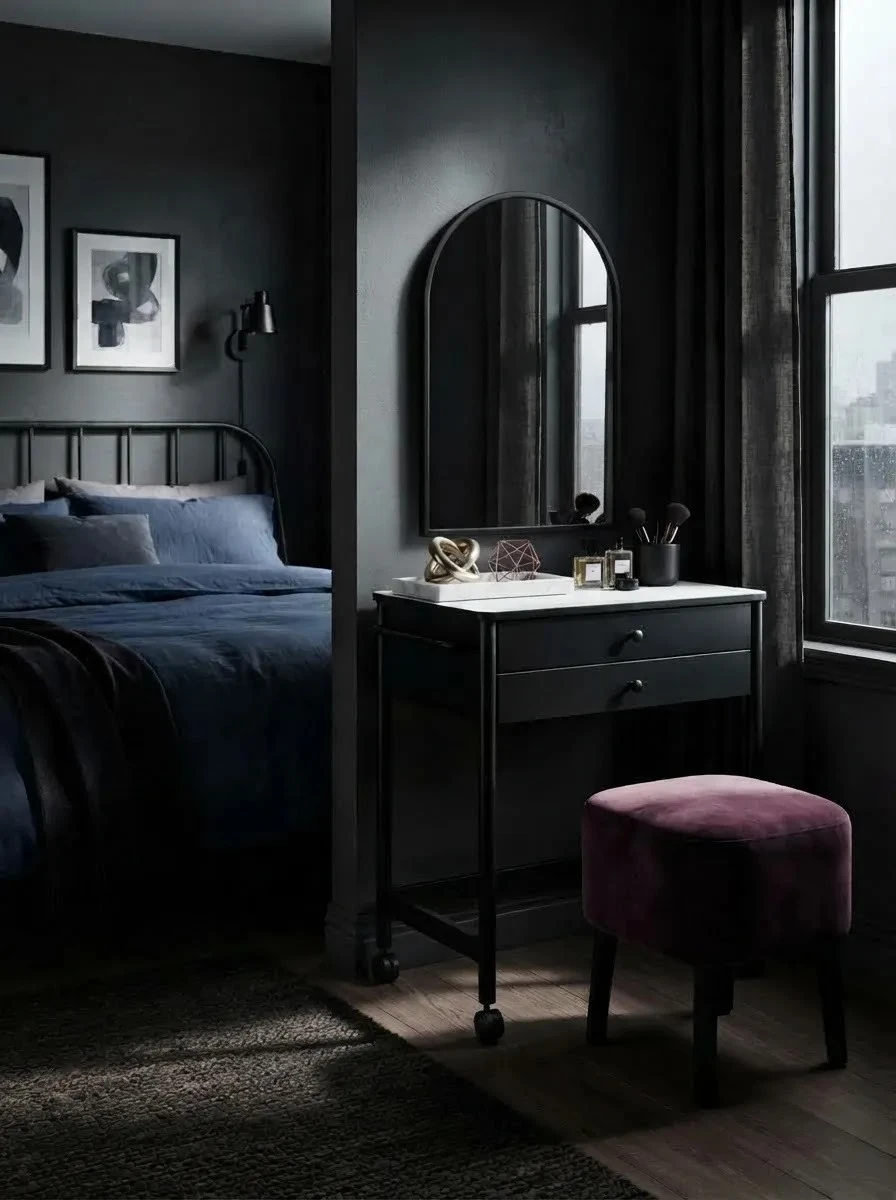
Slim furniture works especially well beside a wardrobe, window, or empty bedroom wall where deeper pieces would feel awkward. Look for a console with at least one drawer for daily essentials. Keeping the legs visually light also helps more flooring remain visible, making the entire bedroom appear less crowded and more open.
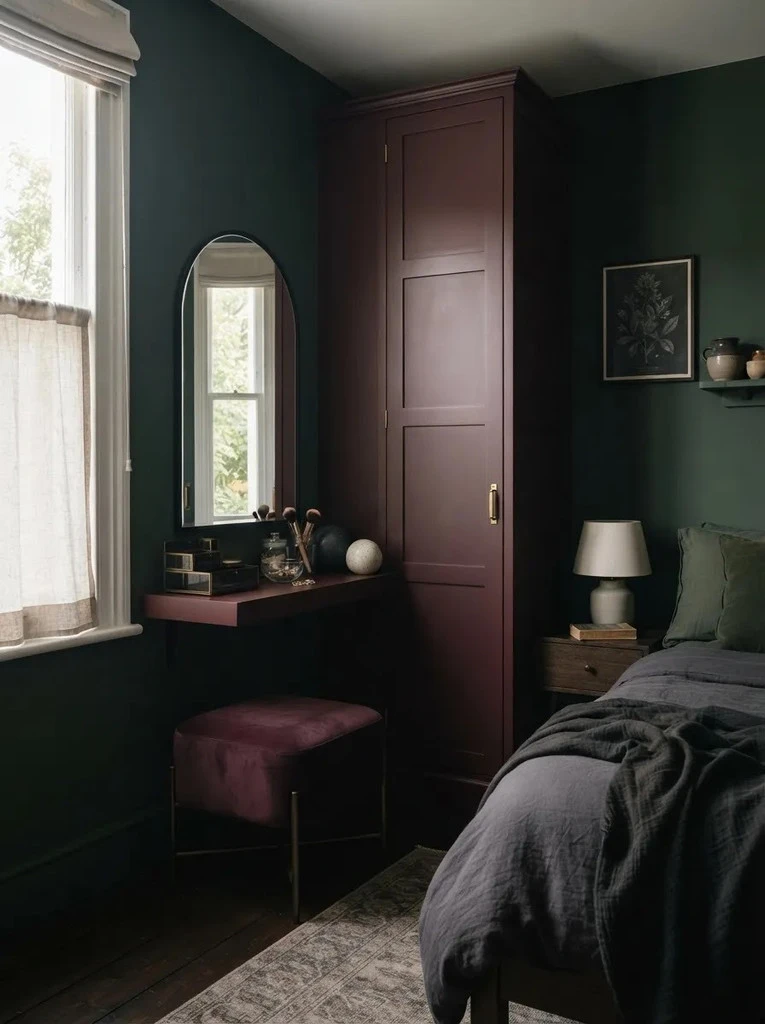
Wardrobe Side Vanity
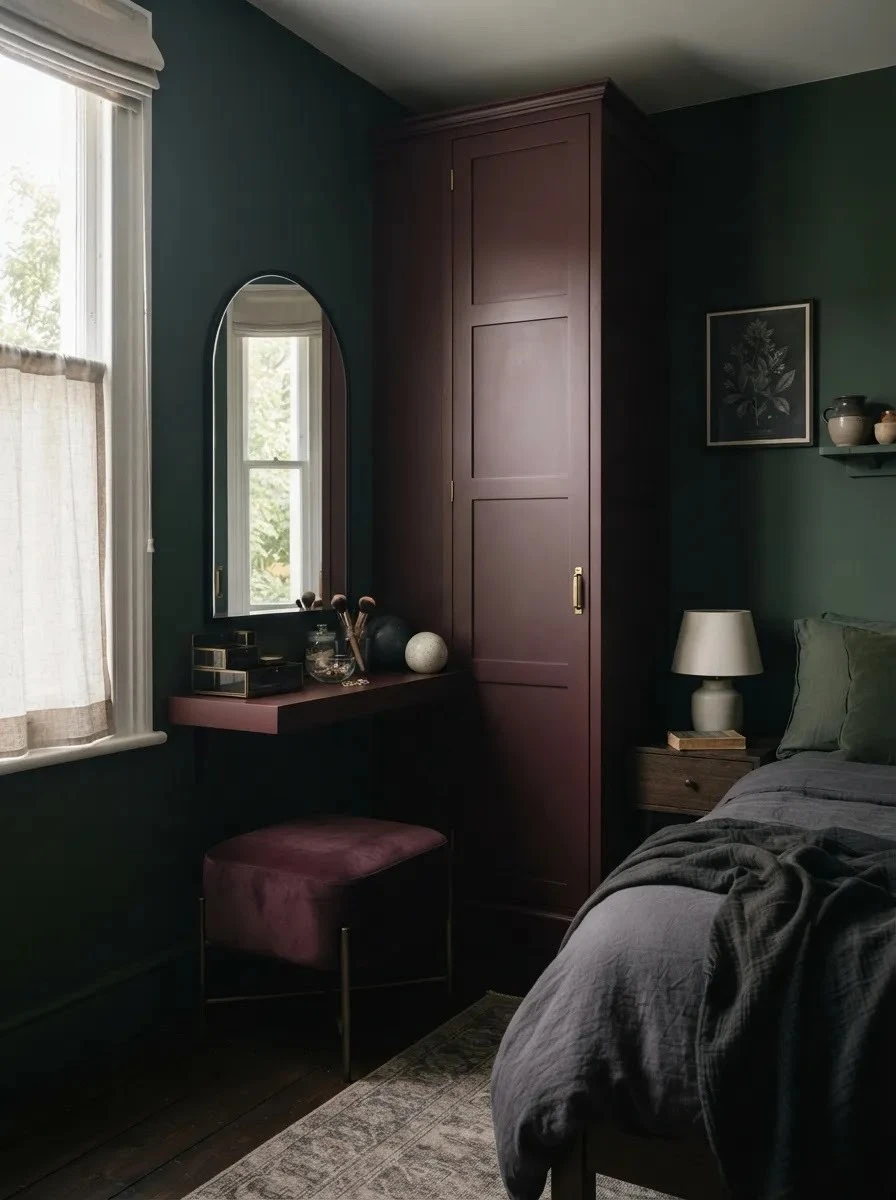
Measure the space between the wardrobe and nearby furniture before buying anything. Leave enough clearance for wardrobe doors and drawers to open fully, and use a wall mounted mirror so the dressing area stays shallow.
Unused space beside a wardrobe can become surprisingly practical without changing the bedroom layout. Match the vanity finish to the wardrobe or nearby furniture for a more connected look. I’ve noticed that repeating one wood tone or hardware finish makes small furniture arrangements feel calmer instead of looking like several unrelated pieces squeezed together.
Built In Vanity
BEFORE:
A gap between wardrobes or storage cabinets often becomes an awkward place for baskets, loose boxes, or unused floor space. A separate vanity placed elsewhere can make the room feel even more crowded.
AFTER:
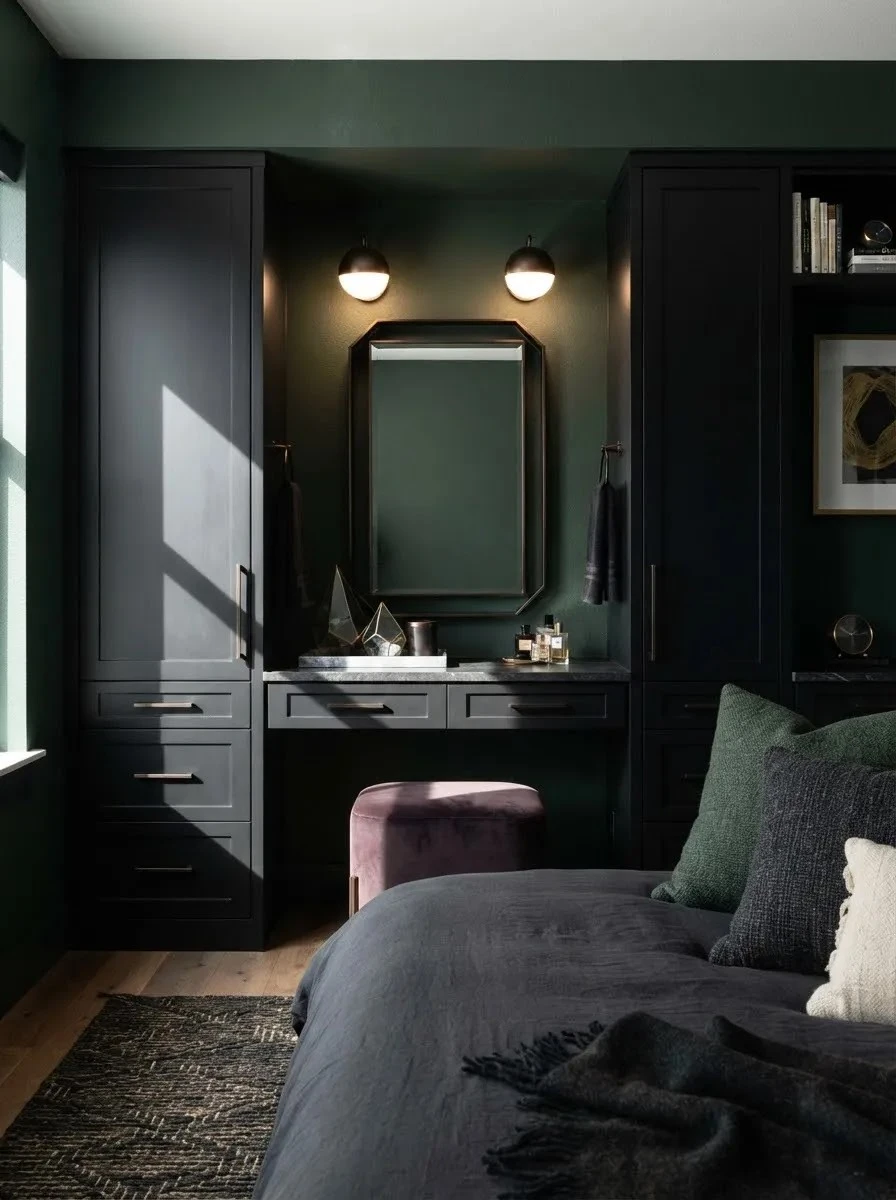
A fitted countertop turns that empty gap into a dedicated grooming station. Drawers hide daily essentials while the surrounding cabinetry creates a tidy, intentional appearance.
Built in designs are especially useful when planning new wardrobes or updating existing bedroom storage. Keep the vanity section slightly narrower than a standard desk and add task lighting near the mirror. The finished arrangement combines storage and grooming in one zone, reducing the number of separate furniture pieces competing for limited floor space.
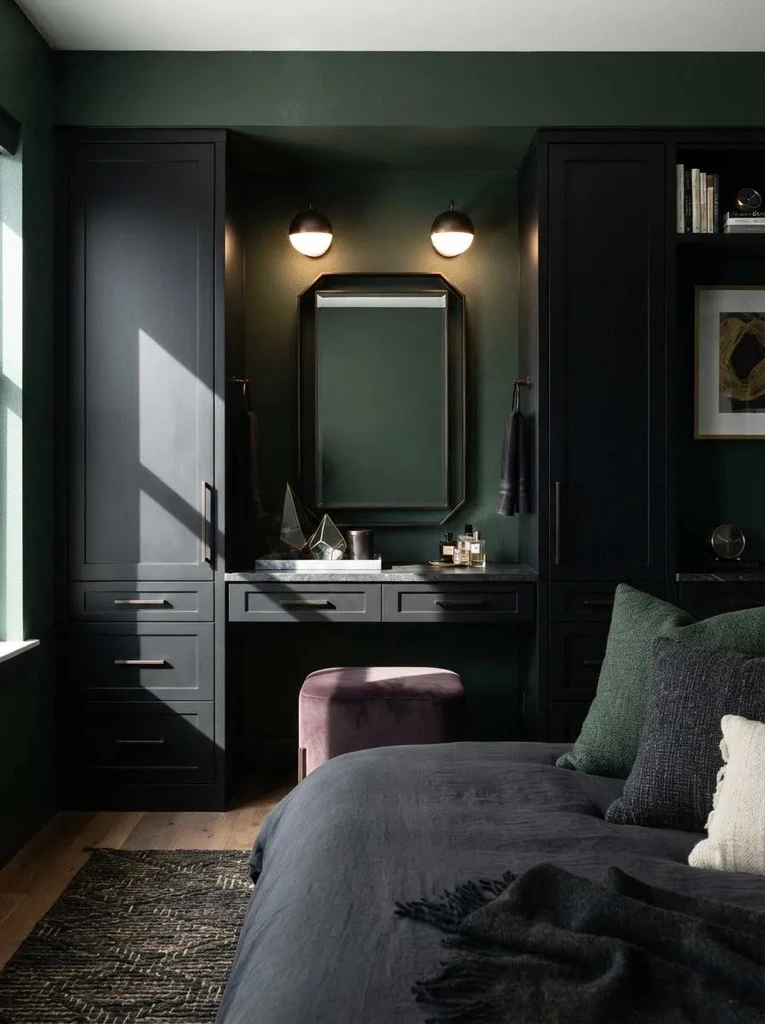
Vanity With Drawers
- Start with a narrow vanity that gives you useful drawers without stealing too much walking space.
- Divide the top drawer into sections for everyday makeup, brushes, and small accessories.
- Reserve deeper drawers for hair tools, backup products, and larger skincare bottles.
- Mount the mirror above the table instead of resting it on the surface.
- Keep only two or three attractive daily items visible on top.
Smart drawer storage can make a dressing table for small bedroom layouts feel much more functional without increasing its footprint. Assigning each drawer a purpose reduces searching and keeps counters clear. Choose shallow organizers that fit the drawer dimensions closely, since loose containers tend to slide around and quickly become untidy.
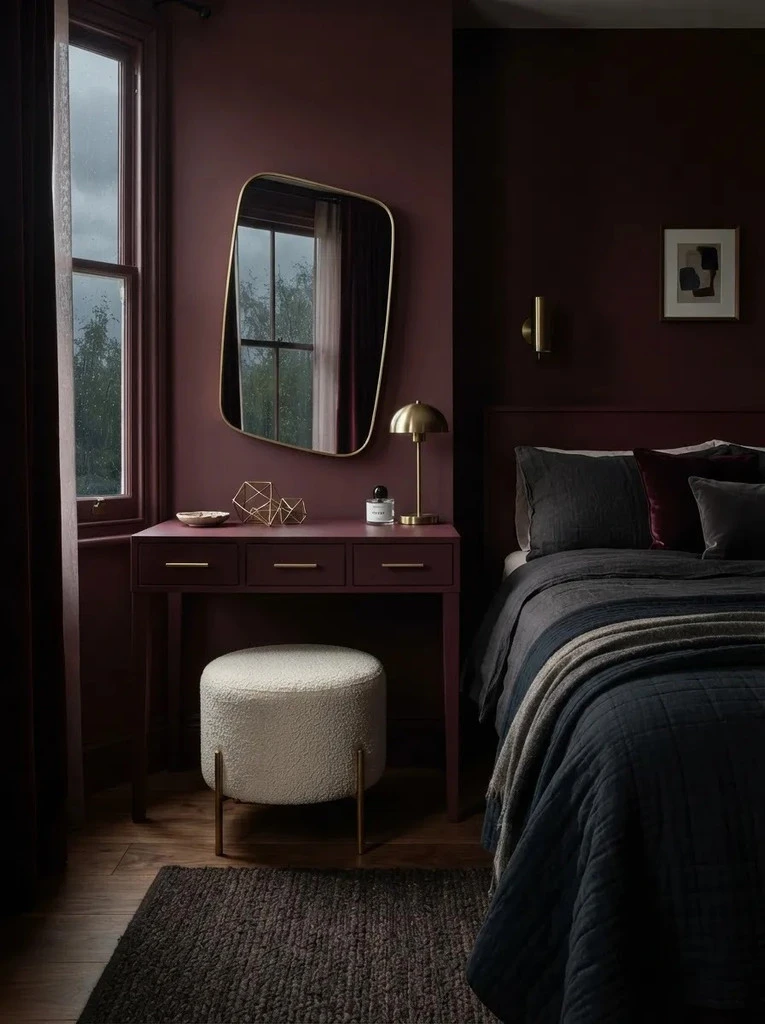
Round Vanity Table
| Feature | Square Vanity | Round Vanity |
| Corners | Sharp edges project outward | Curved edges feel softer |
| Movement | Can narrow tight walkways | Easier to move around |
| Visual Weight | Often appears more structured | Feels lighter in compact rooms |
| Best Placement | Flat open wall | Corners and narrow passages |
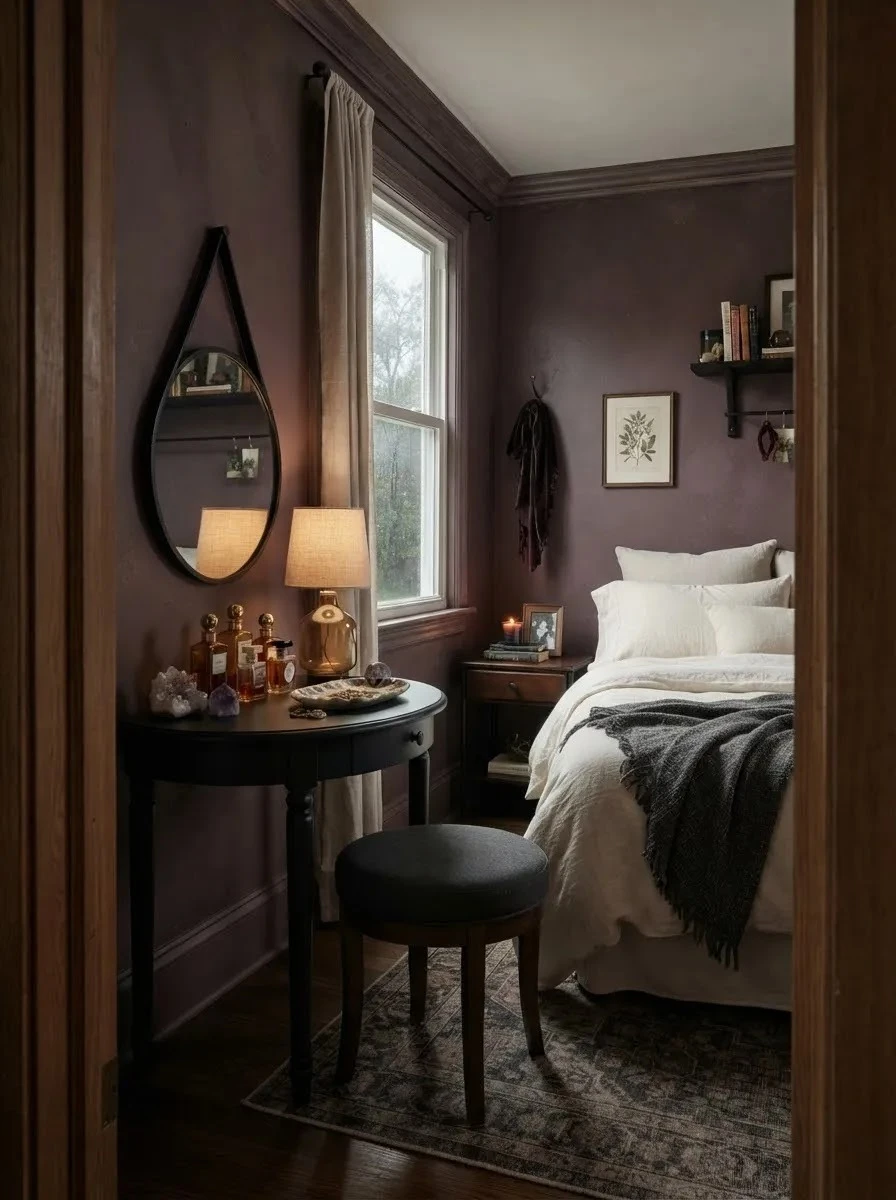
Curved furniture can improve circulation where the bed, wardrobe, and dressing area sit close together. A round tabletop also removes protruding corners that are easy to bump into in tight spaces. Choose a model with one discreet drawer or lower shelf so useful storage is not sacrificed for the softer shape.
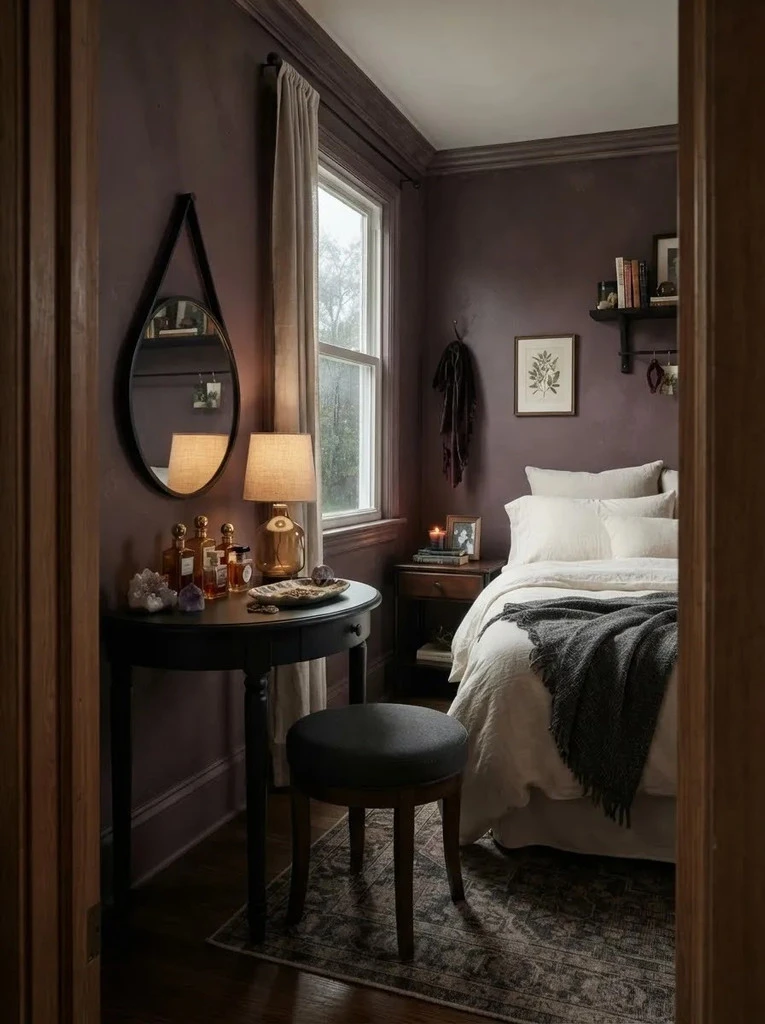
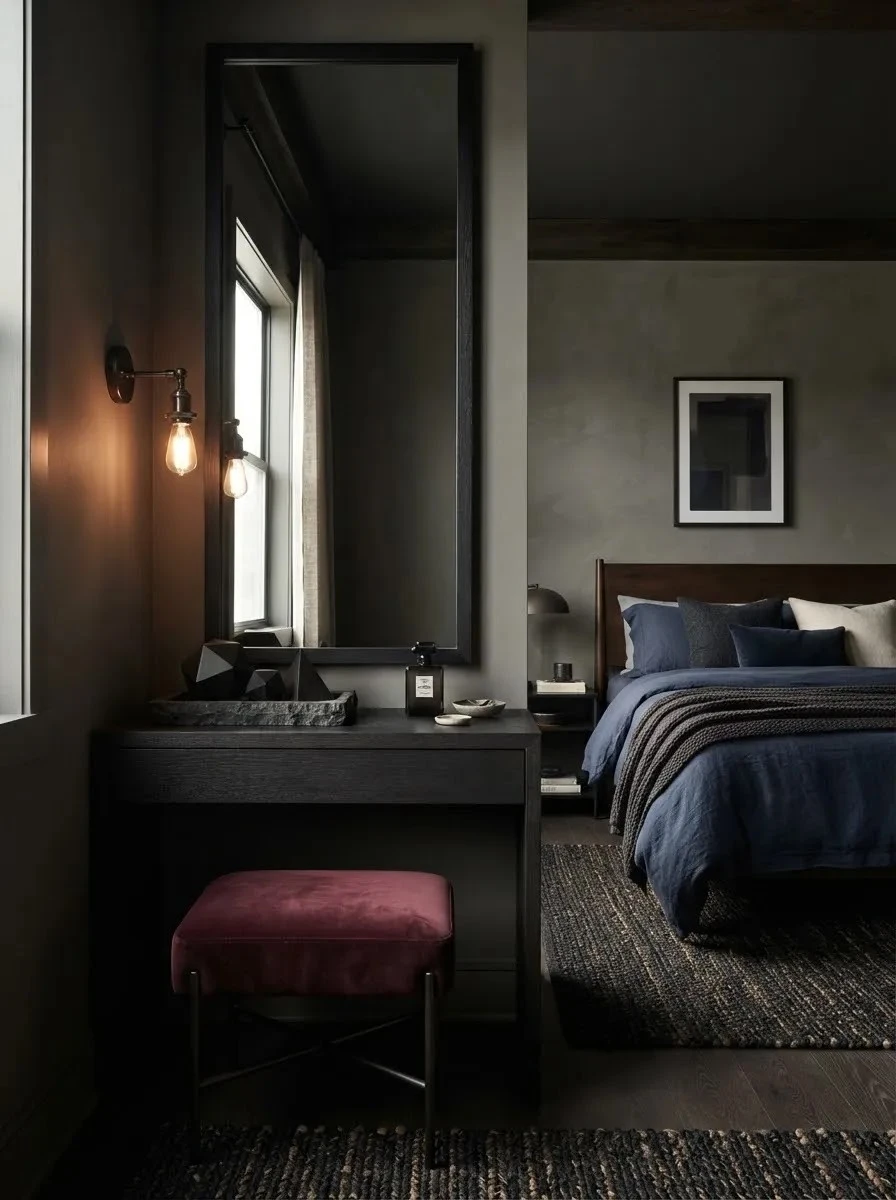
Vertical Mirror Vanity
DO
- Choose a tall mirror that draws the eye upward.
- Keep the vanity itself shallow and visually simple.
- Mount lighting beside the mirror for even facial illumination.
- Store extra products in drawers instead of on the tabletop.
DON’T
- Use an oversized frame that overwhelms the narrow wall.
- Place tall decor directly in front of the mirror.
- Hang the mirror too high for comfortable seated use.
- Crowd both sides with shelves and bulky accessories.
Vertical proportions can make a short wall appear taller while giving you a useful full-face reflection. This setup works especially well between a wardrobe and doorway where horizontal space is limited. Keep the frame thin and the surrounding wall mostly clear so the upward visual effect remains strong rather than cluttered.
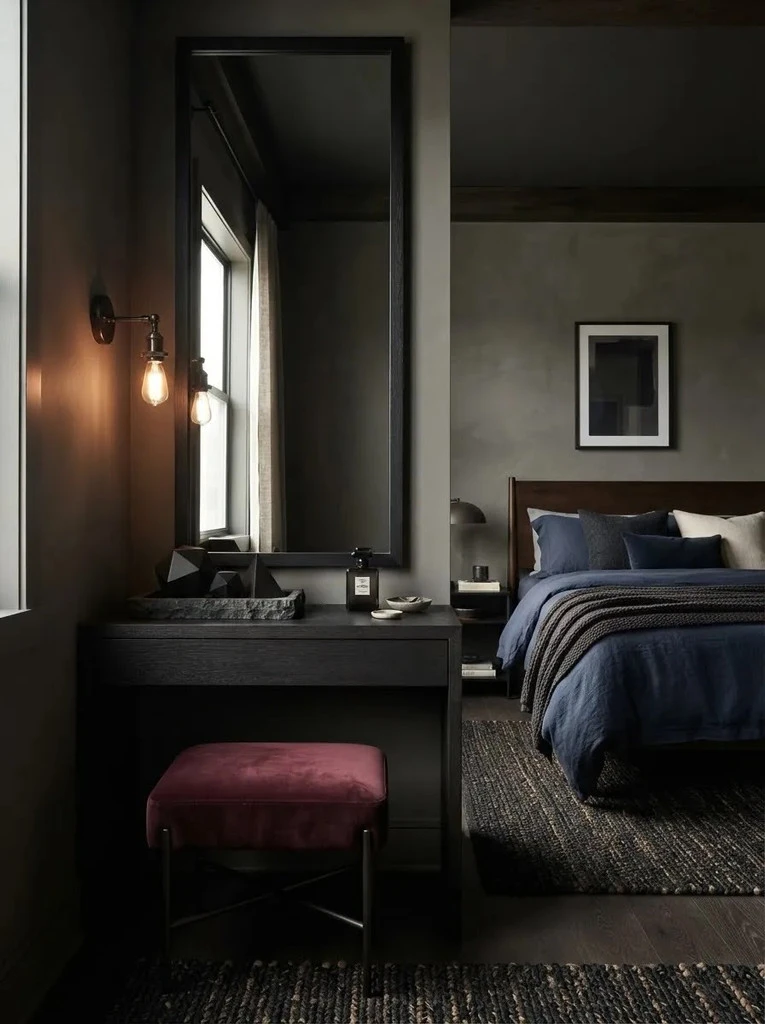
Storage Stool Vanity
Best For: Bedrooms needing hidden storage
Cost: Low to moderate
Skill Level: Beginner friendly
Result: Extra storage without additional furniture
A stool with hidden storage makes every inch work harder while keeping the dressing area visually tidy. Store hair accessories, backup cosmetics, small towels, or rarely used beauty tools inside. Choose a lightweight lid that opens easily, and check that the stool slides completely beneath the vanity before buying it.
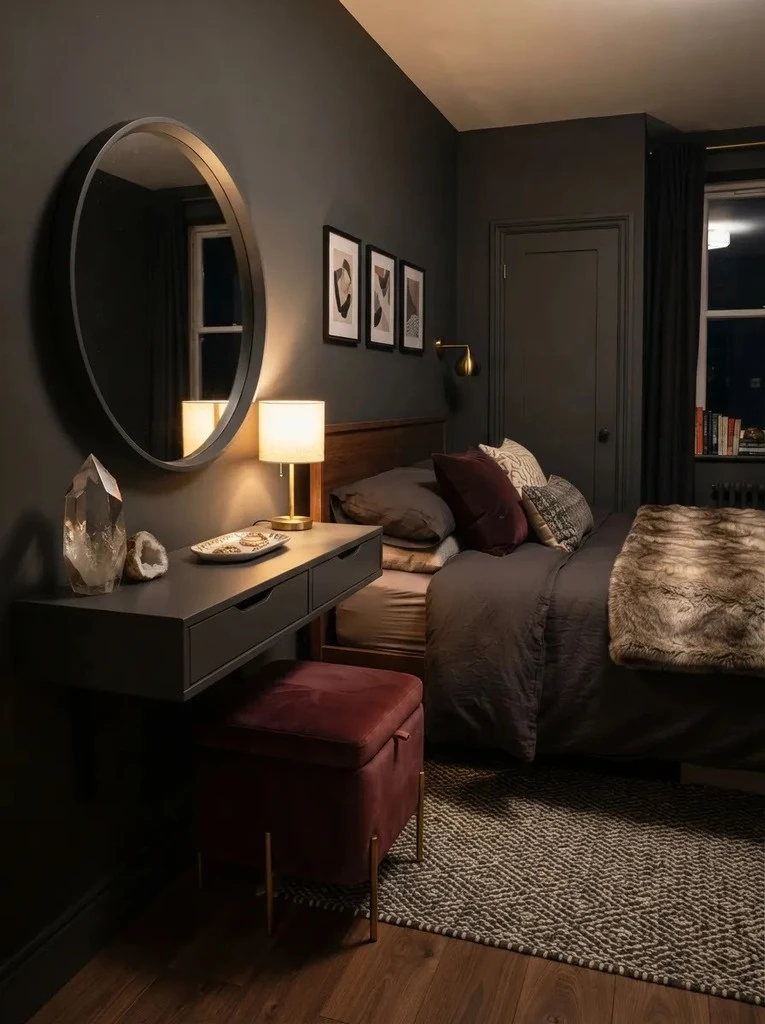
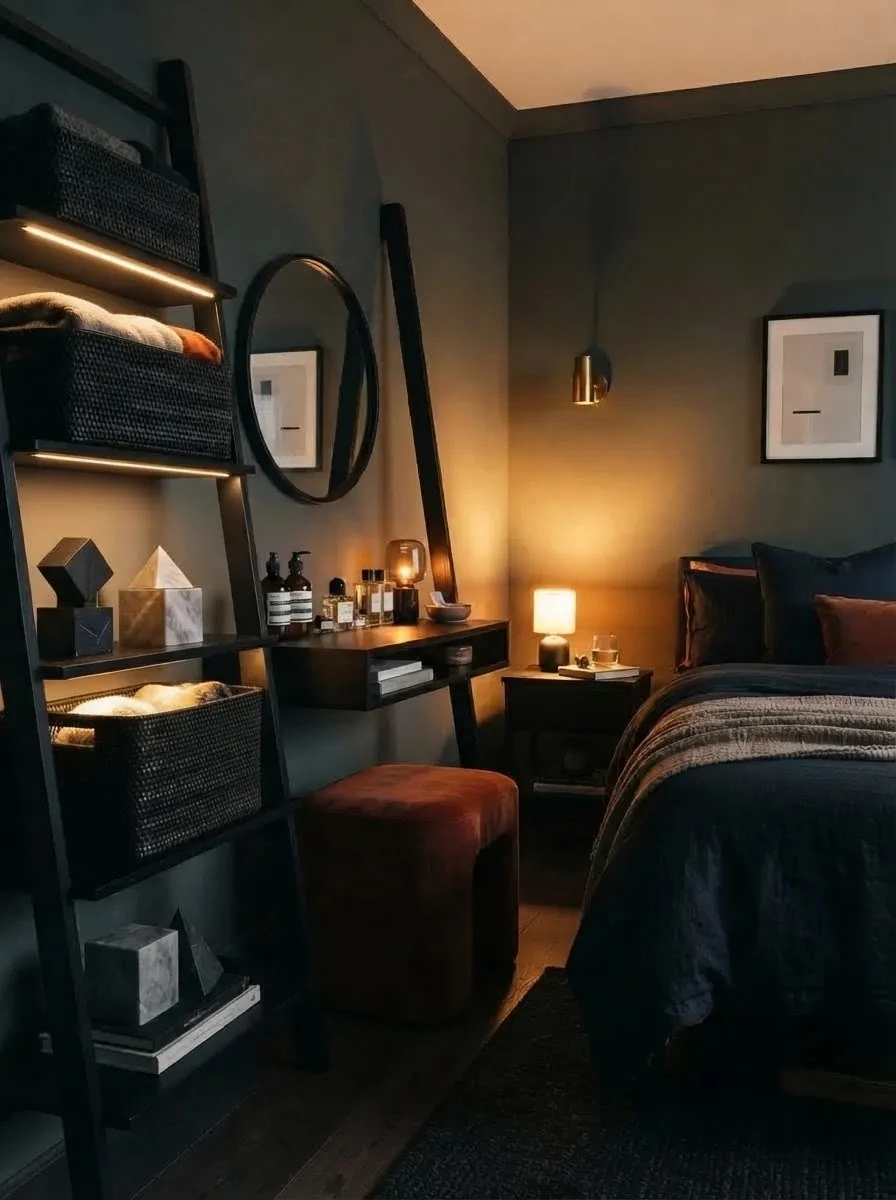
Ladder Shelf Vanity
A ladder style unit makes clever use of vertical wall space while keeping the footprint surprisingly small. Choose one with a wider middle shelf that can serve as the dressing surface, then use the upper shelves for lightweight baskets, perfume, framed decor, or neatly arranged beauty products.
Keep the lowest shelves reserved for less attractive storage so the eye naturally focuses upward. In my experience, matching baskets create a calmer look than several different containers. Secure leaning furniture to the wall where possible, especially in busy bedrooms or homes with young children, for a safer everyday setup.
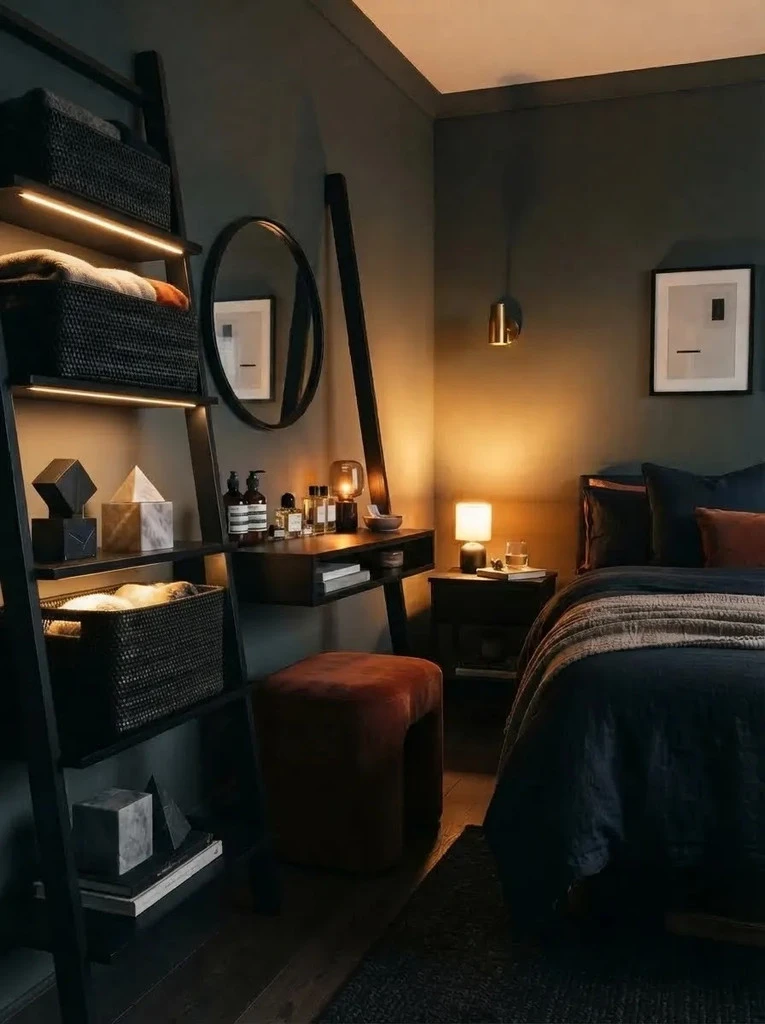
Clear Acrylic Vanity
- Choose a fully transparent or lightly tinted acrylic table to keep sightlines open across the room.
- Pair it with a clear stool so the dressing setup adds less visual weight.
- Keep organizers minimal because clutter remains visible through transparent furniture.
- Place a soft rug underneath to give the clear table a defined visual zone.
- Wipe acrylic with a microfiber cloth to prevent fingerprints and surface scratches.
Transparent furniture can make a crowded bedroom feel visually lighter because it does not create another solid block between the bed and wall. This works particularly well in rooms with bold wallpaper, colorful bedding, or patterned flooring. Keep the tabletop restrained so the clean, airy effect remains the main attraction.

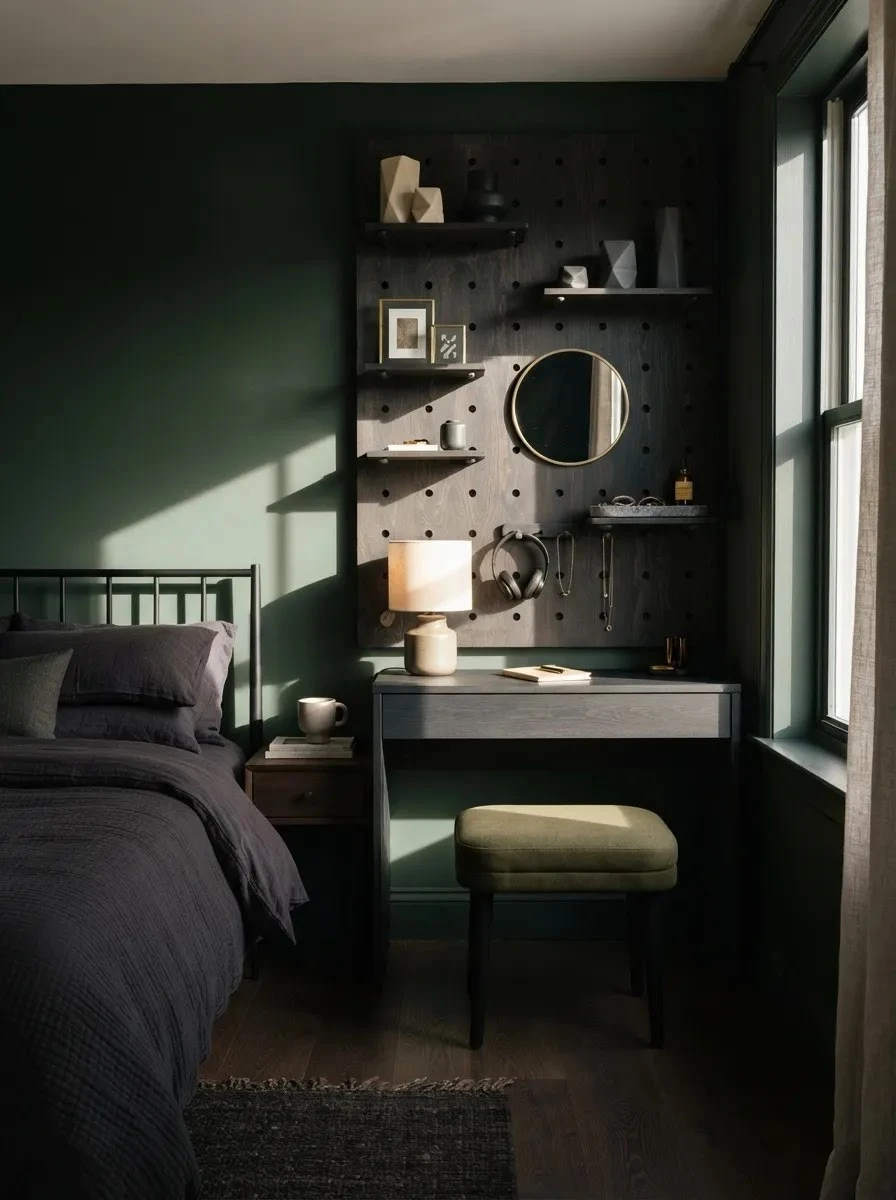
Pegboard Vanity Wall
Quick Tip:
A pegboard works best when the most-used items stay within easy reach rather than covering every available hole. Use matching hooks and small containers, then leave some open space so the wall feels organized instead of busy.
Vertical storage can rescue a tiny vanity from constant surface clutter. Hang brushes, jewelry, hair accessories, and lightweight organizers above the table while reserving the tabletop for daily essentials. Rearrange the hooks whenever your routine changes, making this especially useful for renters or anyone whose beauty collection grows over time.
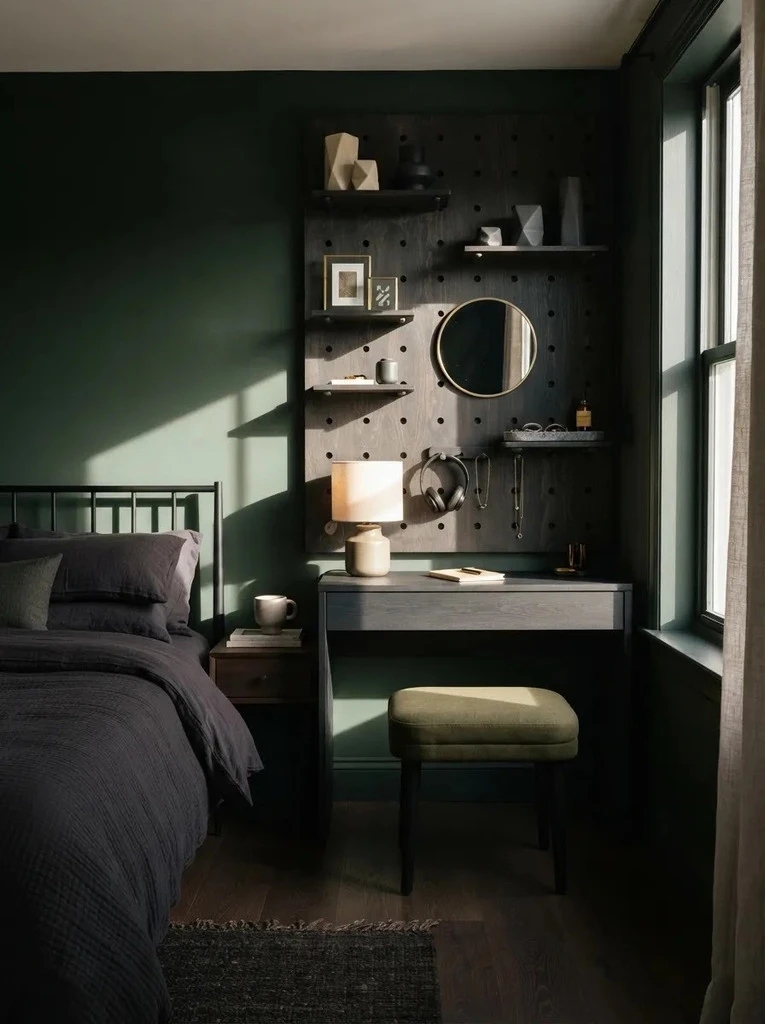
Alcove Dressing Nook
BEFORE:
A shallow bedroom recess often becomes wasted space filled with boxes, laundry, or random storage. Standard furniture may also be too deep to fit comfortably inside it.
AFTER:
A fitted shelf and wall mirror turn the recess into a dedicated dressing area without extending into the main room. Small shelves above provide extra storage while keeping the floor clear.
Awkward architecture can become useful when furniture is sized to the space rather than forced into it. Measure the alcove at several points because older walls are not always perfectly straight. A custom cut shelf can be surprisingly budget friendly, especially when paired with simple brackets and an existing stool.
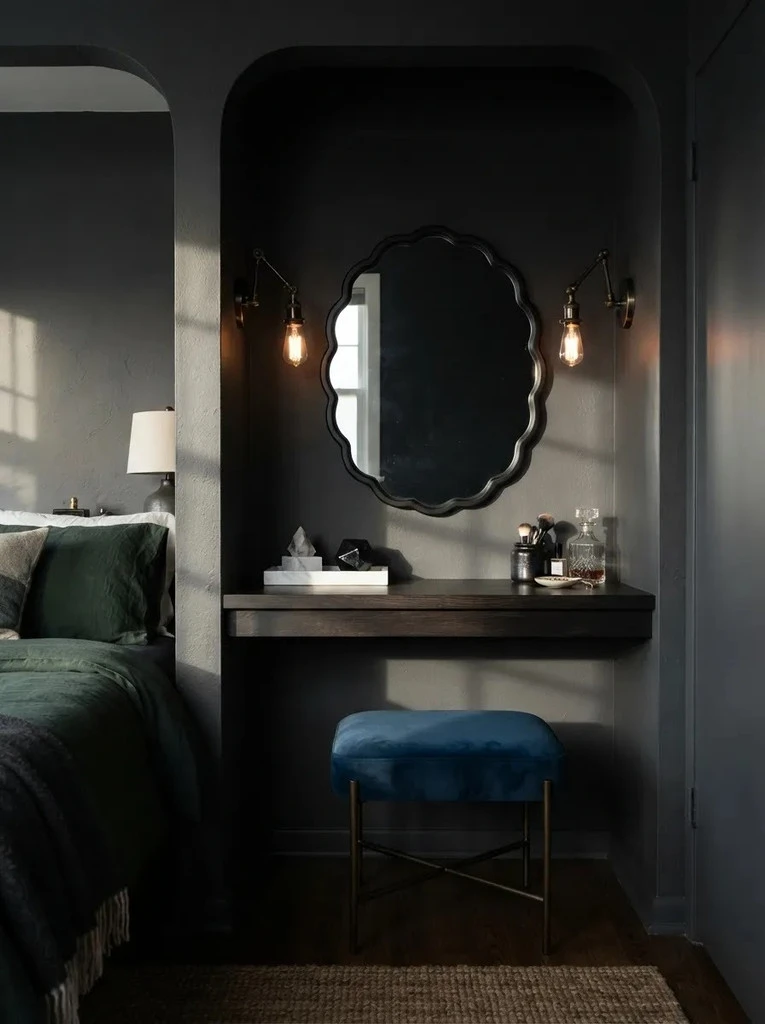
Lighted Mirror Vanity
- Choose a mirror with soft, even lighting rather than harsh exposed bulbs.
- Mount it at seated eye level so your face stays centered during daily routines.
- Use warm neutral or adjustable light settings for makeup and skincare tasks.
- Hide charging cables behind the vanity or secure them neatly along the wall.
- Keep the tabletop simple so the illuminated mirror remains visually balanced.
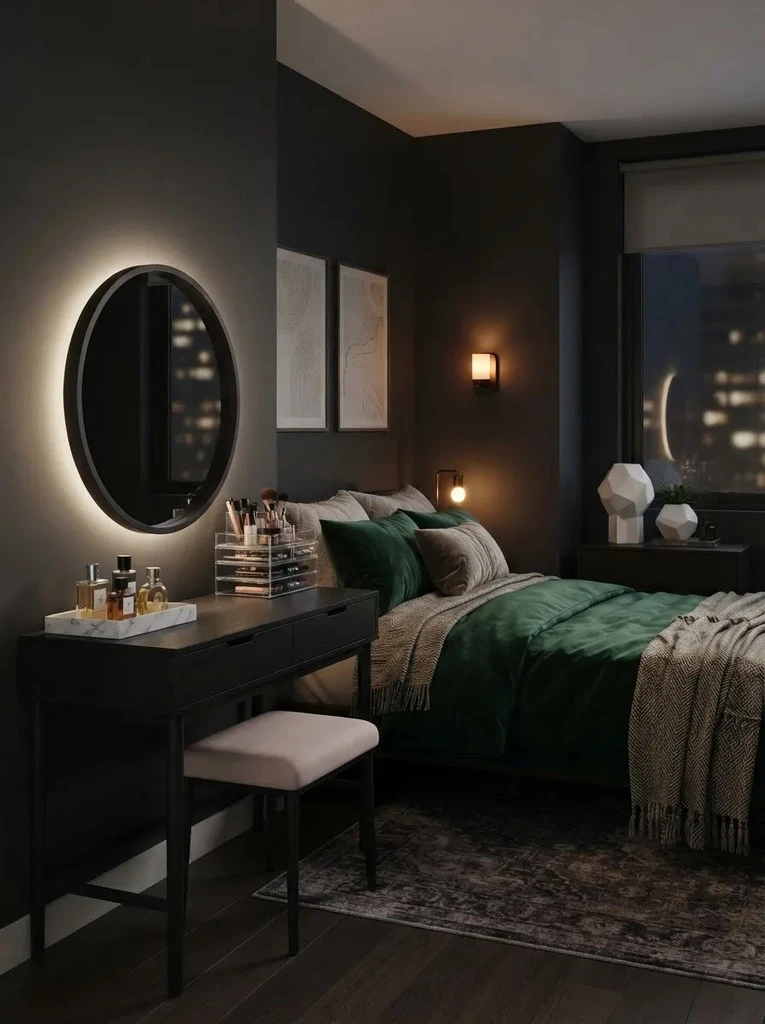
Good lighting can make a compact dressing area far more practical, especially in bedrooms with small windows or dark corners. Look for adjustable brightness so the mirror works during both early mornings and evenings. Avoid placing another strong lamp directly behind you, since competing light sources can create distracting shadows on your face.
Rolling Vanity Cart
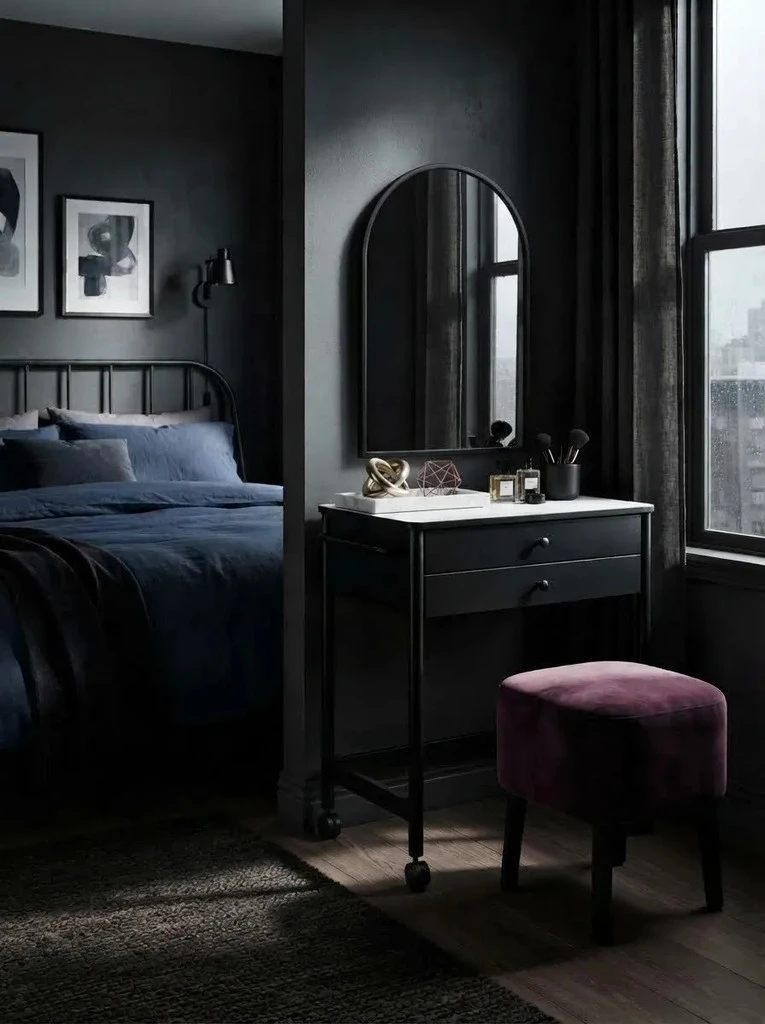
| Feature | Fixed Vanity | Rolling Vanity Cart |
| Flexibility | Stays in one position | Moves wherever needed |
| Floor Space | Permanently occupies an area | Can be stored after use |
| Storage | Usually built into drawers | Uses compact mobile compartments |
| Best For | Stable bedroom layouts | Very small or shared rooms |
A movable vanity gives you freedom when every corner serves more than one purpose. Roll it beside a window for better daylight, then park it near a wardrobe or empty wall afterward. Choose locking wheels for stability and keep heavier products in the lower drawers so the cart stays balanced.


CONCLUSION
Creating a useful dressing area in a compact room becomes much easier once you start looking at walls, corners, storage, and furniture differently. A well planned dressing table for small bedroom setup can give you a comfortable place to get ready without sacrificing valuable floor space. I’ve seen how thoughtful choices like floating shelves, hidden drawers, and multifunctional furniture can make small rooms feel far more organized. Pick one or two ideas that suit your layout and budget, then make them your own. Save this post on Pinterest for later, try your favorite setup, and share it with someone planning a small bedroom refresh.