
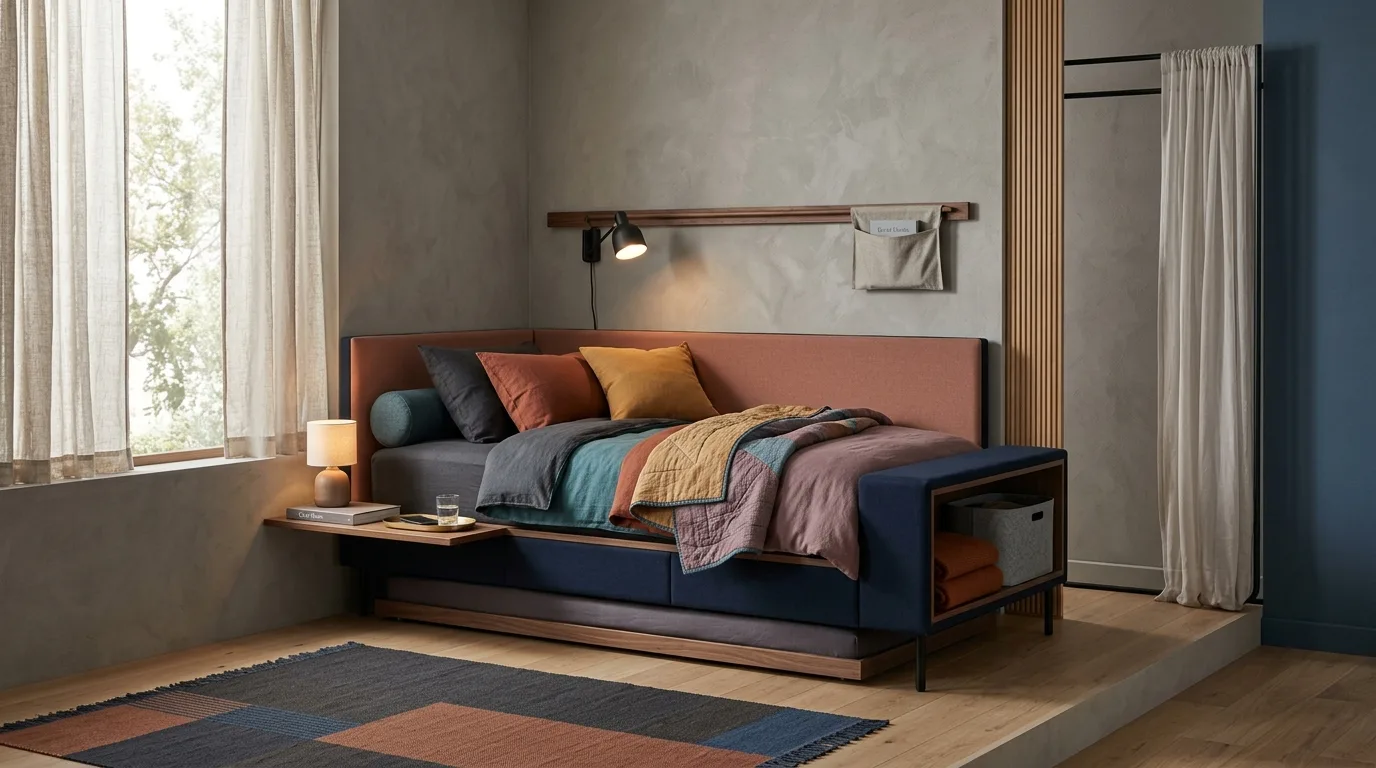
20 Relaxing Daybed Bedroom Ideas for Flexible Comfort
A small bedroom does not have to choose between comfort, style, and flexibility. The right Daybed bedroom setup can give you a cozy place to sleep, relax, read, or host a guest without filling the room with extra furniture.
These 20 ideas focus on practical layouts, smart storage, supportive backrests, compact bedside solutions, and flexible styling that can make limited square footage work harder. In my experience, daybeds are especially useful in rooms that need to serve more than one purpose throughout the day. You will find affordable inspiration for creating a space that feels organized, comfortable, and visually balanced while still leaving valuable floor space open.
Wall Hugging Daybed
A wall hugging layout can free surprising amounts of floor space while making a daybed bedroom feel calmer and easier to navigate. Position the long side directly against the wall, then leave the opposite side open for walking, dressing, or placing a compact nightstand without creating a cramped passage.
In my experience, this arrangement works especially well in narrow rooms where a centered bed wastes useful space. Keep the frame visually light and limit bulky accessories. The clearer floor line makes the room feel wider while still giving you a comfortable place for sleeping, reading, or relaxing.
Daybed Backrest Panel
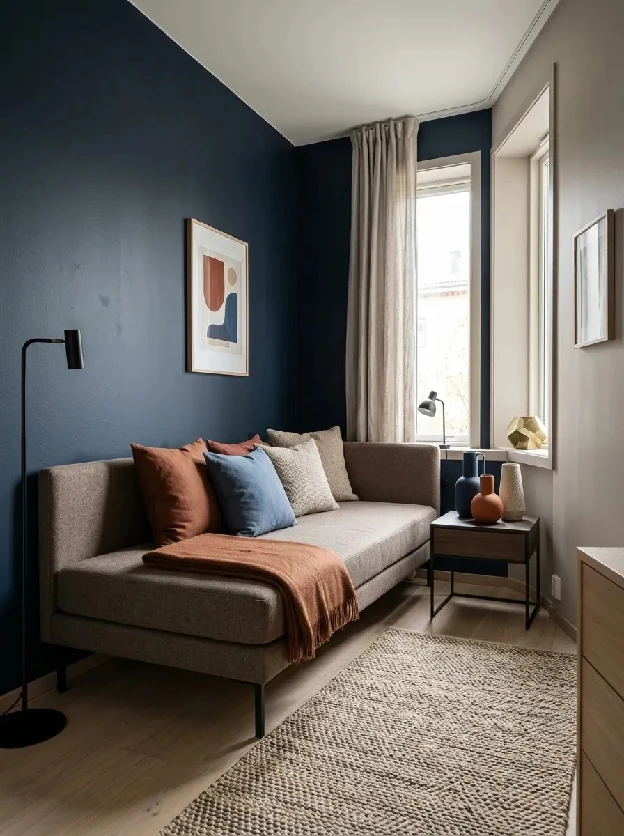
- Choose a padded panel slightly wider than the mattress so the sleeping zone feels intentional and balanced.
- Mount it at comfortable shoulder height for sitting, reading, or working from the daybed.
- Select durable upholstery such as performance linen or tightly woven fabric that handles regular contact well.
- Keep the panel fairly slim so it does not steal valuable inches from a small room.
- Pair it with two supportive cushions rather than filling the mattress with decorative pillows.
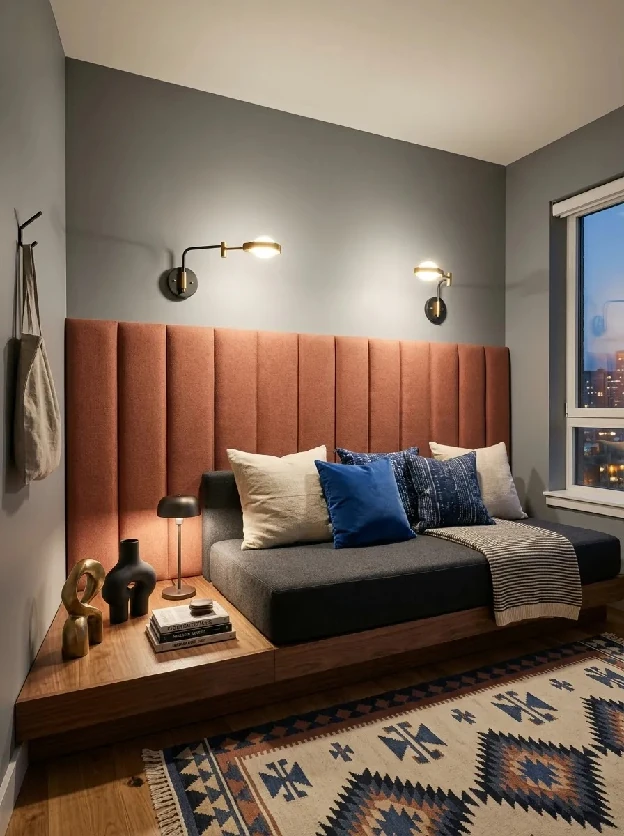
A structured backrest gives the daybed a sofa-like function during the daytime without adding another piece of furniture. It also protects the wall from marks caused by constant leaning. For budget-conscious rooms, a simple upholstered plywood panel can create the same practical effect as a costly custom installation.
Footboard Storage Cubby
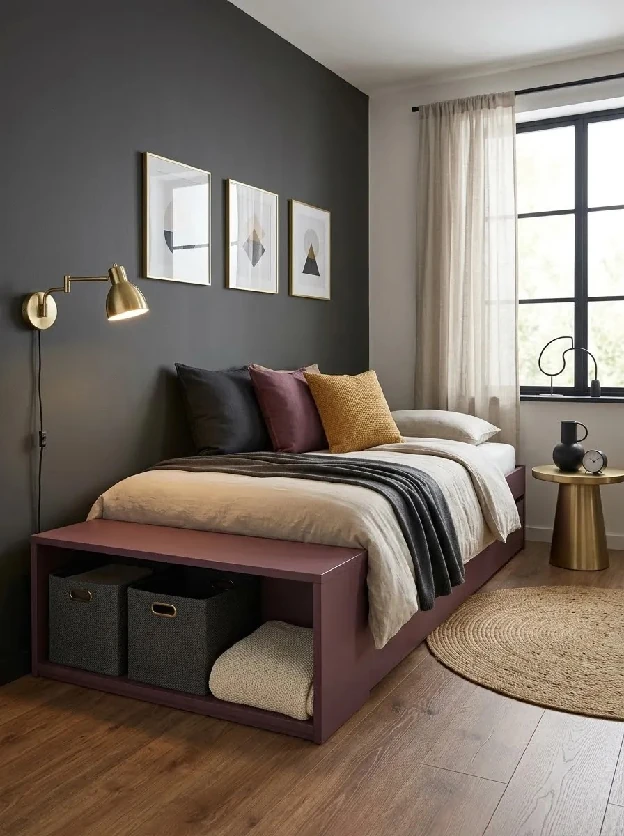
Quick Tip:
Keep the foot cubby shallow enough that it does not make the frame feel bulky. Store soft items such as spare bedding, rolled throws, or fabric bins there so frequently used essentials stay easy to reach.
Small bedrooms benefit most from storage that occupies space the furniture already needs. A footboard cubby adds useful capacity without requiring another cabinet or basket on the floor. Keep its contents organized and visually simple, especially when the compartments remain open, because clutter at the bed’s end can quickly make a compact room feel busy.
Corner Daybed Nook
BEFORE
The daybed sits away from the walls, leaving awkward gaps that collect clutter and make the room feel chopped up. The walking path narrows, and the sleeping area looks disconnected from the rest of the room.
AFTER
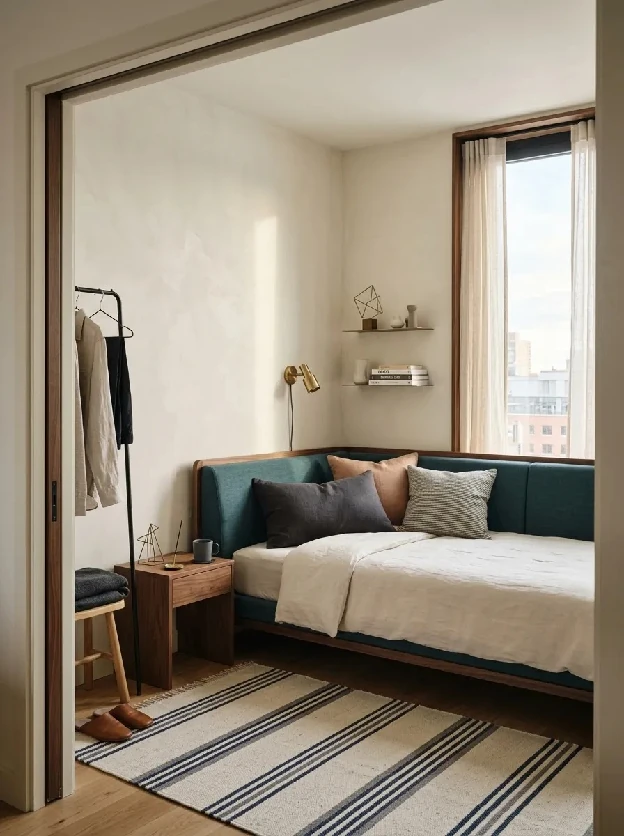
Tucking the frame into a corner creates a defined resting zone and opens more usable floor space. The layout feels calmer, and the extra wall support makes the bed more comfortable for sitting during the day.
A corner placement is especially useful in square or slightly narrow bedrooms where every clear pathway matters. I’ve seen this work well when the room also needs space for a dresser or small desk. Keep the nearby wall decor restrained so the nook feels intentional rather than crowded.
Slim Side Ledge
- Measure the gap beside the frame and keep the ledge narrow enough for easy movement.
- Mount it around mattress height so essentials remain comfortable to reach.
- Choose a shallow top for a lamp, phone, water glass, or book.
- Keep the surface mostly clear so it does not become a clutter shelf.
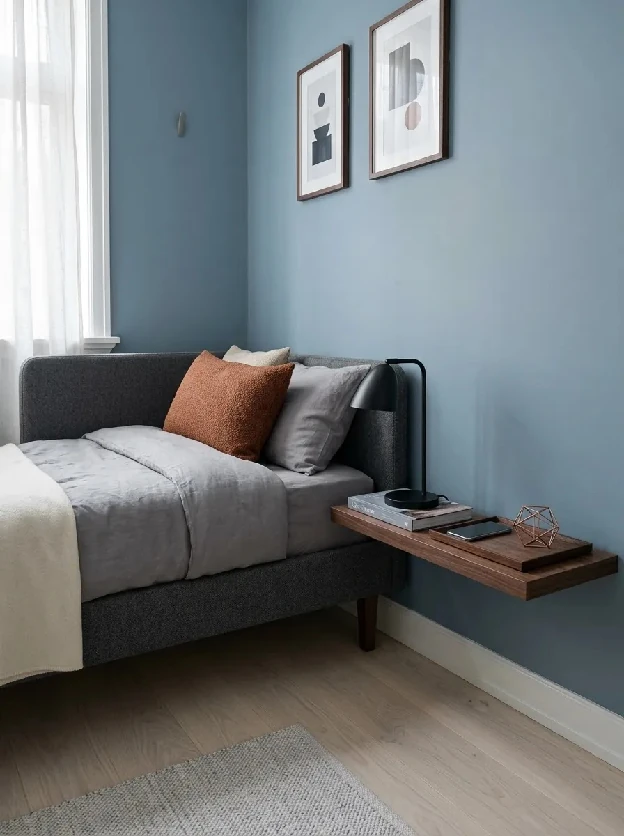
A slim ledge replaces a bulky bedside table while still giving the sleeper a practical landing spot. This matters in tight layouts where even a small nightstand can block movement. A wall mounted version also keeps the floor visible, which helps a compact bedroom feel lighter and easier to clean.
Raised Daybed Base
| Feature | Standard Low Base | Raised Base |
|---|---|---|
| Storage | Limited or none | Space for shallow drawers |
| Visual Effect | Casual and low profile | More structured and defined |
| Best Use | Very minimal rooms | Rooms needing hidden storage |
| Access | Closer to floor | Easier for some adults to sit on |
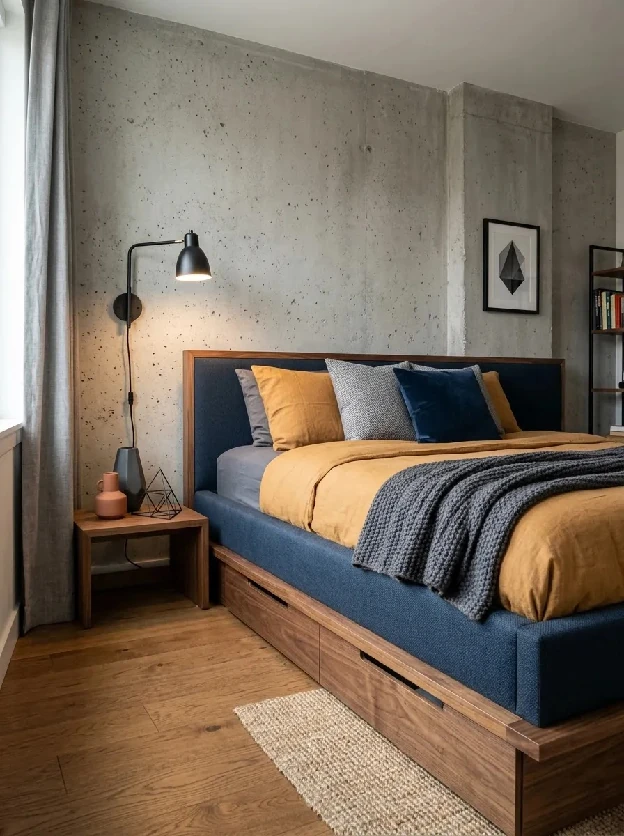
A slightly raised base can make a compact sleeping area work harder without turning it into a bulky storage bed. The extra height creates room for shallow drawers while giving the frame a more finished look. Keep the platform proportions slim so the piece still suits a small bedroom rather than dominating it.
Pullout Guest Mattress
DO
- Choose a pullout mattress that slides fully beneath the main frame.
- Leave enough clear floor space for the lower bed to extend safely.
- Store lightweight bedding nearby for quick guest setup.
- Test the mechanism before buying to make sure it moves smoothly.
DON’T
- Block the pullout area with heavy furniture.
- Choose an overly thick lower mattress that catches on the frame.
- Ignore ventilation around stored bedding.
- Overfill the surrounding floor with baskets or decor.
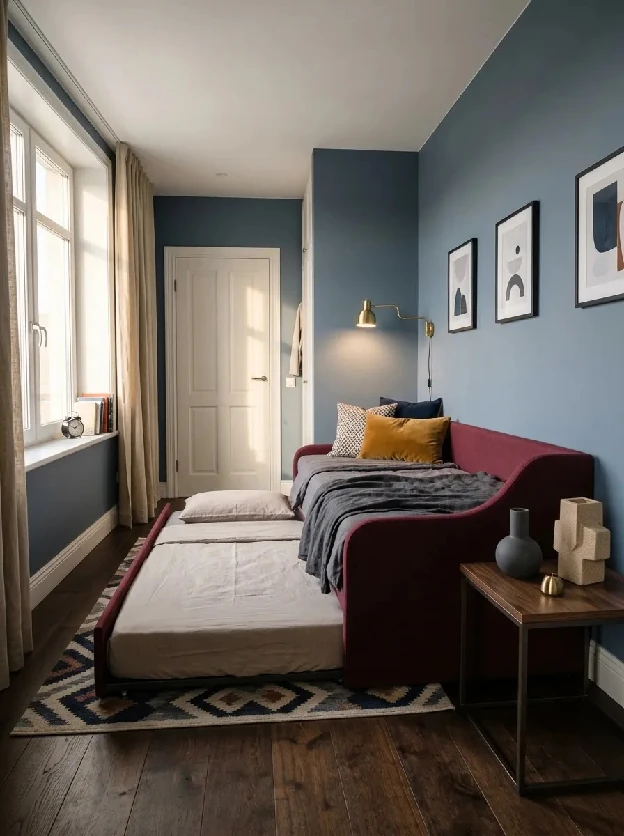
A hidden second mattress adds sleeping capacity without permanently sacrificing valuable floor space. It works especially well in children’s rooms, guest bedrooms, or multipurpose spaces where overnight visitors are occasional. Keep the pullout path completely clear so the setup stays practical rather than becoming frustrating every time it is needed.
Bolster Pillow Backing
Cost: Low to moderate
Skill Level: Beginner
Best For: Daytime lounging and reading
Works In: Narrow bedrooms and multifunctional rooms
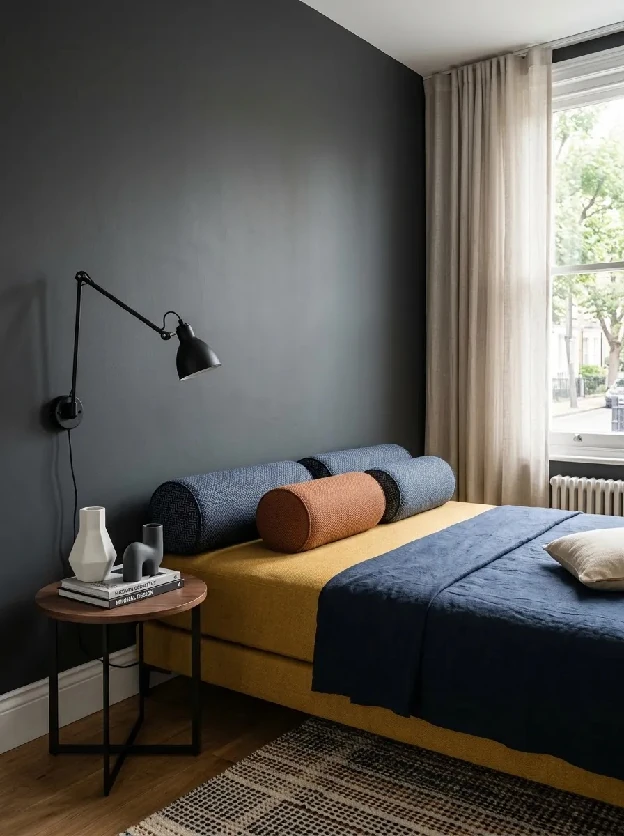
Structured bolster pillows can make a daybed feel more supportive without filling it with oversized cushions. I’ve noticed that firmer shapes stay neater than soft decorative pillows after repeated use. Place them along the back edge and add only one or two smaller cushions so the sleeping surface remains easy to clear at night.
End Shelf Extension
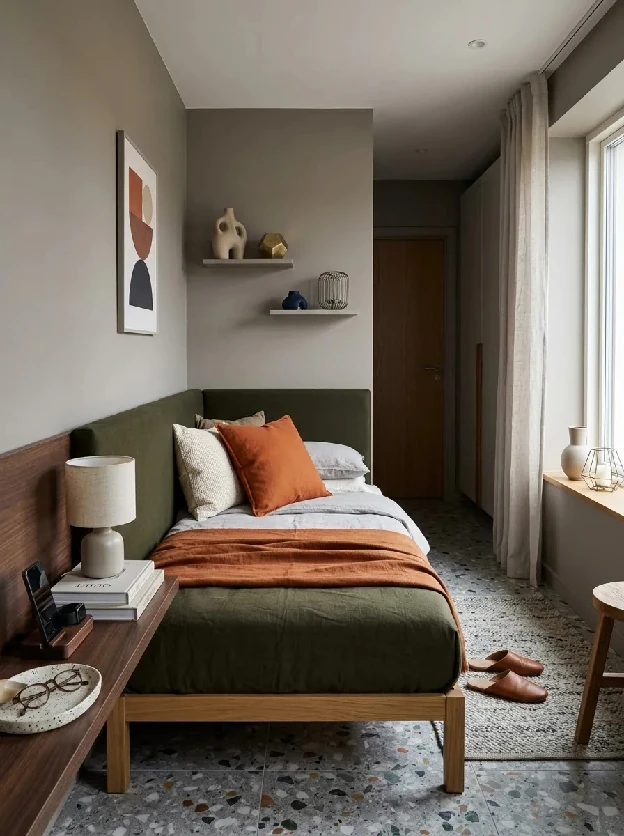
An end shelf can replace another piece of furniture while keeping daily essentials close to the sleeping area. Extending the frame by only a few inches provides enough room for a book, phone, lamp, or water glass without taking up the floor area required by a standard bedside table.
Keep the extension proportionate to the daybed and avoid loading it with decor. A shallow integrated shelf works best because it keeps the frame visually unified. For tight bedrooms, this small detail can improve function while preserving a wider walkway and making the furniture arrangement feel more deliberate.
Curtained Daybed Alcove
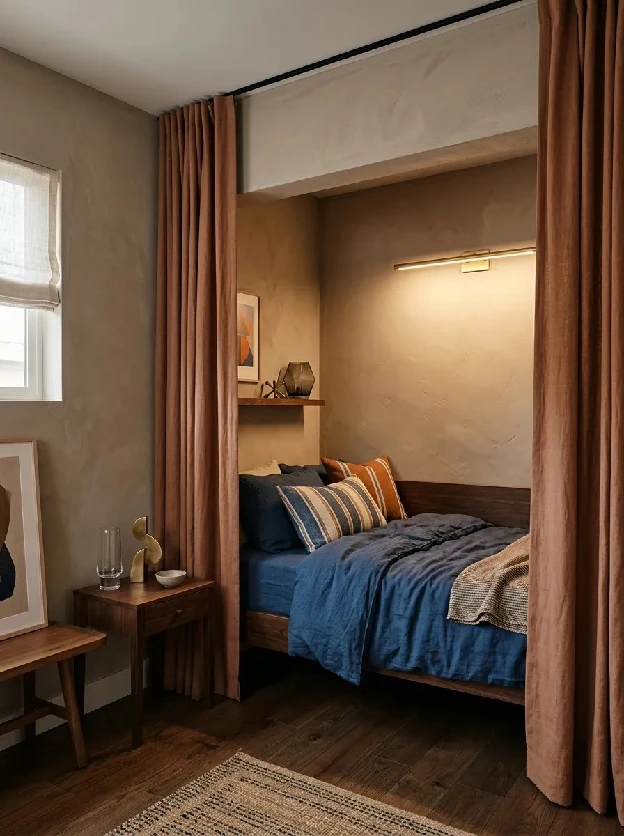
- Mount curtains close to the ceiling to make the alcove feel taller and more intentional.
- Choose medium weight fabric that provides privacy without making the nook feel heavy.
- Keep the curtain panels wide enough to close fully around the sleeping area.
- Use wall mounted lighting so the floor and side space remain clear.
- Pair the enclosure with simple bedding to avoid visual overload.
A curtained alcove gives a daybed more privacy while keeping the room flexible during the day. It can help separate sleeping from working or dressing without building a permanent divider. For small bedrooms, the biggest advantage is that the enclosure adds definition without taking up extra floor space.
Daybed Reading Rail
Quick Tip:
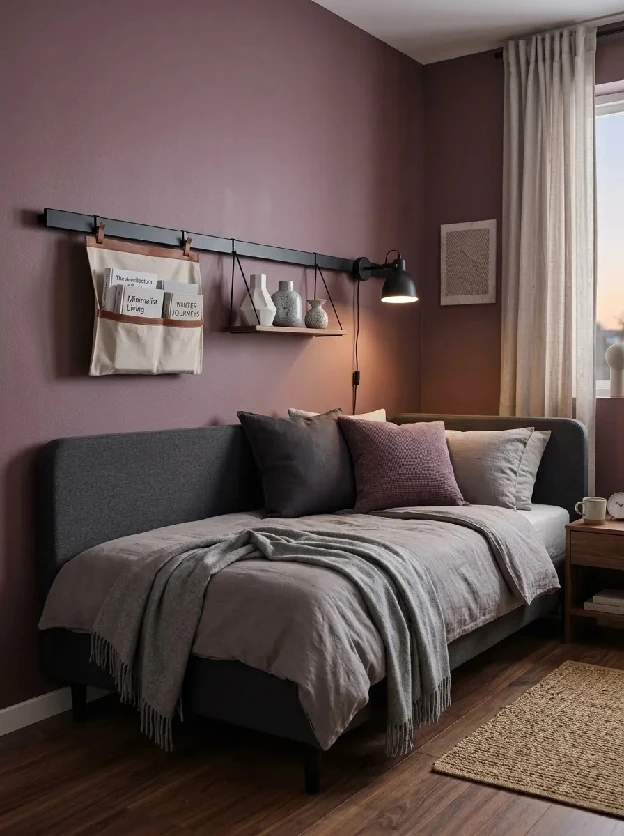
Keep the rail narrow and place it just above seated shoulder height. Use only lightweight accessories so the wall system stays practical and does not make the sleeping zone feel cluttered.
A reading rail adds function without introducing another bulky table or cabinet. It works especially well in bedrooms where the daybed doubles as a reading seat during the day. Keep the setup simple with one lamp, one small storage attachment, and clear wall space around it for a cleaner result.
Open Frame Daybed
BEFORE
A bulky solid base makes the daybed feel visually heavy and blocks much of the visible floor. In a small bedroom, that can make the whole layout seem tighter than it really is.
AFTER
An open frame reveals more floor beneath the bed and creates a lighter visual footprint. The room feels more spacious, and cleaning around the frame also becomes easier.
Open framed furniture can help a compact bedroom feel less crowded because more of the floor remains visible. That visual continuity matters in tight layouts. Choose a sturdy frame with slim legs and keep storage underneath minimal so the open look stays intentional rather than turning into exposed clutter.
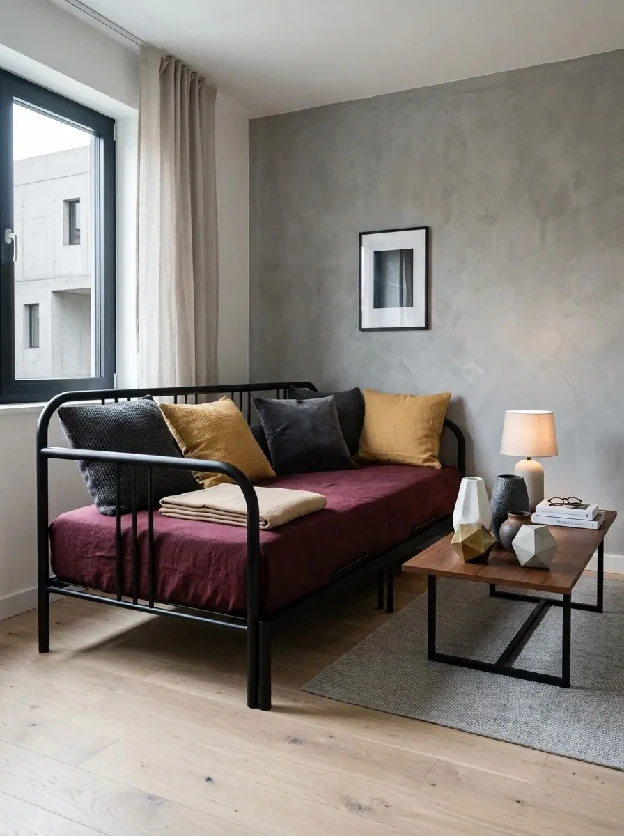
Lift Up Daybed Base
- Choose a lift mechanism that opens smoothly without requiring too much force.
- Reserve the compartment for bedding, seasonal blankets, or rarely used items.
- Use soft storage bags to prevent loose items from shifting inside.
- Keep frequently needed essentials elsewhere for faster daily access.
Hidden storage under the mattress keeps bulky items out of sight without adding another cabinet to the room. It is especially useful where floor space is limited. A lift up base works best when the stored items are lightweight and organized, so opening the compartment stays simple and practical.
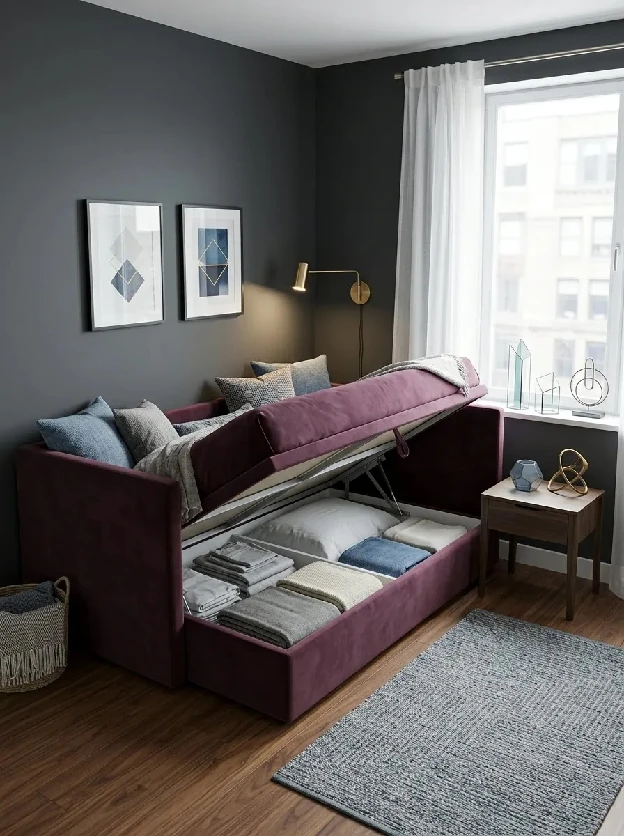
Armless Daybed Frame
| Feature | Framed Ends | Armless Frame |
|---|---|---|
| Visual Weight | More enclosed | Lighter and more open |
| Access | Mostly from front | Easy from several sides |
| Best Fit | Defined sleeping nook | Very tight bedrooms |
| Styling | More structured | Flexible and minimal |
An armless frame reduces visual bulk and makes a small bedroom feel easier to move through. It also gives you more freedom to sit from either end during the day. Choose supportive back cushions and keep the mattress edges neat, since the simpler frame leaves more of the sleeping surface visible.
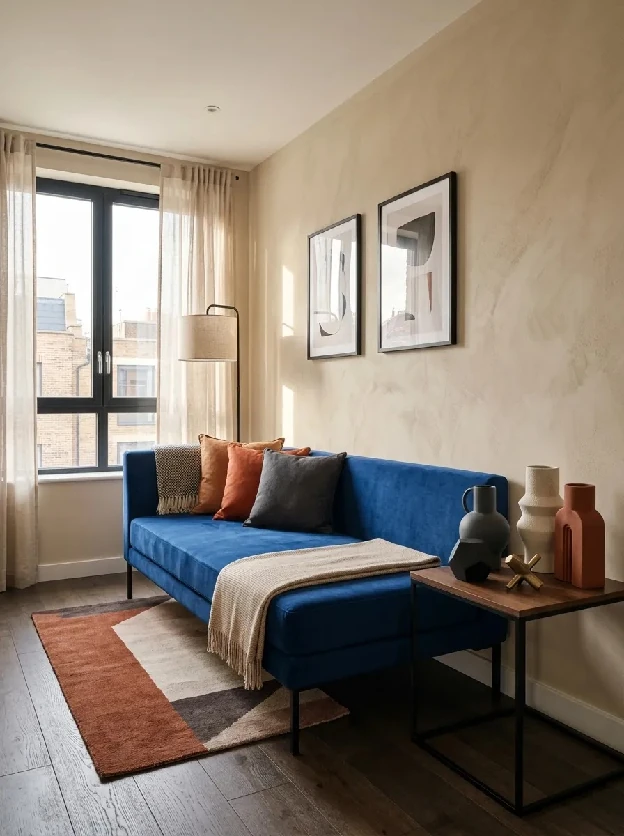
Fold Down Bedside Shelf
DO
- Mount the shelf at comfortable mattress height.
- Choose sturdy hardware that locks securely when opened.
- Keep the surface limited to lightweight daily essentials.
- Fold it away when you need a wider walkway.
DON’T
- Use a shelf that projects too far into the room.
- Place heavy decor on a folding mechanism.
- Block drawers or pathways beneath it.
- Leave loose charging cables hanging across the floor.
A fold down shelf gives you bedside function only when you need it, which is valuable in narrow rooms. I’ve seen this work especially well where a permanent nightstand would restrict movement. Keep the shelf compact and uncluttered so its main advantage, reclaiming floor space, stays noticeable.
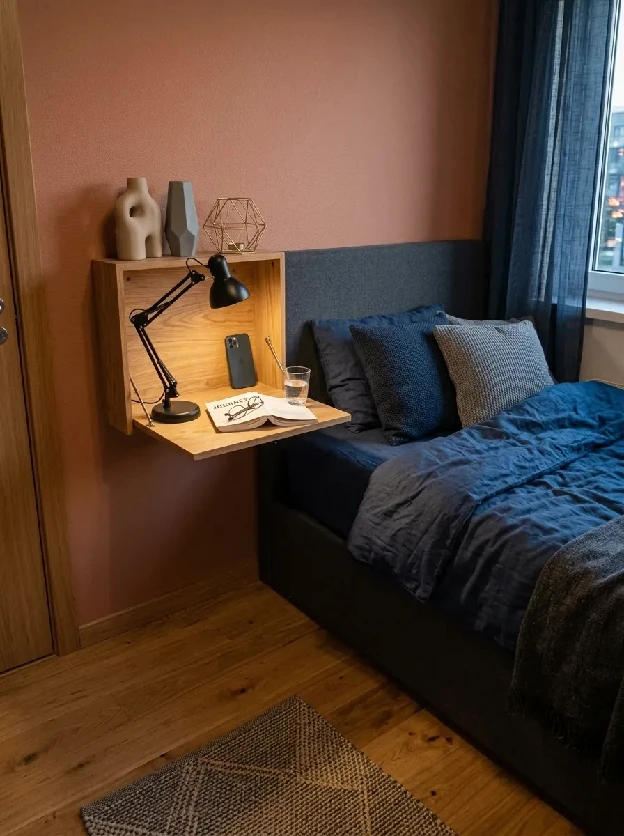
Daybed Privacy Screen
Cost: Moderate
Skill Level: Beginner to intermediate
Best For: Shared or multifunctional bedrooms
Result: More privacy without closing off the room
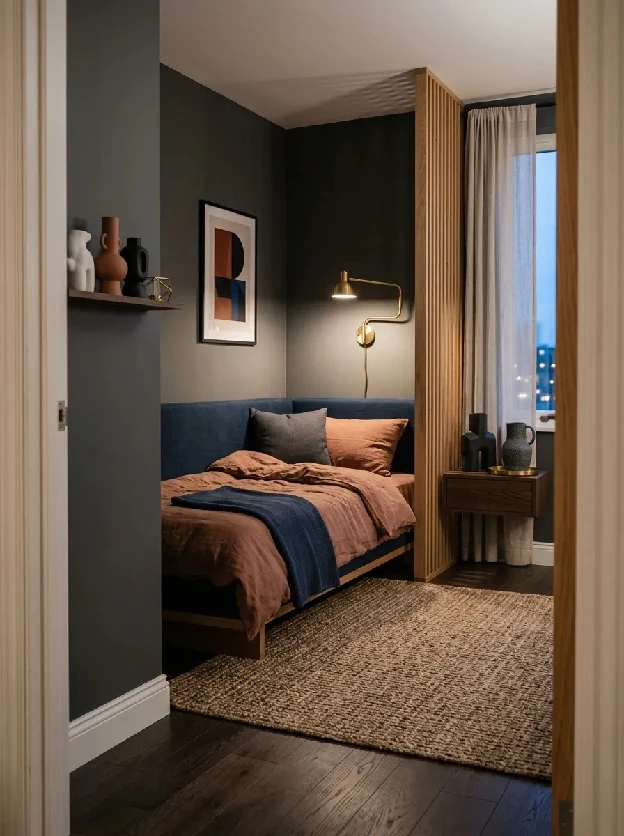
A slim privacy screen can separate the sleeping zone without making a small bedroom feel boxed in. Choose an open slatted design so light still travels through the room. Position it near one end of the daybed rather than across the entire space to preserve airflow and an easy walking path.
Daybed Window Alignment
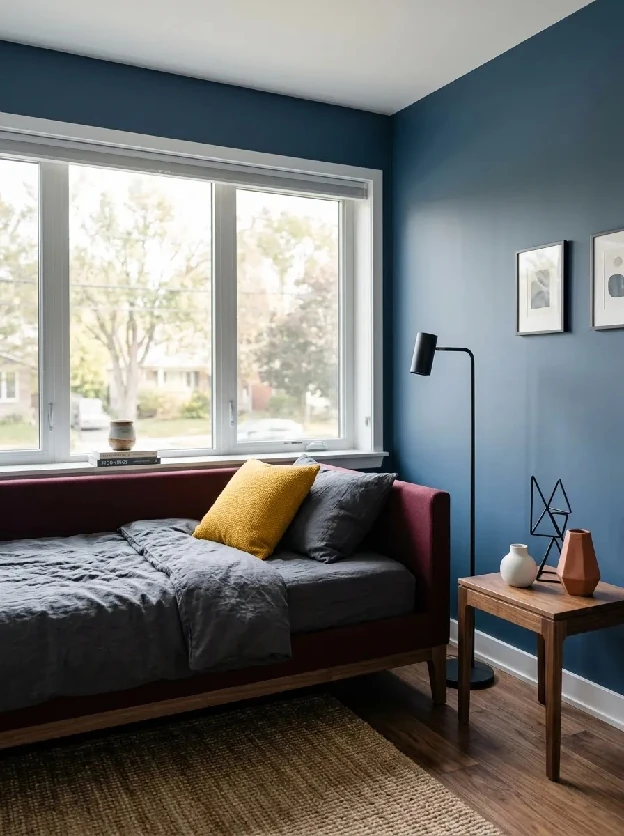
Placing the daybed beneath a window can turn an awkward wall into a practical sleeping and lounging zone. Keep the frame low enough that it does not block too much natural light, and choose simple window treatments that can open fully during the day.
I’ve noticed this arrangement works best when the sill remains slightly above the mattress height. It gives the room a stronger visual connection to the outdoors while preserving floor space elsewhere. Avoid tall back cushions that cover the glass, especially in bedrooms that already rely on one main window for daylight.
Reversible Daybed Cover
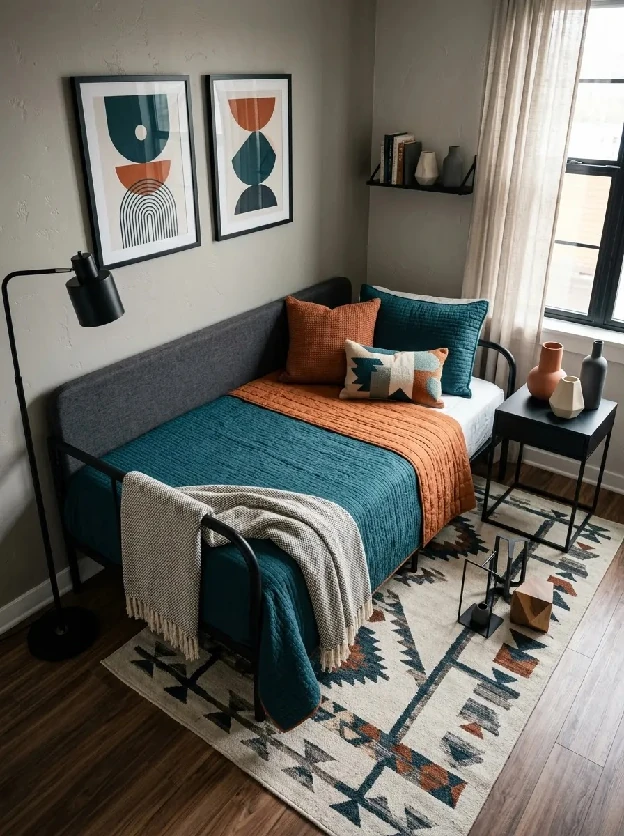
- Choose two contrasting but coordinated colors so the room can change mood without new furniture.
- Use washable fabric that can handle frequent sitting, sleeping, and folding.
- Pick a quilt large enough to cover the mattress edges neatly during daytime use.
- Pair it with only a few cushions so changing the look stays quick.
- Store the matching pillow covers nearby for easy seasonal swaps.
A reversible cover is an affordable way to refresh a small bedroom without replacing major pieces. It also helps a daybed shift between a polished daytime seat and a softer sleeping setup. Choose colors that work with the existing walls and flooring so both sides feel intentional.
Daybed Canopy Frame
Quick Tip:
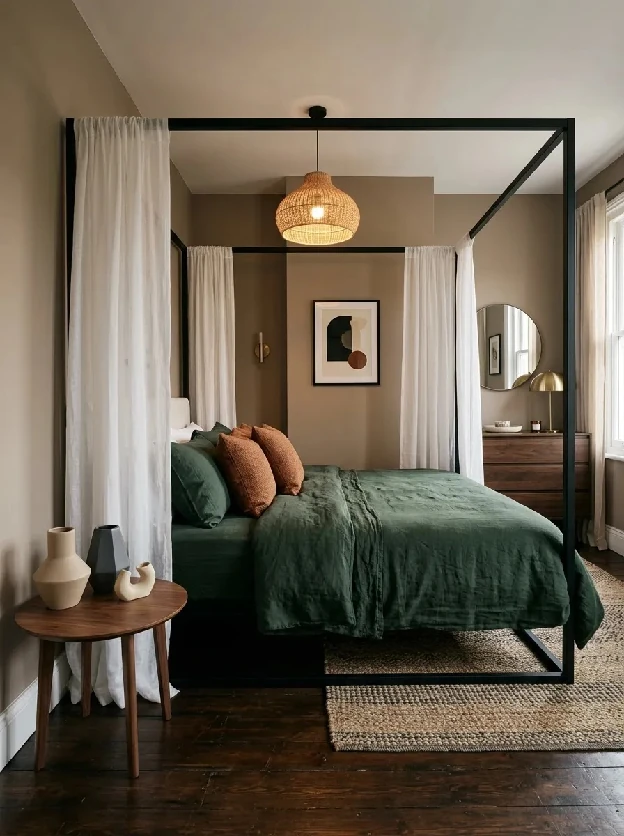
Keep the canopy frame visually light and avoid heavy fabric on all four sides. One or two sheer panels are enough to soften the sleeping zone without making a compact room feel enclosed.
A slim canopy structure gives the daybed a stronger sense of place while keeping the footprint unchanged. It works especially well in bedrooms that need a defined focal point without extra furniture. Choose narrow metal posts and breathable fabric so the setup feels airy rather than visually heavy.
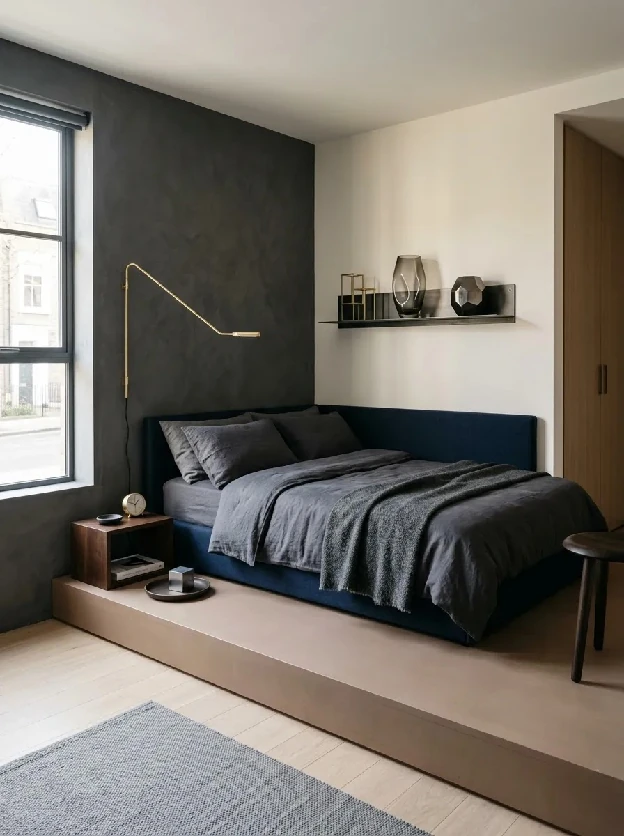
Daybed Accent Platform
BEFORE
The daybed blends into the rest of the room, making the sleeping area feel visually undefined. Furniture seems scattered, and the layout lacks a clear focal point.
AFTER
A shallow platform creates a distinct sleeping zone without adding walls or bulky dividers. The room feels more organized, and the daybed gains a stronger visual presence.
A low platform can make a small bedroom feel more structured while still keeping the layout open. Keep the height modest so the room remains easy to move through. This works best when the platform edge is simple and the surrounding decor stays restrained, helping the daybed remain the clear focal point.
Conclusion
A thoughtfully planned Daybed bedroom can make a small space feel more useful without sacrificing comfort or personality. From hidden storage and slim shelves to guest mattresses, privacy features, and space-saving layouts, even one practical change can improve how the room functions every day.
I’ve seen how carefully chosen furniture details can make compact bedrooms feel calmer and easier to use. Save this post on Pinterest so you can return to your favorite ideas, try the solutions that fit your room and budget, and share the article with someone who is also looking for smart small-bedroom inspiration.