23 Dramatic Master Bedroom Accent Wall Ideas to Wow
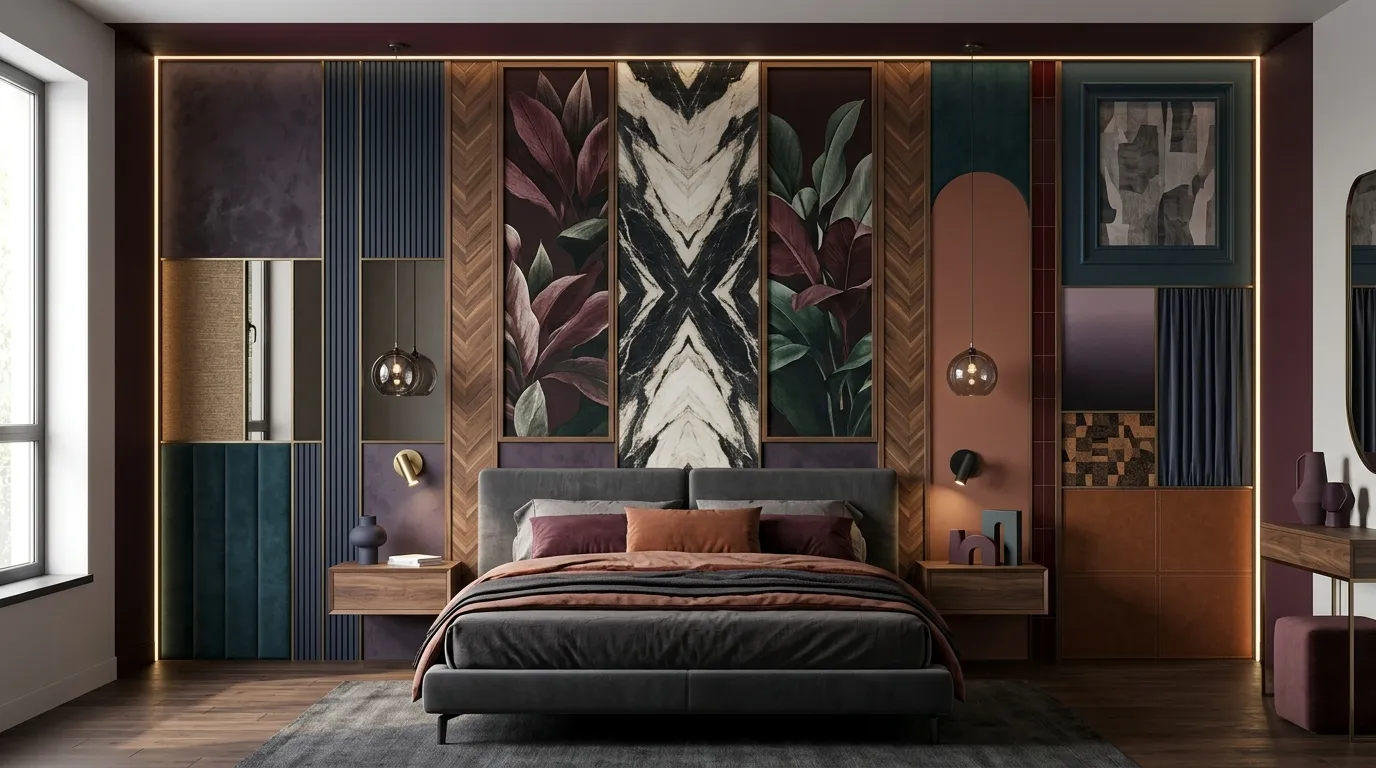
A plain bedroom wall can make even a well-decorated space feel unfinished. The right Master bedroom accent wall can bring depth, personality, and a stronger focal point without filling a small room with extra furniture or accessories.
Bookmatched Marble Mural
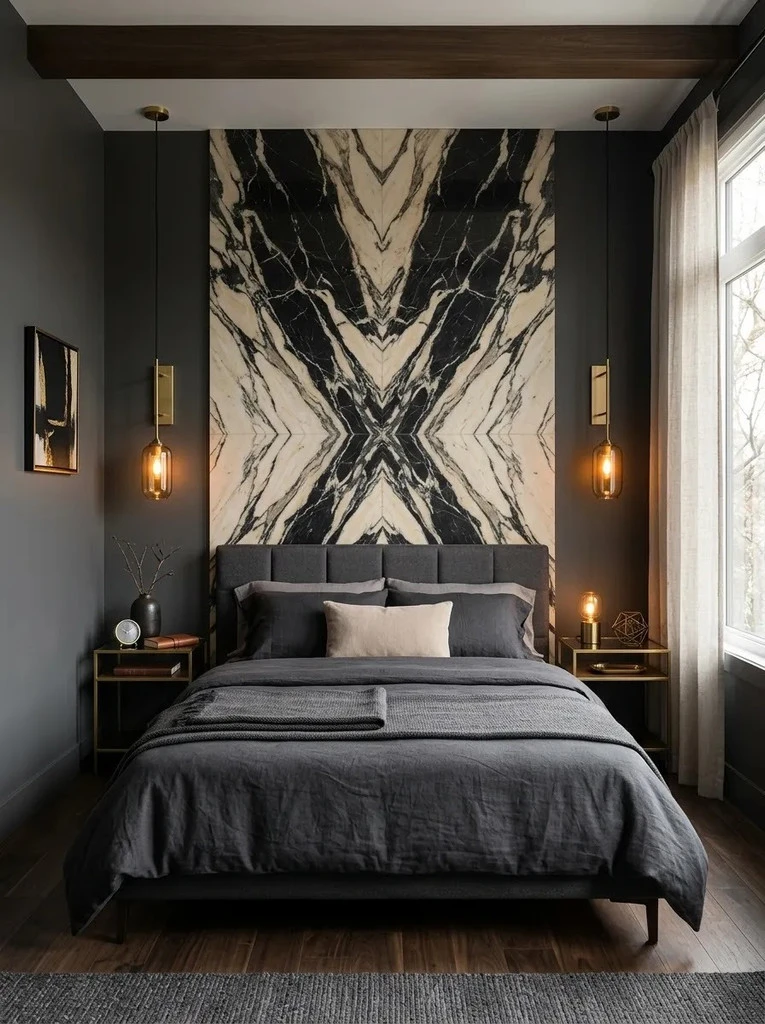
A marble effect can give a compact bedroom a strong focal point without taking away a single inch of floor space. For a Master bedroom accent wall, a large bookmatched pattern works especially well because the mirrored veining creates symmetry behind the bed and makes the entire setup feel intentional.
Choose removable mural panels or marble effect wallpaper instead of real stone to control costs and wall weight. Keep nearby bedding mostly solid so the veining remains the main feature. In my experience, fewer competing patterns help a dramatic wall feel sophisticated rather than crowded in a smaller bedroom.
Oversized Botanical Mural
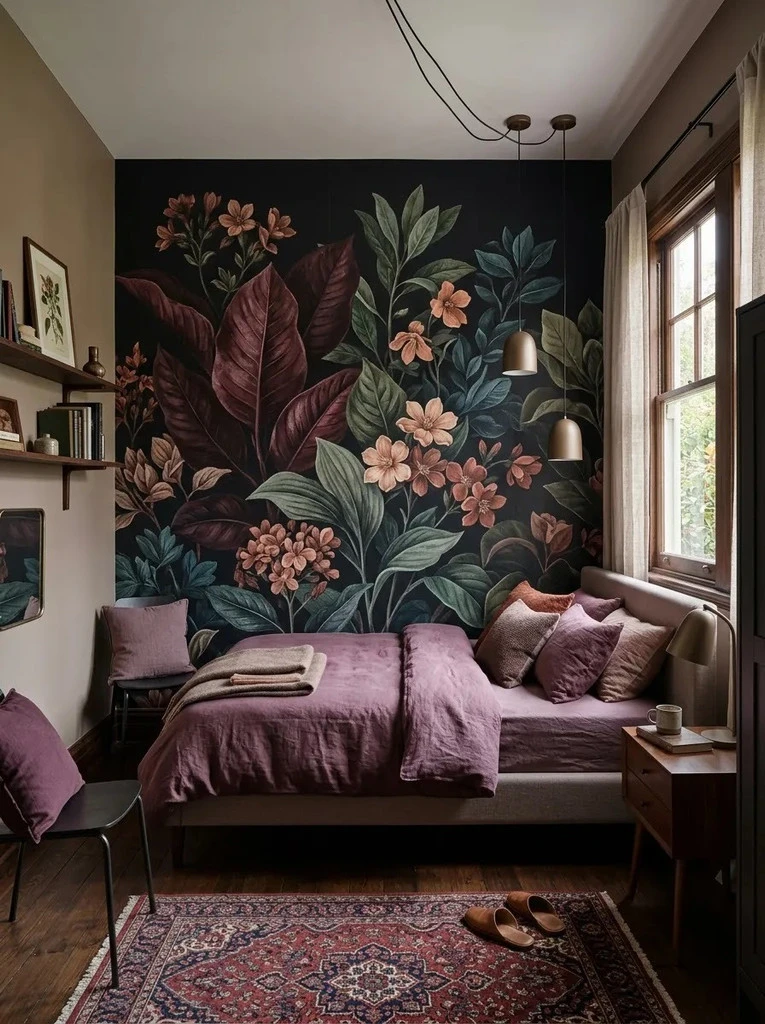
- Choose one large botanical composition instead of several tiny repeating prints so the wall feels calmer and more purposeful.
- Position the strongest flowers or leaves around the bed rather than directly behind pillows where important details may disappear.
- Repeat one mural color in a throw, cushion, or lamp shade to connect the room.
- Keep surrounding walls simple so the mural does not compete with extra visual noise.
- Use peel and stick wallpaper when you want a lower commitment update.
Large scale botanicals create depth because oversized leaves and flowers visually pull the wall beyond its physical boundary. I’ve noticed darker murals work especially well in small bedrooms when balanced with controlled lighting and simpler furniture. The result feels dramatic and layered without requiring bulky decorative pieces that consume valuable space.
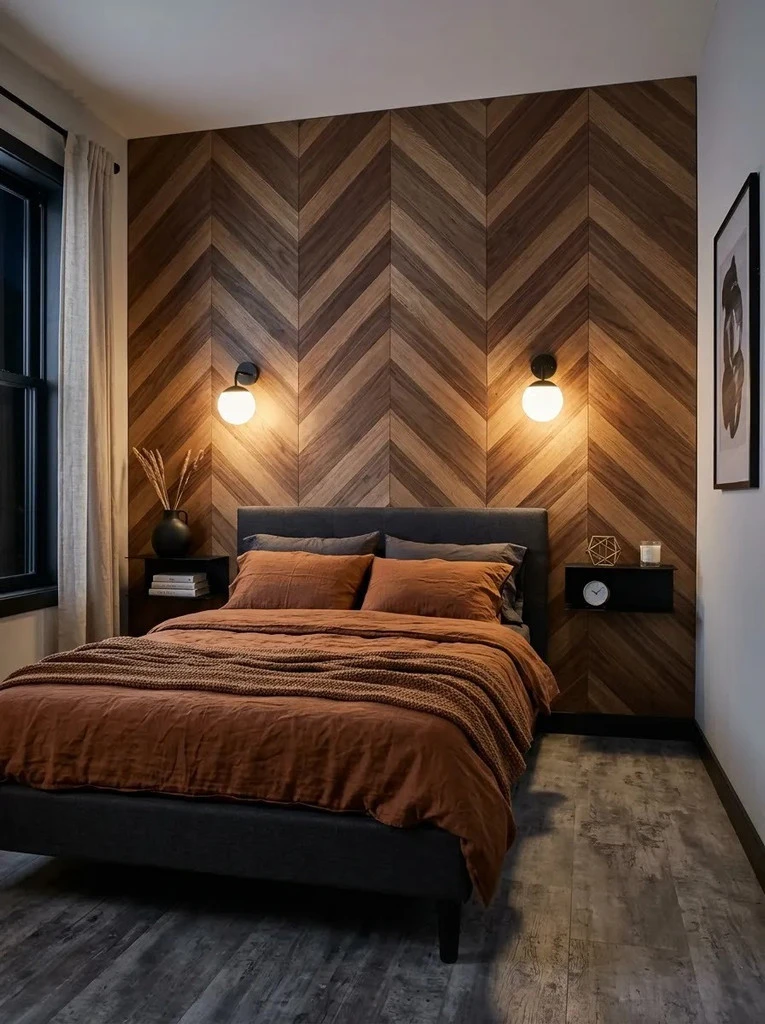
Chevron Wood Inlay
Quick Tip:
Keep the chevron pattern moderately sized rather than using very narrow strips. Larger sections create cleaner movement and are easier for beginners to align accurately. Use lightweight decorative panels when installing solid timber would exceed the budget.
Angular wood lines naturally draw the eye upward and across the wall, helping a narrow bedroom appear more dimensional. Choose two closely related wood tones so the pattern remains noticeable without becoming busy. A matte finish also reduces glare from bedside lighting and gives the wall a warmer, more convincing architectural character.
Moody Limewash Finish
BEFORE
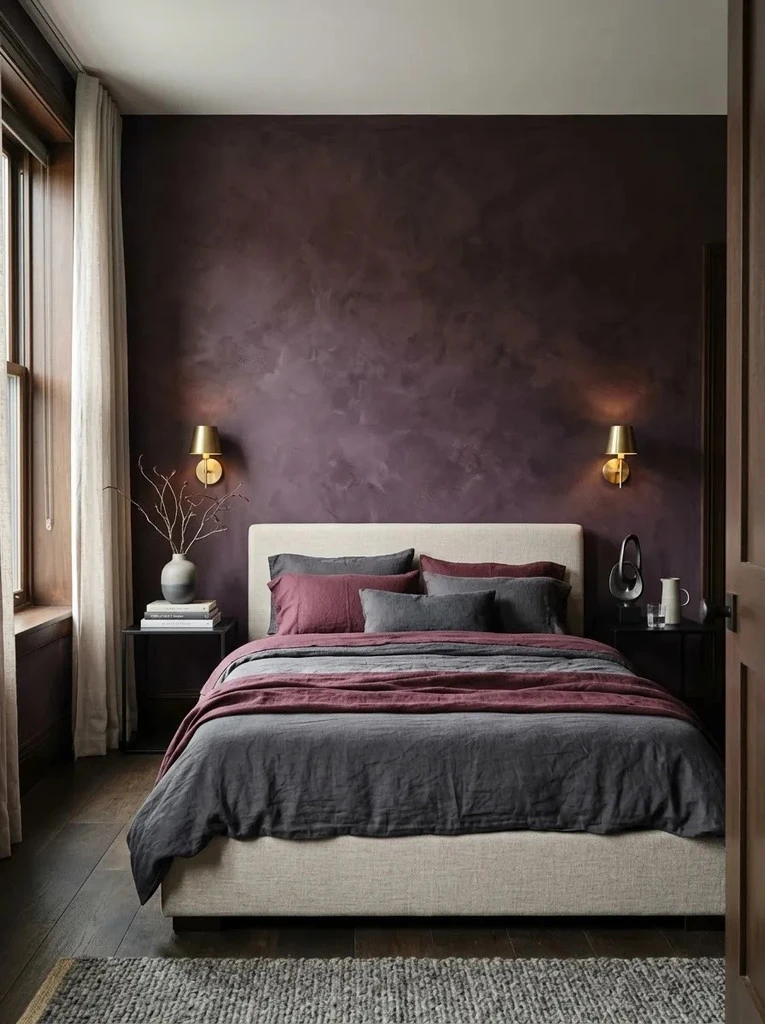
A flat painted wall can feel unfinished, especially when the bedroom relies on only one strong color for interest. In a small space, adding more furniture or decor to fix that emptiness can quickly create clutter.
AFTER
Limewash brings soft tonal movement and visible depth without adding physical bulk. The uneven finish gives the wall a handcrafted look while keeping the room calm and visually connected.
For the richest result, apply two or three thin coats with a wide masonry brush and vary your strokes rather than working in straight rows. Dark plum, oxblood, charcoal, and muted cocoa shades create drama without feeling harsh. Test a sample first because limewash often dries lighter than it appears wet.
Fluted Panel Backdrop
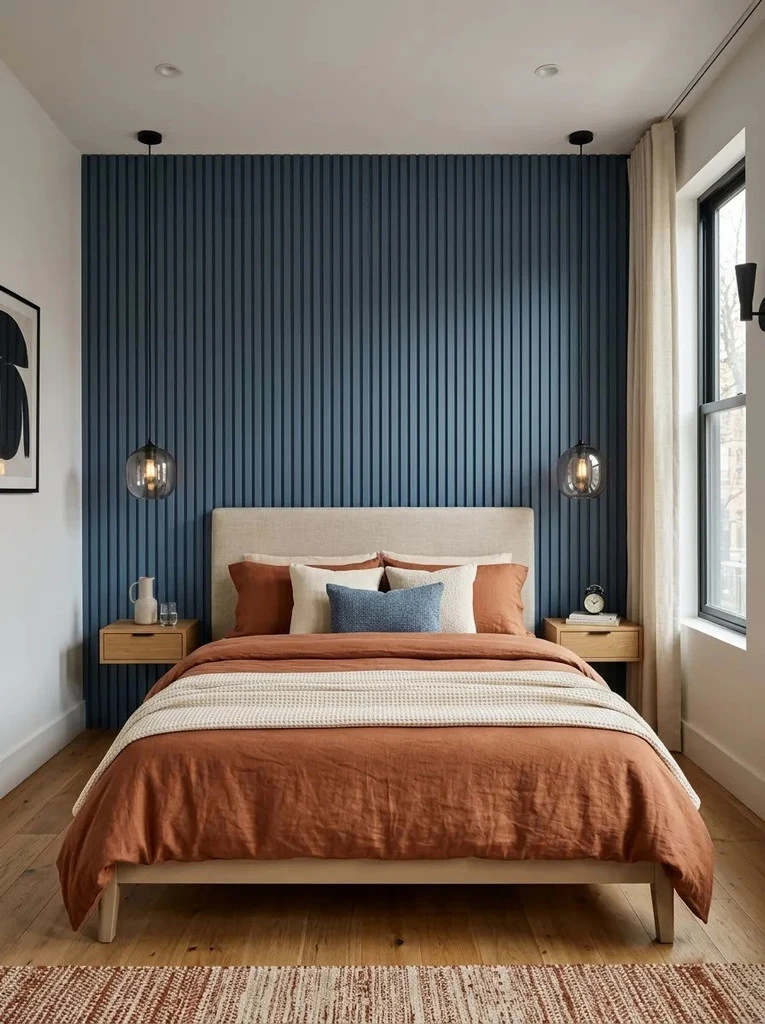
- Measure the wall and mark the bed centerline before planning panel placement.
- Choose lightweight MDF or decorative composite slats for a more affordable installation.
- Space each flute evenly so the vertical rhythm stays clean and balanced.
- Paint the panels before final installation to avoid visible gaps along the grooves.
- Finish with slim wall lights instead of bulky bedside lamps.
Vertical fluting adds height and structure, which is especially useful when a small bedroom has low ceilings or limited decorative space. I’ve seen this work well behind compact beds because the repeated lines provide enough detail on their own. Keep nearby furniture simple so the panel texture remains the main architectural feature.
Fabric Wrapped Panels
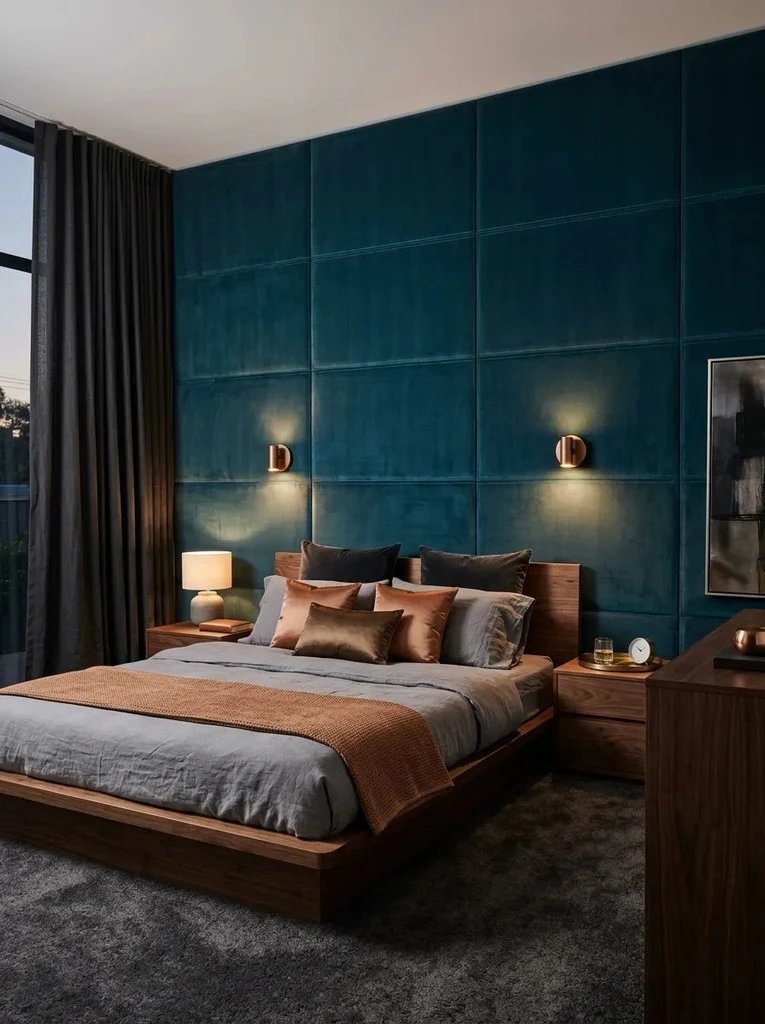
| Detail | Standard Upholstery | Wall Panel Approach |
| Coverage | Mainly the headboard | Extends across the wall |
| Visual Impact | Focused around the bed | Creates a full backdrop |
| Sound Softening | Moderate | Greater fabric surface area |
| Installation | Single furniture piece | Several lightweight panels |
Fabric panels soften both the look and acoustics of a compact bedroom while creating a strong focal surface behind the bed. For a budget conscious version, wrap plywood or lightweight foam boards with upholstery fabric and mount them individually. Deep teal, plum, tobacco, or charcoal can deliver drama without relying on busy patterns.
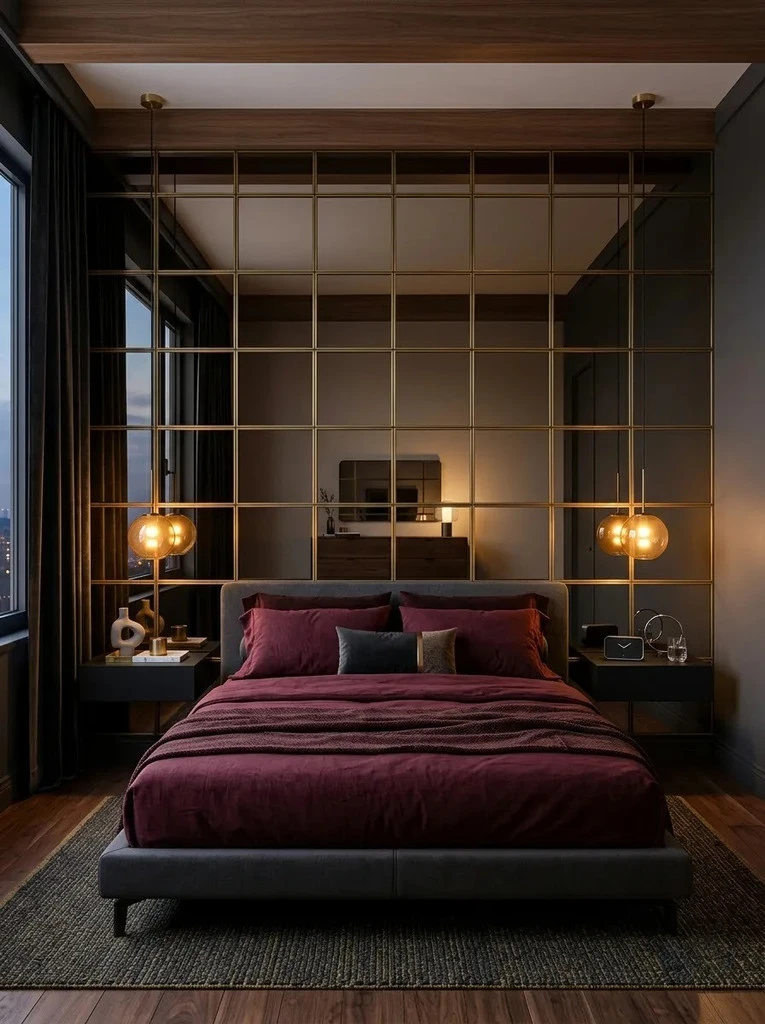
Smoked Mirror Grid
DO
- Use smoked or bronze tinted mirrors instead of bright clear mirrors for a softer reflective effect.
- Divide the surface into large panels so the wall feels structured rather than fragmented.
- Position bedside lighting carefully to prevent harsh glare.
- Keep bedding and accessories mostly matte to balance the reflective finish.
DON’T
- Cover every bedroom wall with a mirror.
- Use tiny mirror tiles that create excessive visual movement.
- Place strong exposed bulbs directly opposite the reflective surface.
- Add several other glossy finishes beside the feature wall.
Reflective panels can visually extend a compact bedroom while adding a darker, more polished character behind the bed. Bronze or smoked finishes feel calmer than standard mirrors and work especially well with warm lighting. Keep reflections simple by limiting clutter on the opposite side of the room.
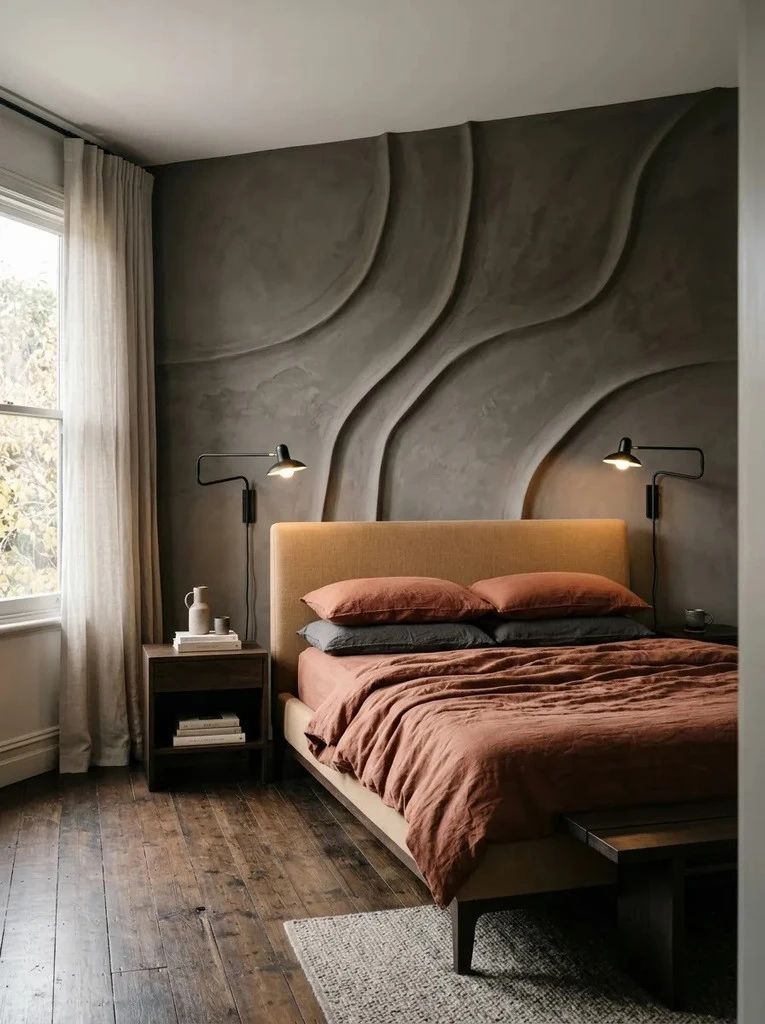
Sculpted Plaster Relief
Cost: Moderate, especially with prefabricated relief panels
Skill Level: Intermediate
Best For: Bedrooms needing texture without patterned wallpaper
Works In: Modern, contemporary, and organic interiors
Raised plaster forms create real shadow, so the wall changes subtly as daylight and bedside lighting shift throughout the day. In my experience, broader relief patterns suit small rooms better than very intricate designs because they remain visually calm. A single muted color also lets the three dimensional texture provide the drama.
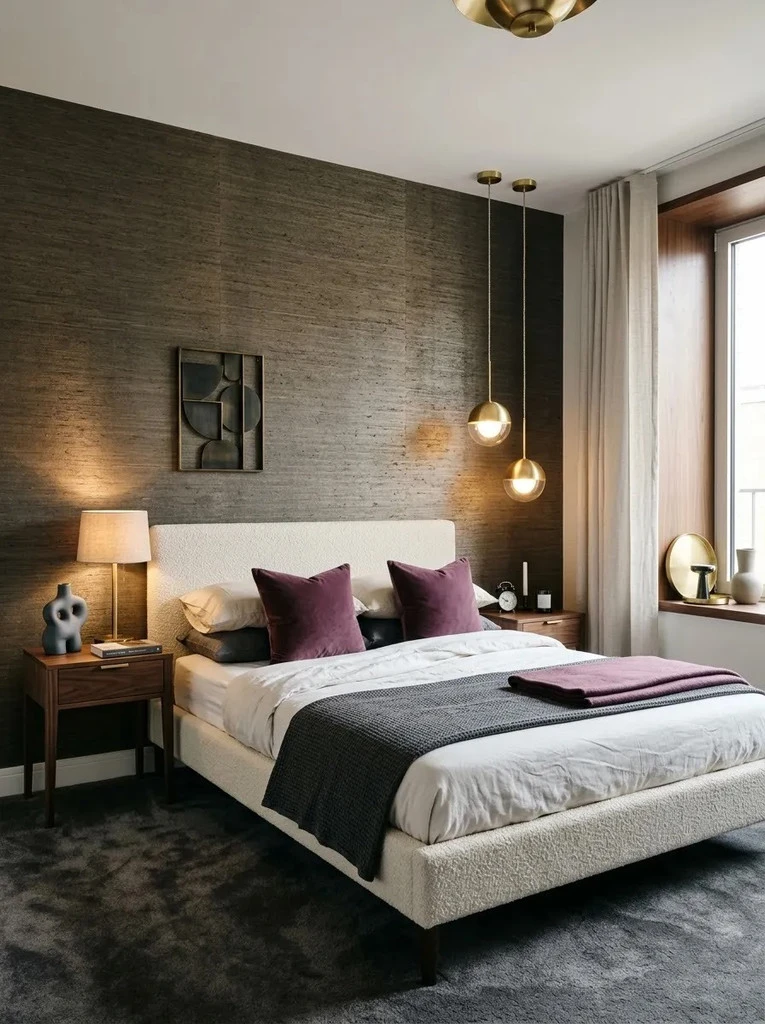
Metallic Grasscloth Wall
Metallic grasscloth gives a wall subtle shine without the hard reflection of glass or polished metal. Its woven surface catches light differently across the day, which can make a compact sleeping area feel richer and more layered while still keeping the backdrop relatively quiet.
Choose bronze, graphite, pewter, or dark copper rather than highly reflective gold if the room is small. I have noticed that low sheen finishes are easier to live with because they add depth without creating glare. Keep seams carefully aligned, since visible joins become more noticeable on textured wallcoverings.
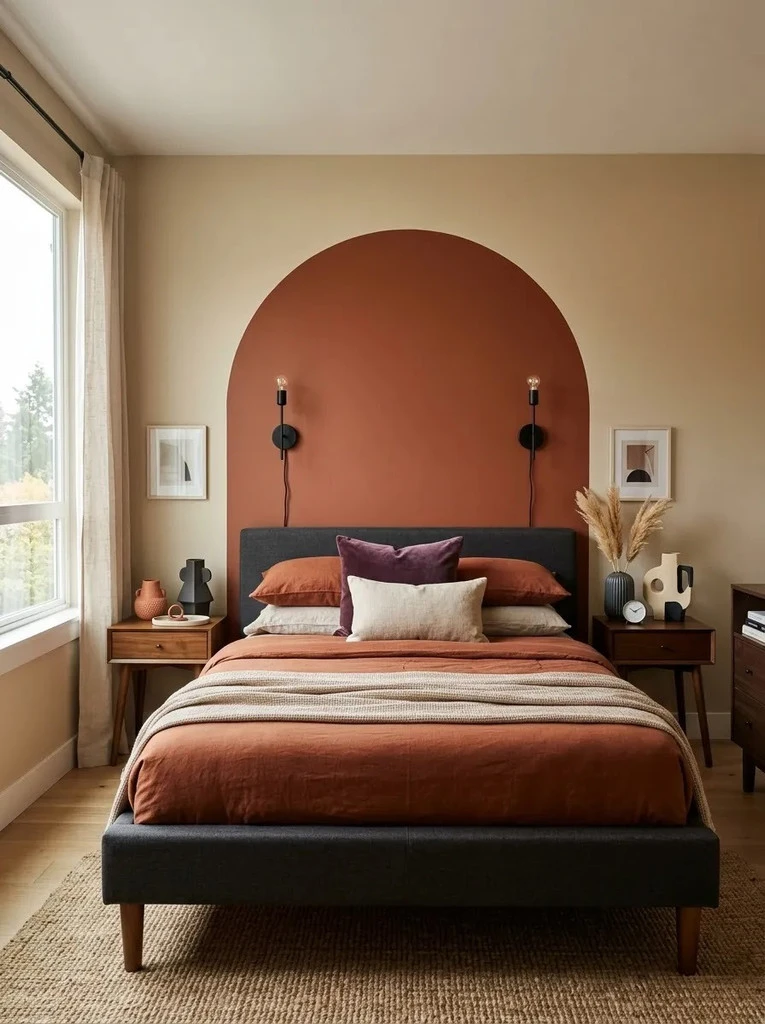
Arched Color Block
- Mark the arch with painter’s tape and a string guide before applying color.
- Choose one saturated shade such as terracotta, wine, navy, or deep clay.
- Keep the arch wider than the bed so the feature feels intentional.
- Use a matte finish to reduce glare and make the color look richer.
- Repeat the wall shade once in a cushion or throw for visual balance.
A painted arch creates architectural definition without requiring paneling, wallpaper, or expensive materials. It works especially well in a small bedroom because the shape frames the bed and draws attention upward. Keep the rest of the wall simple so the curved color block remains crisp and easy to read.
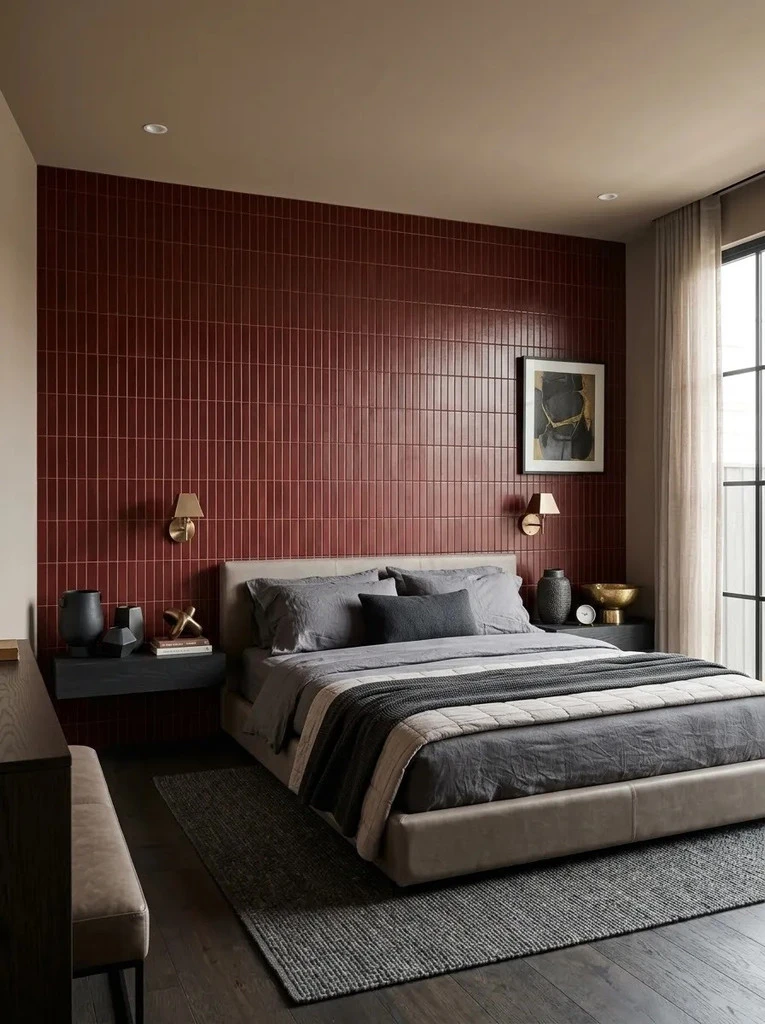
Vertical Tile Feature
Quick Tip:
Use long narrow tiles and install them vertically to make the wall appear taller. Choose a lightly textured or handmade look rather than a highly glossy finish if the bedroom receives strong direct light.
Tile is not limited to bathrooms and kitchens. A narrow tiled section behind the bed can create a strong master bedroom accent wall while remaining easy to wipe clean. Deep burgundy, graphite, petrol blue, or brown tiles bring drama, while matching grout keeps the surface cohesive instead of visually busy.
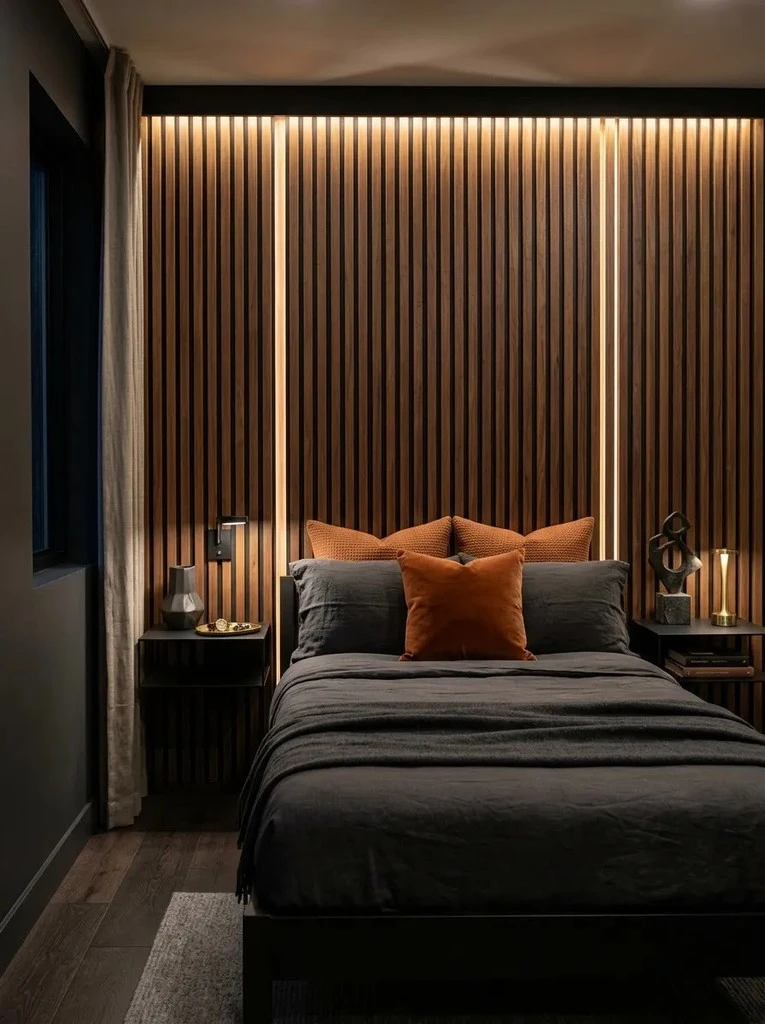
Backlit Slat Wall
BEFORE
A plain dark wall may provide color but still feel flat once the main lights are switched off. Adding several lamps can also consume valuable bedside space and create visible cords.
AFTER
Wood slats paired with concealed lighting add texture, vertical emphasis, and a soft glow directly to the wall. The feature feels dimensional at night while keeping the floor and nightstands clear.
Install LED channels behind selected slats rather than lighting every gap, which can make the wall overly bright. Warm white light usually works best with walnut, oak, or smoked timber finishes. Choose dimmable strips so the feature can shift from practical evening lighting to a softer glow before sleep.
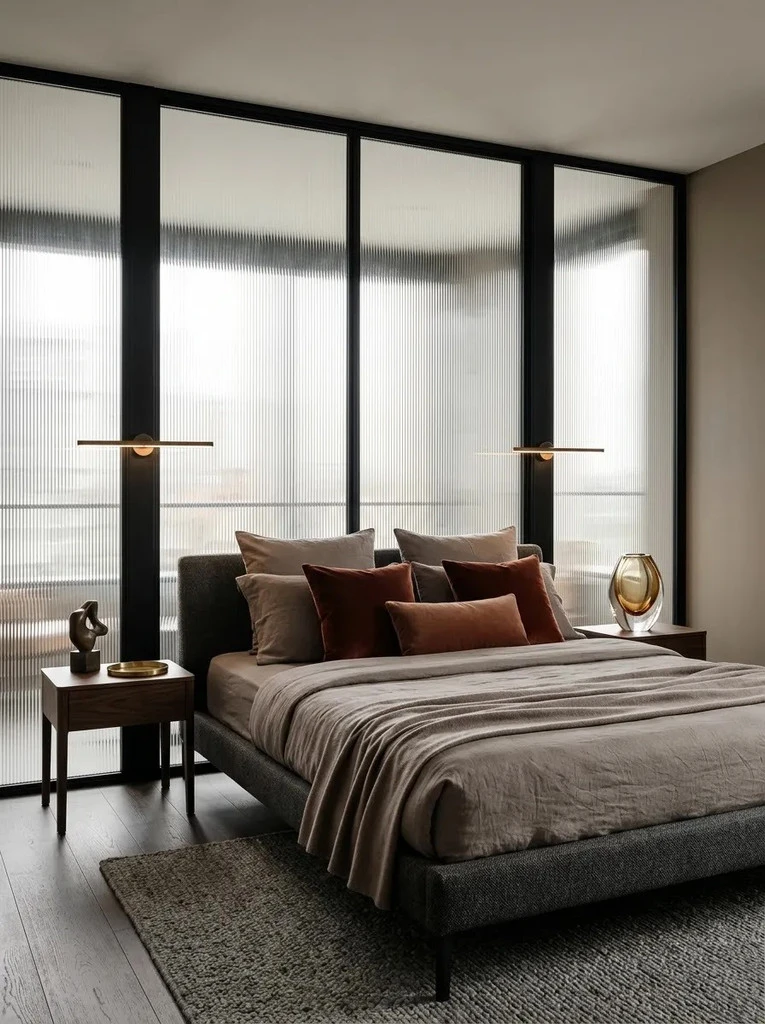
Reeded Glass Panels
- Measure the wall width and divide it into equal panel sections before ordering materials.
- Choose fluted or reeded glass with moderate opacity for texture without excessive reflection.
- Use slim black, bronze, or charcoal framing to keep the design visually clean.
- Position lighting beside the glass rather than directly opposite it to control glare.
- Keep nearby decor simple so the ribbed surface remains the main feature.
Reeded glass adds texture and depth while reflecting only a softened version of the room. This makes it useful in compact bedrooms where a full mirror could feel too bright. For a lower budget, acrylic fluted panels can create a similar effect with less weight and easier installation.
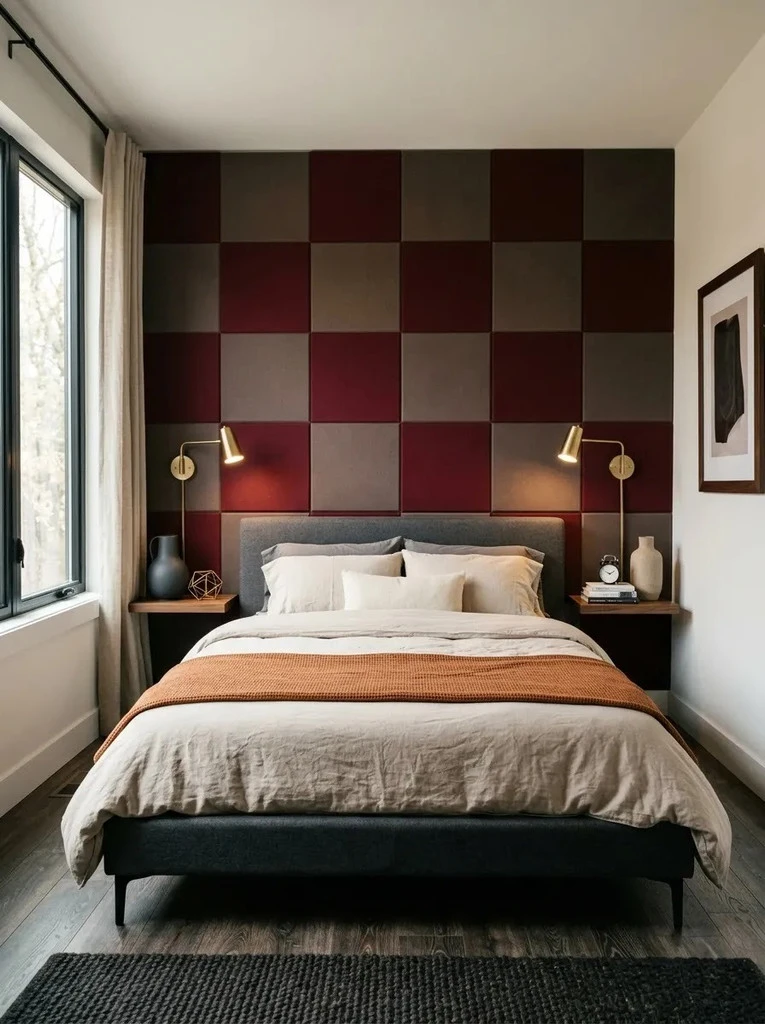
Checkerboard Wall Panels
| Detail | Small Checks | Large Checks |
| Visual Effect | Busy and energetic | Bold and controlled |
| Small Room Use | Can feel crowded | Easier on the eye |
| Installation | More measuring and cuts | Simpler panel layout |
| Best Pairing | Minimal decor only | Simple or layered bedding |
Large checkerboard sections bring graphic drama without relying on wallpaper patterns or added furniture. Keep both shades fairly close in depth so the contrast feels strong but not harsh. I’ve seen this work best with four to eight oversized sections, especially when the bed sits neatly along the central dividing lines.
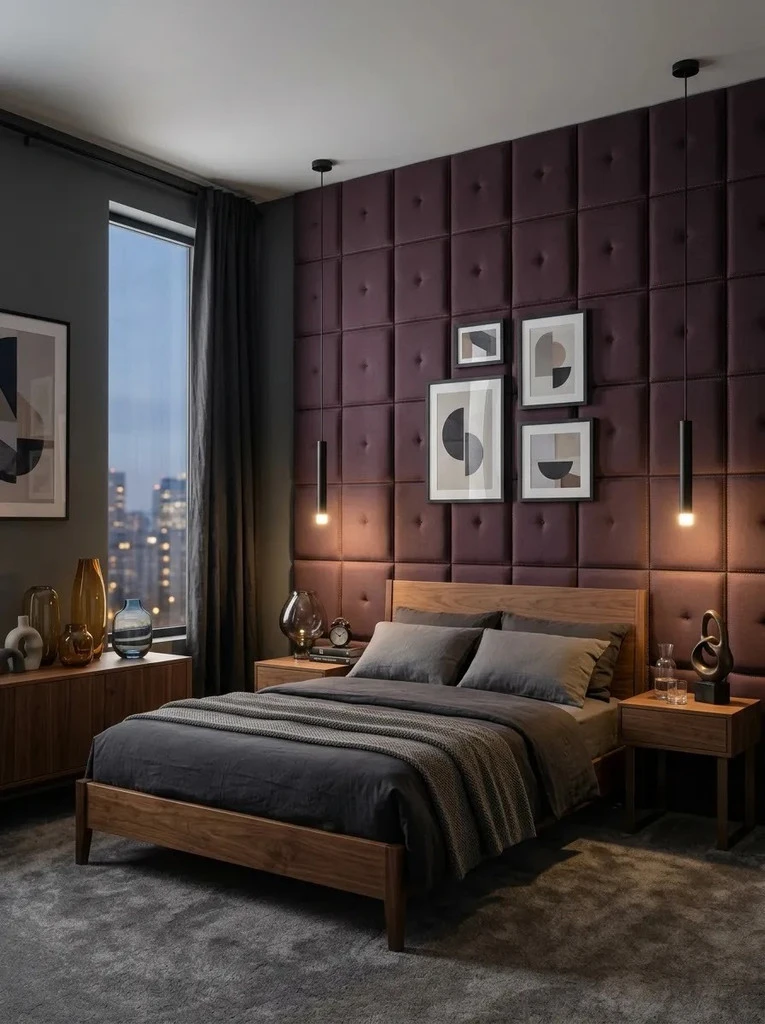
Upholstered Wall Grid
DO
- Use large padded panels to keep the wall visually calm.
- Choose durable upholstery fabric with a low sheen.
- Align panel joints carefully with the bed centerline.
- Limit the palette to one or two deep tones.
DON’T
- Use many tiny squares that make the wall feel fragmented.
- Mix several loud fabrics in one grid.
- Extend thick padding into narrow walking areas.
- Install panels without checking outlet and sconce positions.
A padded grid creates softness, sound absorption, and strong visual structure at the same time. Deep plum, charcoal, navy, or cocoa fabrics can make the sleeping zone feel richer without adding bulky decor. Keep panel depth shallow in a small room so the wall gains texture without sacrificing useful floor space.
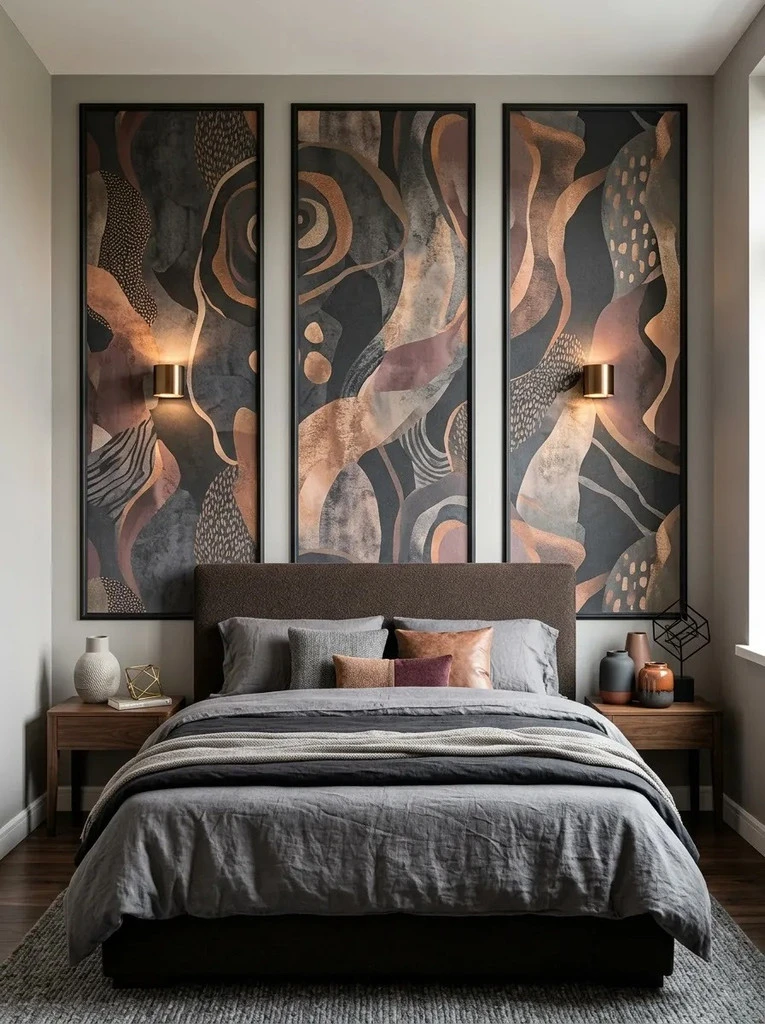
Framed Wallpaper Panels
- Measure the wall and mark three balanced rectangular sections behind the bed.
- Install slim molding first, keeping equal spacing between every panel.
- Apply the same dramatic wallpaper pattern inside each framed section.
- Paint the surrounding wall a darker coordinating shade for stronger contrast.
- Keep accessories restrained so the framed pattern remains the focal point.
Framing wallpaper gives a bold print more structure and requires less material than covering an entire wall. It is especially helpful for budget-conscious decorators who want an expensive custom look. Larger panels also keep the pattern controlled, making the feature easier to use in a compact bedroom without overwhelming the bed.
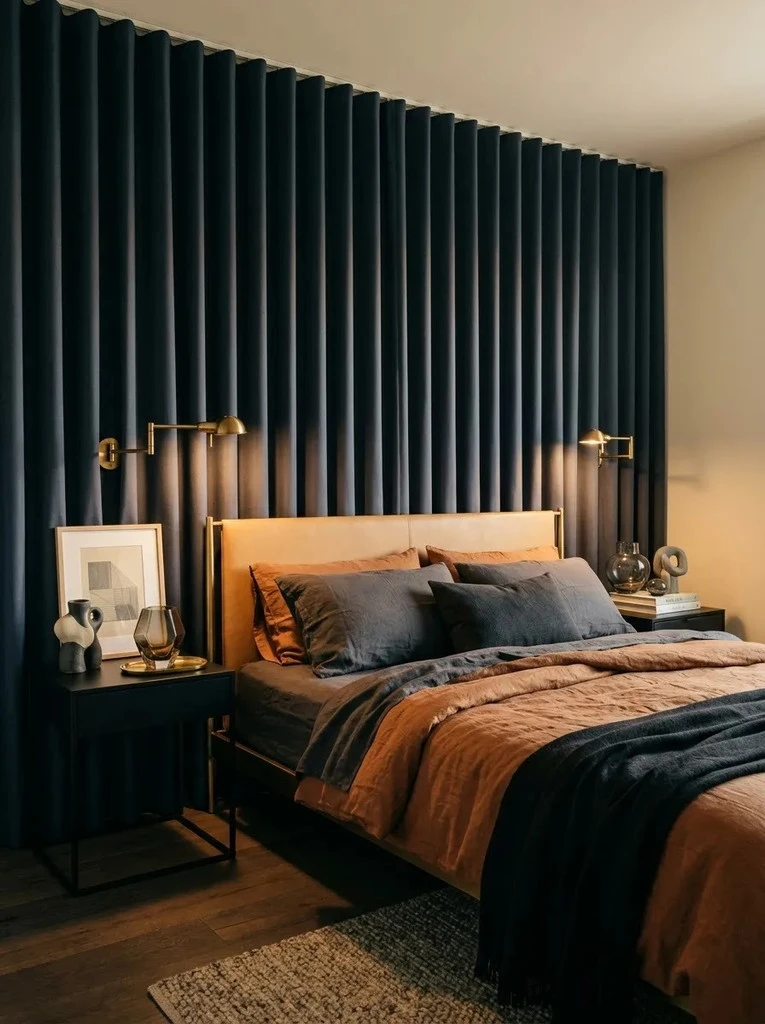
Pleated Fabric Backdrop
| Detail | Flat Fabric | Pleated Fabric |
| Texture | Smooth and subtle | Deep vertical dimension |
| Visual Height | Moderate | Strong upward emphasis |
| Fabric Needed | Less | More |
| Overall Effect | Quiet backdrop | Dramatic tailored feature |
Pleated fabric brings softness to a bedroom while the repeated vertical folds help visually stretch a short wall upward. Choose a medium-weight material that holds its shape without becoming bulky. Velvet, linen blends, or performance fabric work well, while a single deep shade keeps the folds sophisticated rather than theatrical.
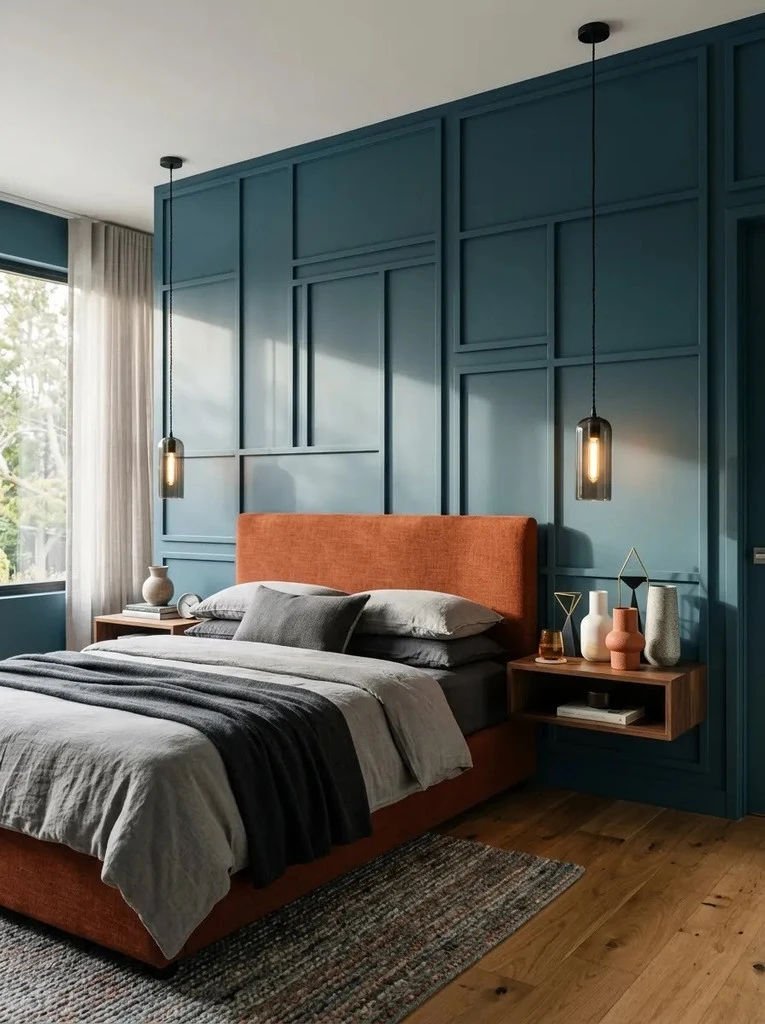
Asymmetrical Molding Layout
DO
- Plan the molding arrangement on paper before attaching any trim.
- Use a few large rectangles rather than many small sections.
- Extend selected lines beyond the bed width for an intentional asymmetrical look.
- Paint the trim and wall the same shade for a unified finish.
DON’T
- Scatter random molding pieces without visual alignment.
- Make every section a different color.
- Place thick trim where it interferes with switches or outlets.
- Crowd the wall with additional framed artwork afterward.
Asymmetrical molding adds architectural interest without requiring expensive materials or deep wall construction. A monochromatic finish lets shadows define the pattern naturally, which keeps a small bedroom from feeling overly busy. Deep blue, wine, charcoal, or earthy brown can make the geometry especially striking behind simple upholstered furniture.
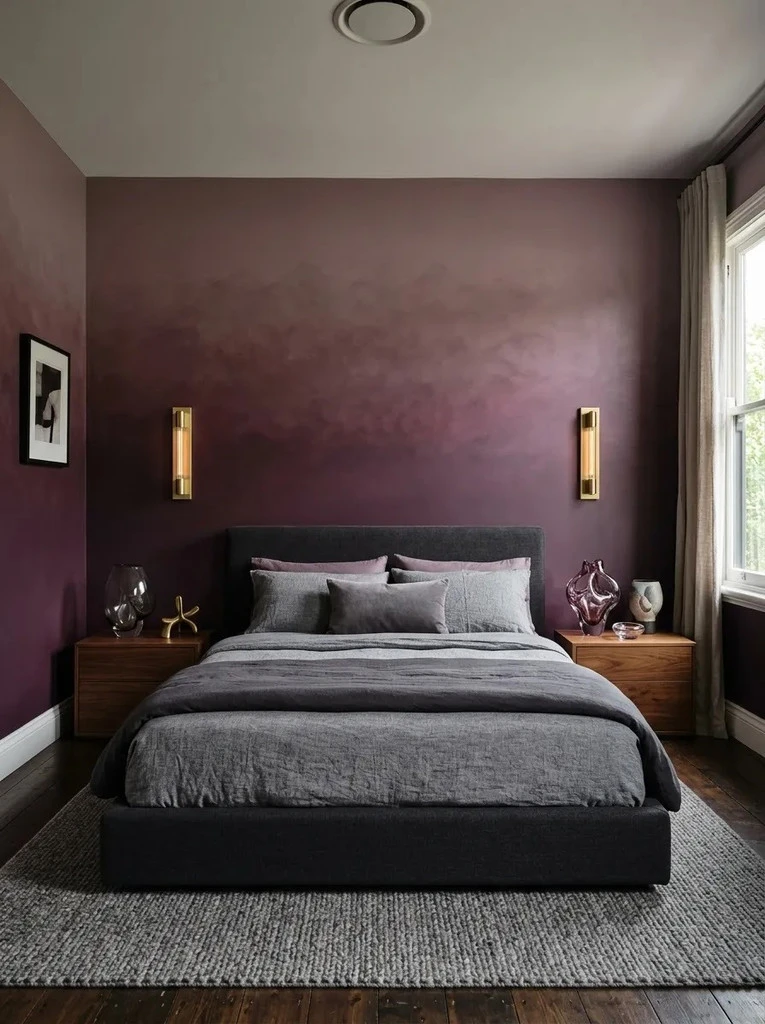
Ombre Painted Wall
Quick Tip:
Blend the two paint shades while both sections are still slightly wet, using a wide dry brush to soften the transition. Keep the darkest tone lower on the wall so the upper area feels lighter and the ceiling does not appear compressed.
A gradual color shift creates drama without introducing another material, making it one of the more affordable wall treatments for beginners. Choose neighboring shades rather than extreme contrasts for a smoother finish. Testing the blend on a spare board first can help you practice the technique before working across the entire bedroom wall.
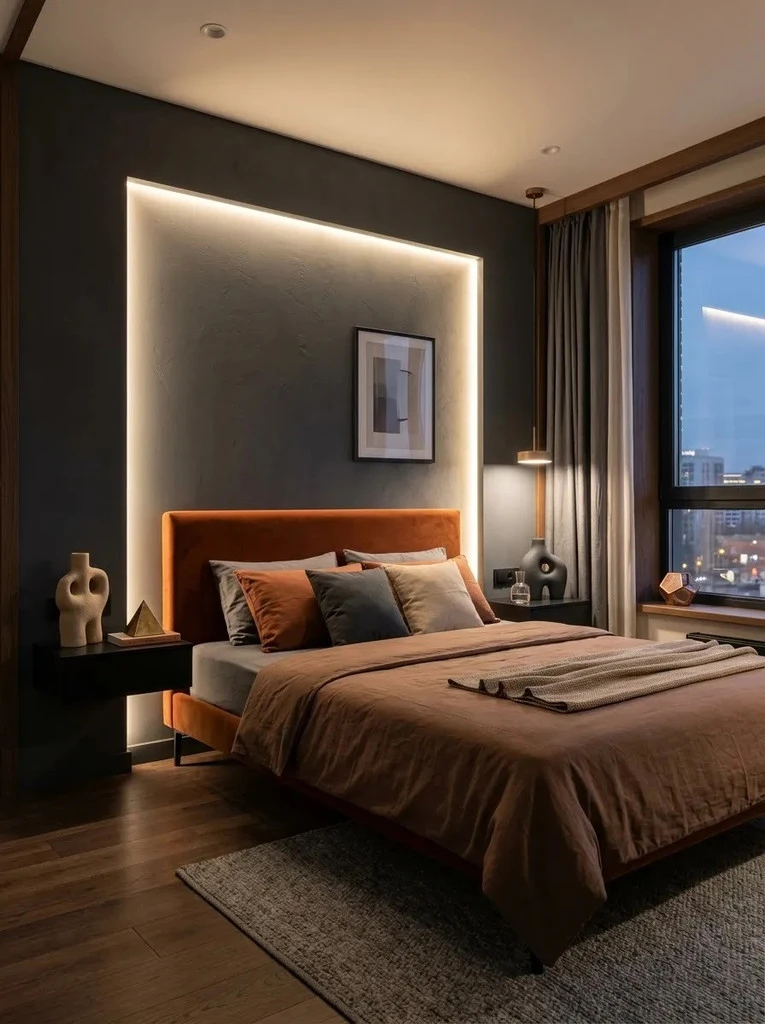
Inset LED Border
BEFORE
A dark wall can create mood, but it may lose definition at night once general room lighting becomes dim. Table lamps can restore visibility, though they often take up precious surface area on narrow nightstands.
AFTER
A concealed illuminated border gives the bed its own architectural frame while providing soft indirect light. The surrounding dark finish appears deeper, and the sleeping zone gains definition without extra furniture or visible lamp bases.
Keep the light warm and dimmable rather than choosing bright cool white strips. A simple rectangular outline usually feels cleaner in a small room than several intersecting shapes. The border should sit comfortably outside the bed width, leaving enough dark wall visible around it to preserve the dramatic framed effect.
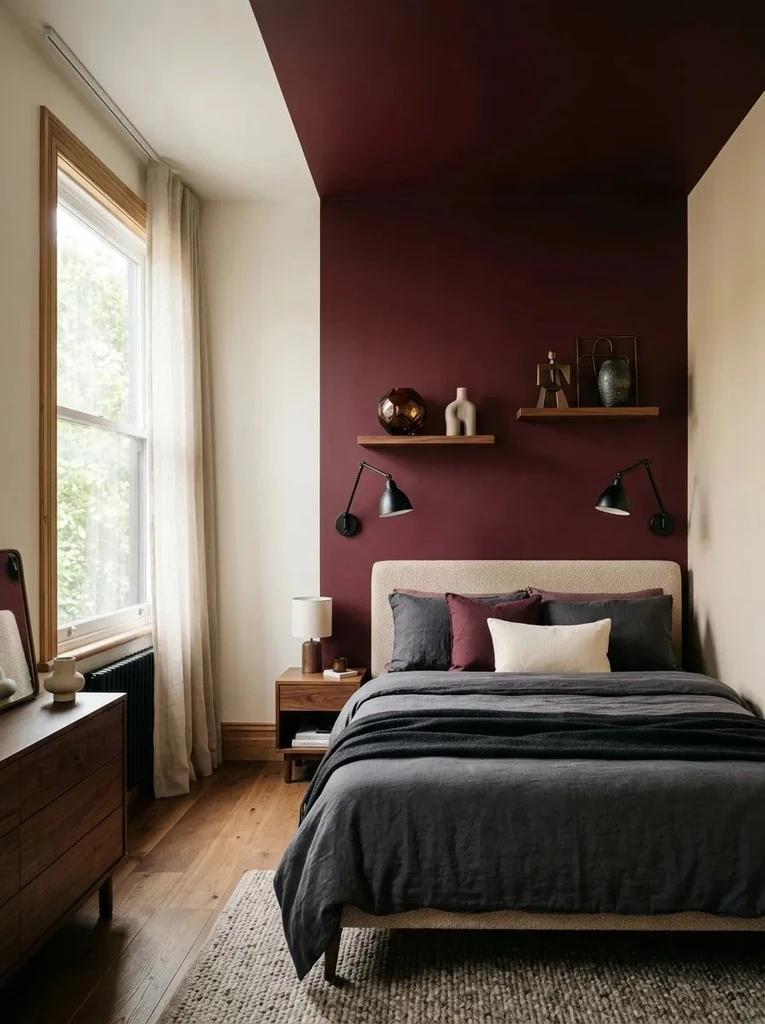
Painted Ceiling Wrap
- Choose a deep wall color such as wine, navy, cocoa, or smoky plum.
- Mark a straight ceiling line about 18 to 30 inches beyond the feature wall.
- Paint the wall and ceiling section in the exact same matte finish.
- Remove painter’s tape while the final coat is still slightly damp.
- Keep the remaining ceiling lighter to preserve visual breathing room.
Extending color onto the ceiling makes the sleeping area feel deliberately enclosed without building a physical canopy. It can also visually shorten an awkwardly tall wall and strengthen the bed’s placement. I’ve noticed this approach works best when the ceiling extension stays shallow, especially in smaller rooms where too much dark color overhead can feel heavy.
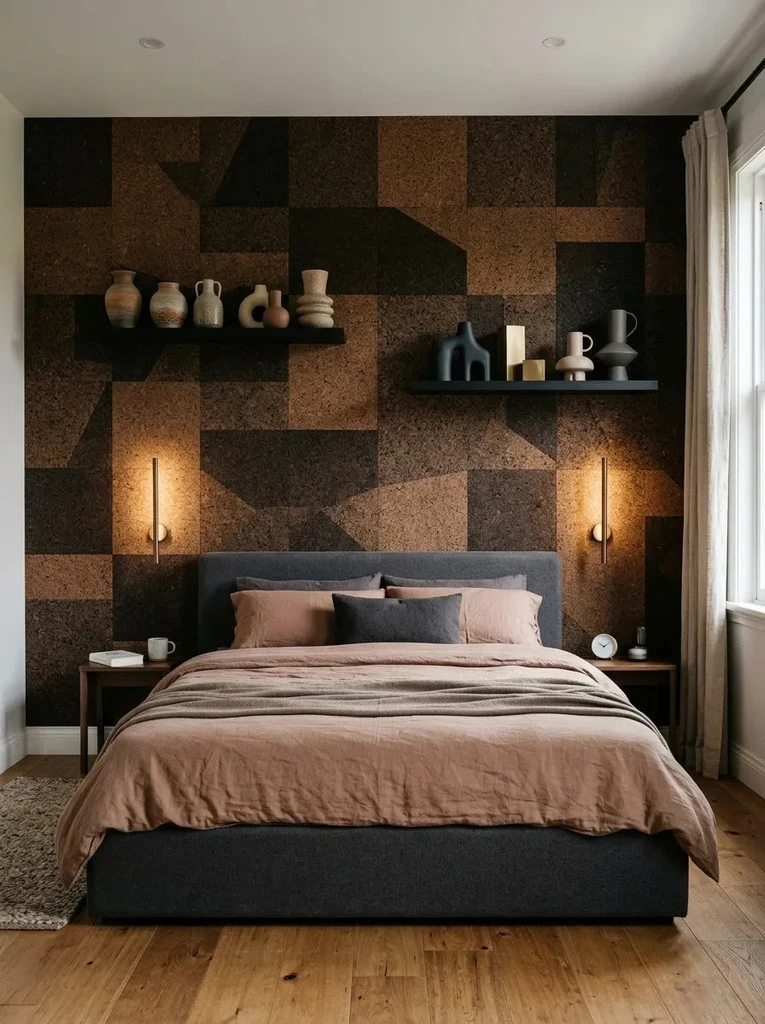
Cork Mosaic Wall
| Detail | Plain Cork Sheets | Cork Mosaic Tiles |
| Pattern | Simple and uniform | Graphic and dimensional |
| Visual Impact | Quiet and subtle | Strong focal feature |
| Installation | Fewer large pieces | More careful alignment |
| Best Look | Natural minimal rooms | Dramatic modern bedrooms |
Cork adds warmth, texture, and a little sound absorption without making a compact room feel hard or overly polished. For stronger visual impact, combine two or three closely related brown tones rather than contrasting colors. Larger geometric pieces keep the pattern readable and help the wall feel intentional instead of visually cluttered.
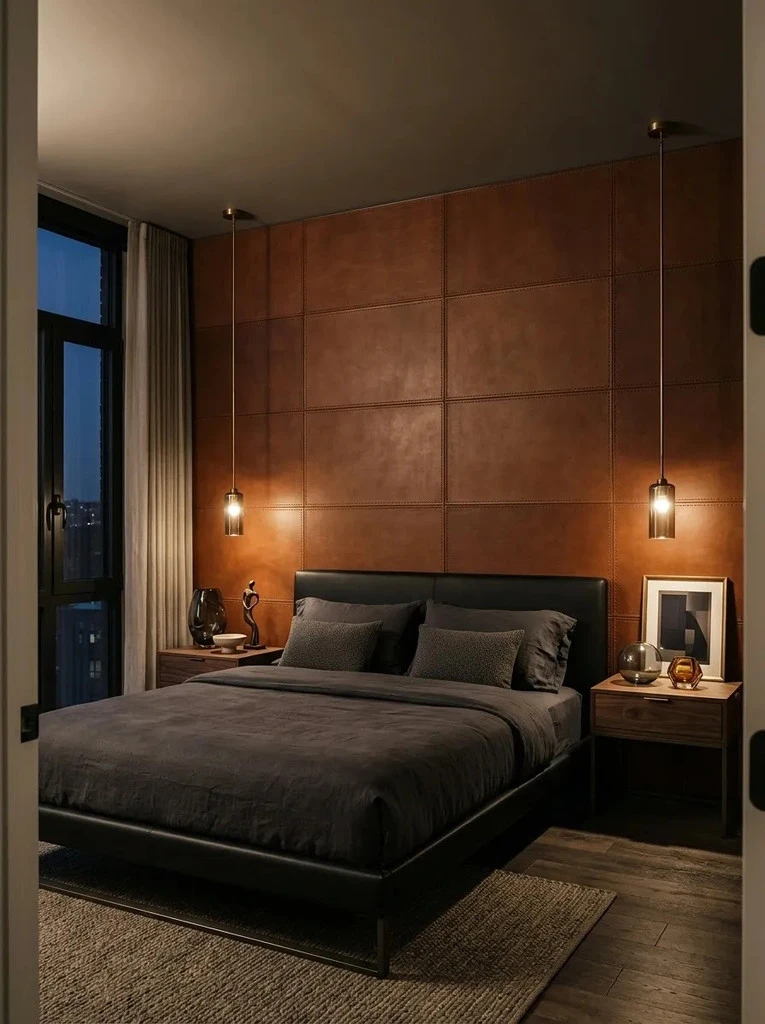
Faux Leather Tiles
DO
- Choose large tiles with minimal stitching for a cleaner wall.
- Use matte or lightly grained finishes instead of shiny faux leather.
- Center the layout carefully behind the bed before fixing panels.
- Pair cognac, oxblood, or espresso tones with simple bedding.
DON’T
- Mix several leather colors in one small room.
- Use thick panels that reduce clearance around narrow walkways.
- Place the material close to hot exposed bulbs.
- Add heavily patterned artwork over the finished surface.
Faux leather tiles give a bedroom wall a tailored, upholstered character while remaining easier to clean than many fabrics. Large panels suit smaller rooms because fewer seams create a calmer surface. Keep lighting warm and indirect so the grain and stitching show gently without producing distracting shine across the wall.
CONCLUSION
A dramatic bedroom wall does not need an oversized budget or a huge room to make an impact. From painted effects and wall panels to textured finishes, lighting, and bold materials, these ideas show how a thoughtful Master bedroom accent wall can give a small space more depth, character, and focus.
I’ve seen how one carefully chosen wall treatment can shift the entire mood of a bedroom without requiring a full redesign. Save this post on Pinterest so you can revisit your favorite ideas, try the option that suits your space and budget, and share the article with anyone planning a bedroom refresh. Start with one wall and make it count.