
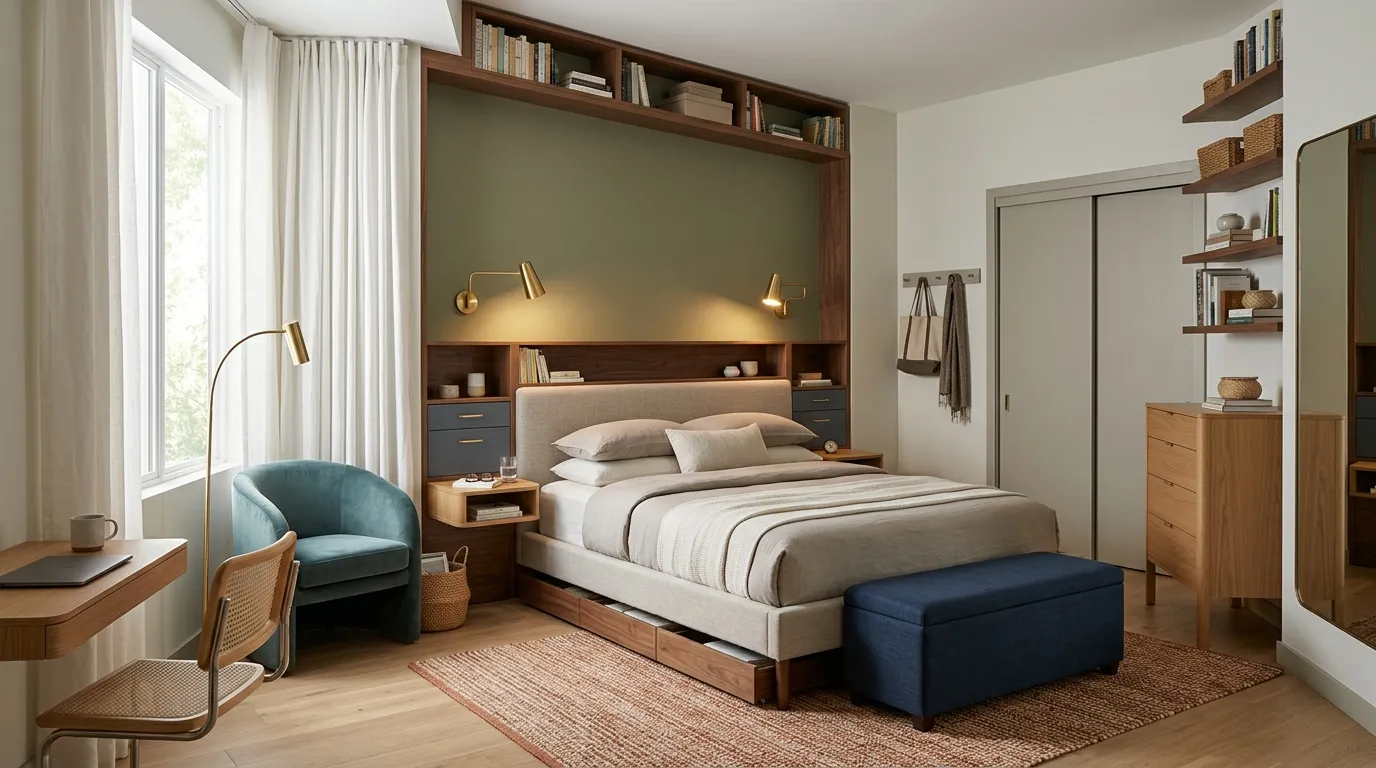
24 Brilliant Small Bedroom Decor Ideas for More Space
A small bedroom should not feel like you have to choose between storage, comfort, and style. With smarter small bedroom decor, even an awkward room can feel calmer, brighter, and much easier to use.
The key is not filling every empty inch with tiny furniture. In fact, some of the biggest improvements come from choosing fewer pieces that work harder. A tall mirror, one generous rug, or a properly placed shelf can sometimes do more than removing five decorative objects.
I tend to look at compact bedrooms as a layout puzzle. Every item should either store something, improve movement, or make the room feel more balanced. These 24 ideas focus on practical changes you can actually use, whether you are working with a small apartment bedroom, guest room, or tight family home.
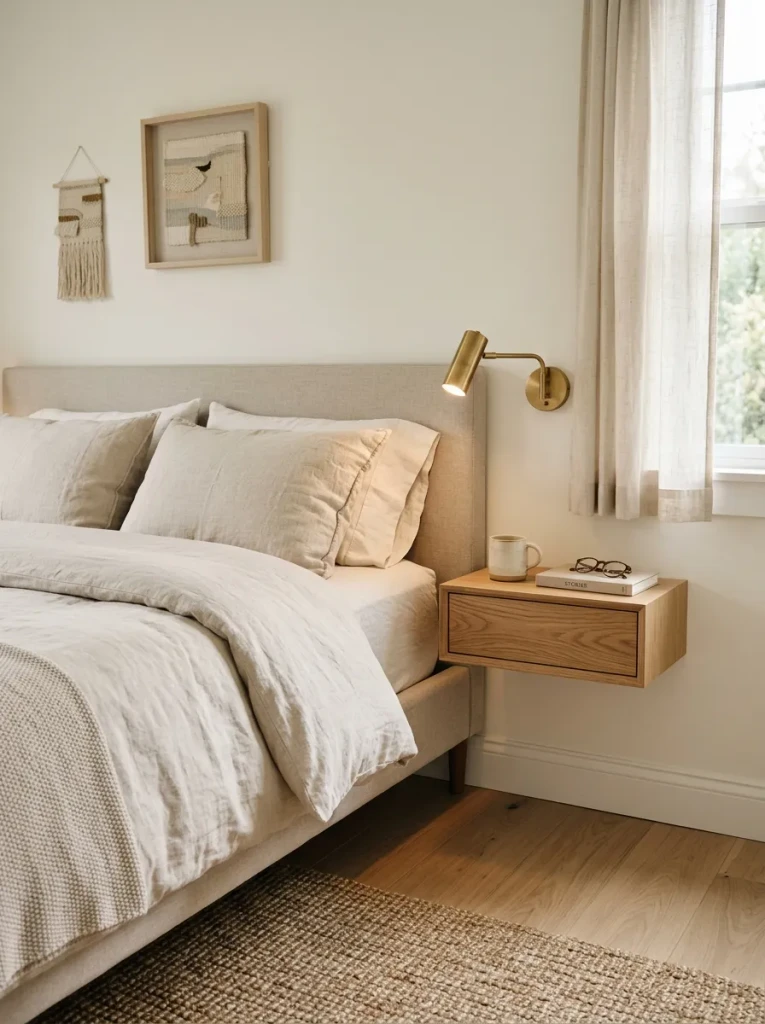
Wall Mounted Nightstands
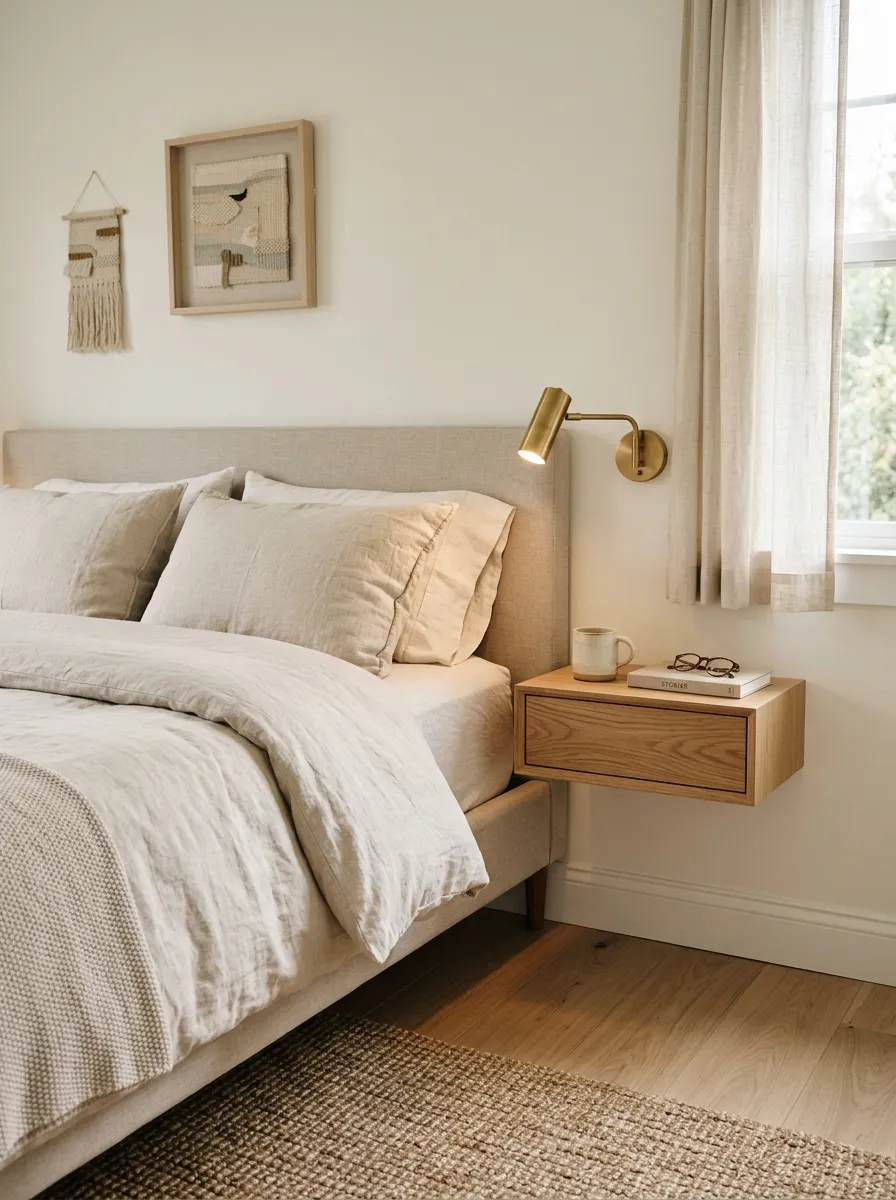
A nightstand does not need four legs to be useful. Mounting a narrow shelf or drawer beside the bed keeps essentials close while exposing more floor underneath.
Aim for a depth of roughly 8 to 12 inches if the walkway beside your bed is tight. That is usually enough room for a phone, glass of water, and small lamp. Mount the surface close to mattress height so it feels natural to reach.
The difference shows up most in narrow rooms where traditional bedside tables make the path around the bed feel squeezed. One clear strip of visible flooring can make the layout feel noticeably lighter.
Under Bed Storage
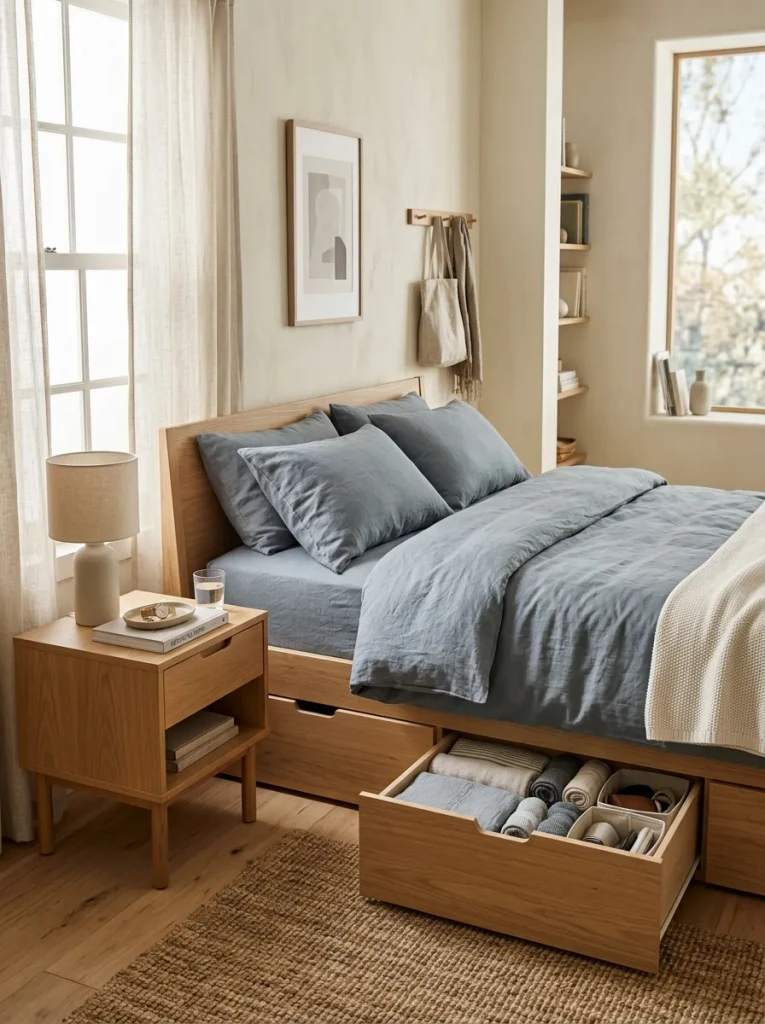
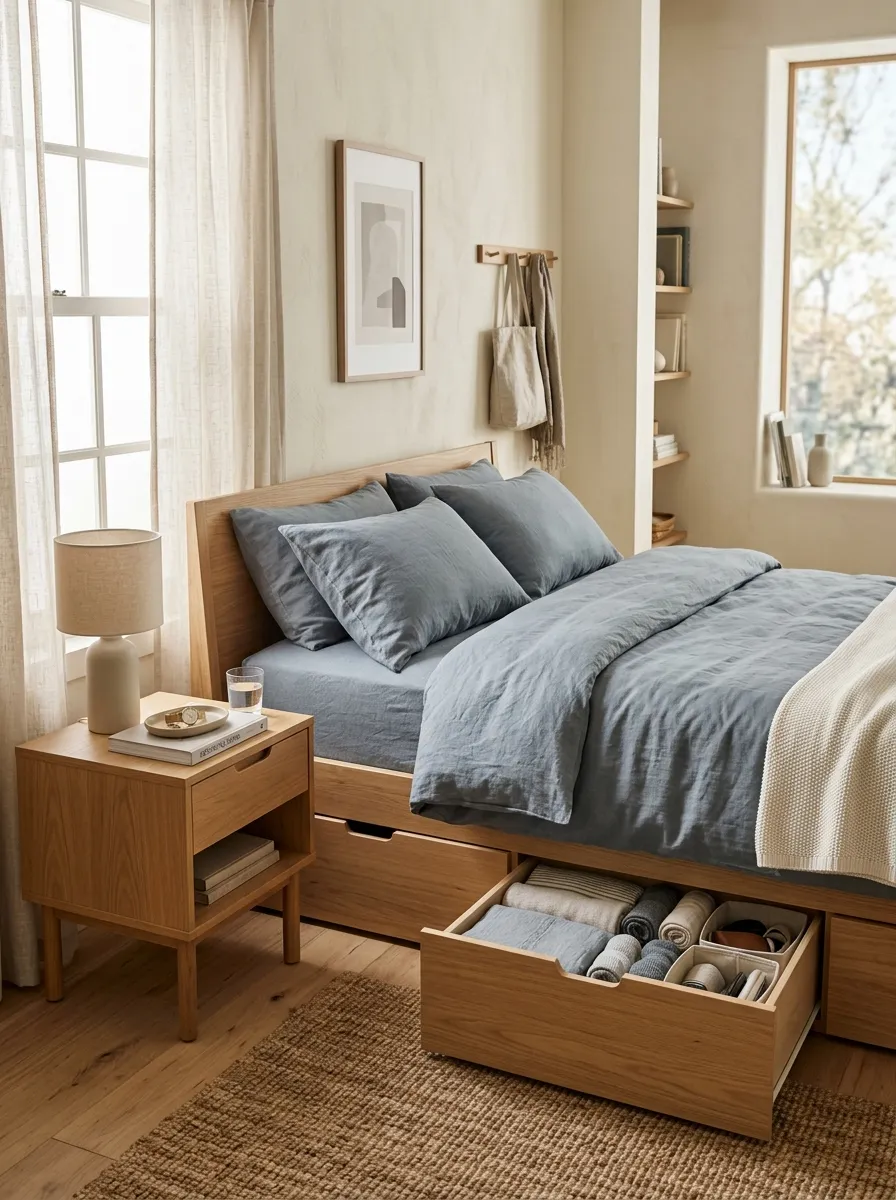
Before buying another dresser, check what is happening beneath your bed. That unused area often holds enough space for seasonal clothes, spare linens, shoes, or extra bedding.
Most standard bed frames offer around 7 to 9 inches of clearance, although yours may differ, so measure from the floor to the lowest part of the frame before choosing containers. Leave roughly half an inch of extra clearance so bins slide without catching.
Choose matching containers with handles and keep frequently used items near the edges. Deep storage is useful, but crawling halfway under the bed for a T-shirt every morning gets old quickly.
Vertical wall shelves
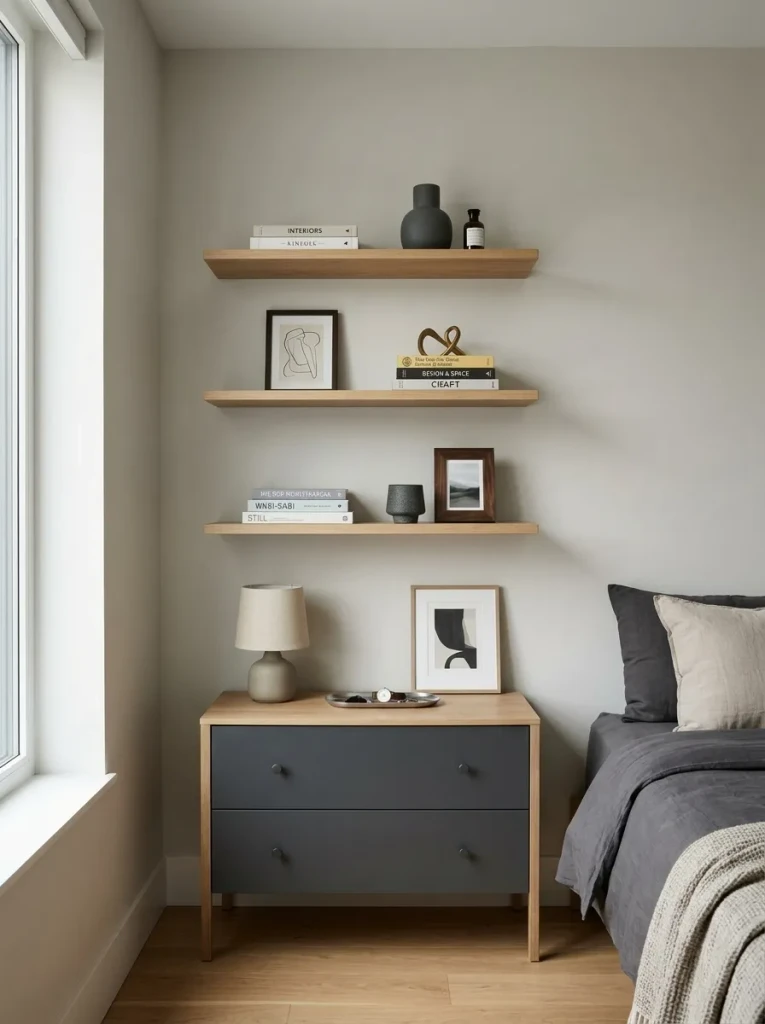
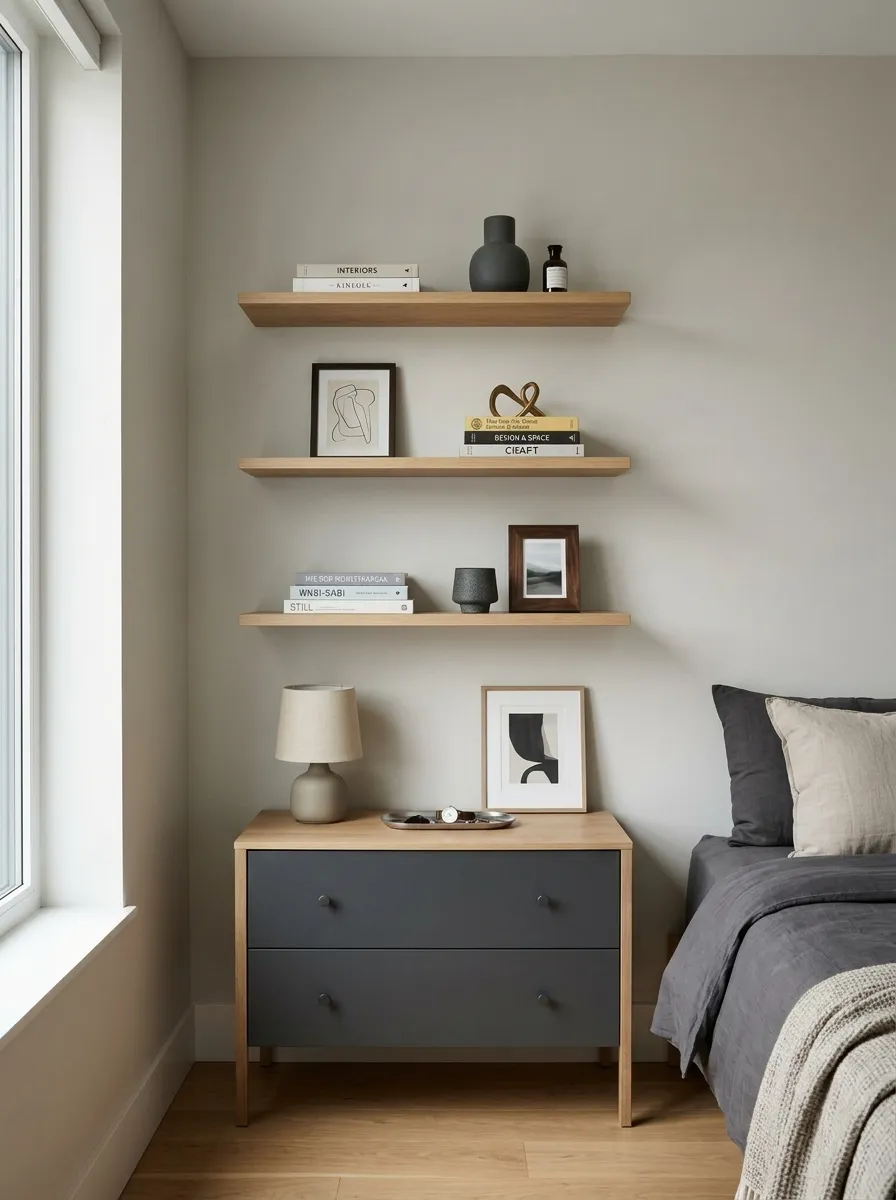
Short on floor space but surrounded by an empty wall? Use the middle section of the wall for everyday storage and display.
Install two or three shelves roughly 8 to 10 inches deep above a desk, dresser, or bedside area. Keep the lowest shelf easy to reach for books or frequently used objects, then place lighter decorative pieces higher up.
Avoid covering the entire wall. Leaving visible gaps between shelves and objects prevents the arrangement from feeling like a storage warehouse. This approach is best for items you want accessible, which keeps it distinct from high ceiling storage meant for things you rarely touch.
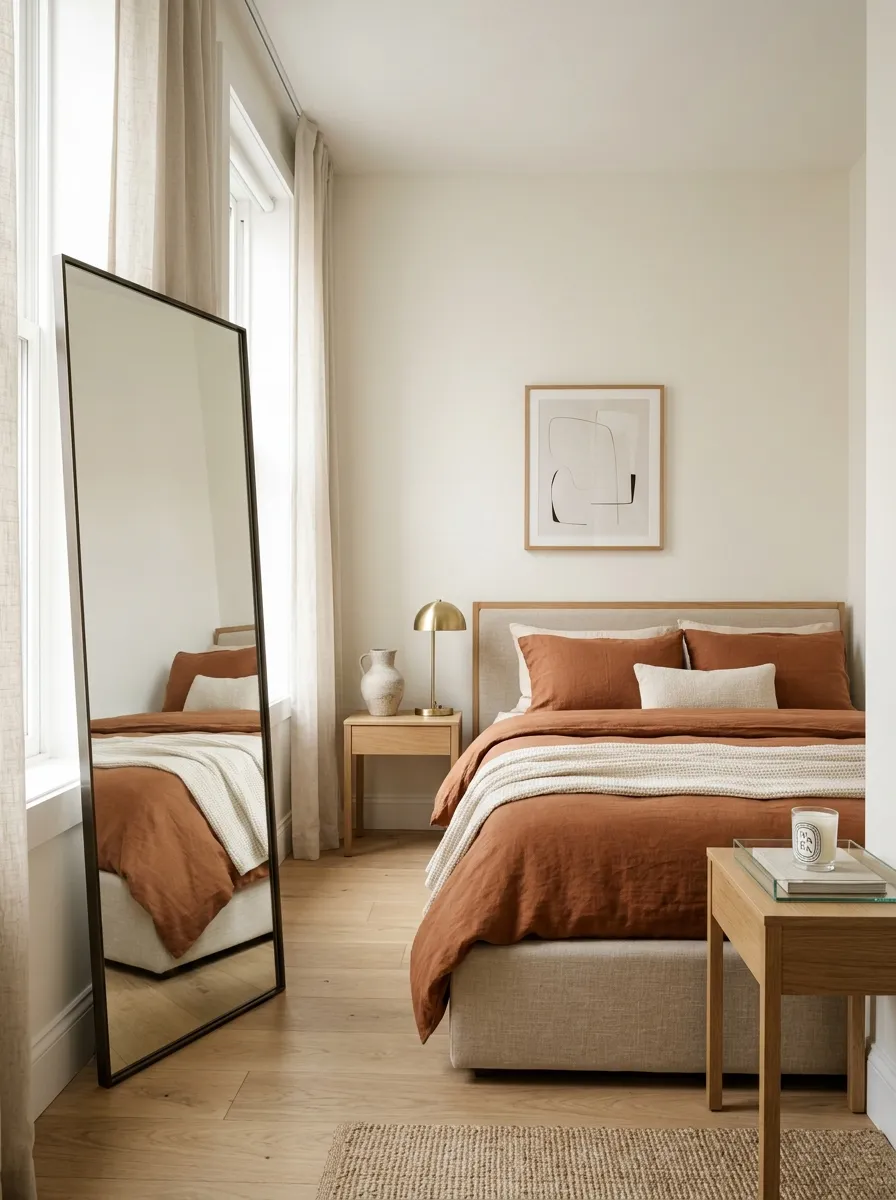
Full Length Mirror
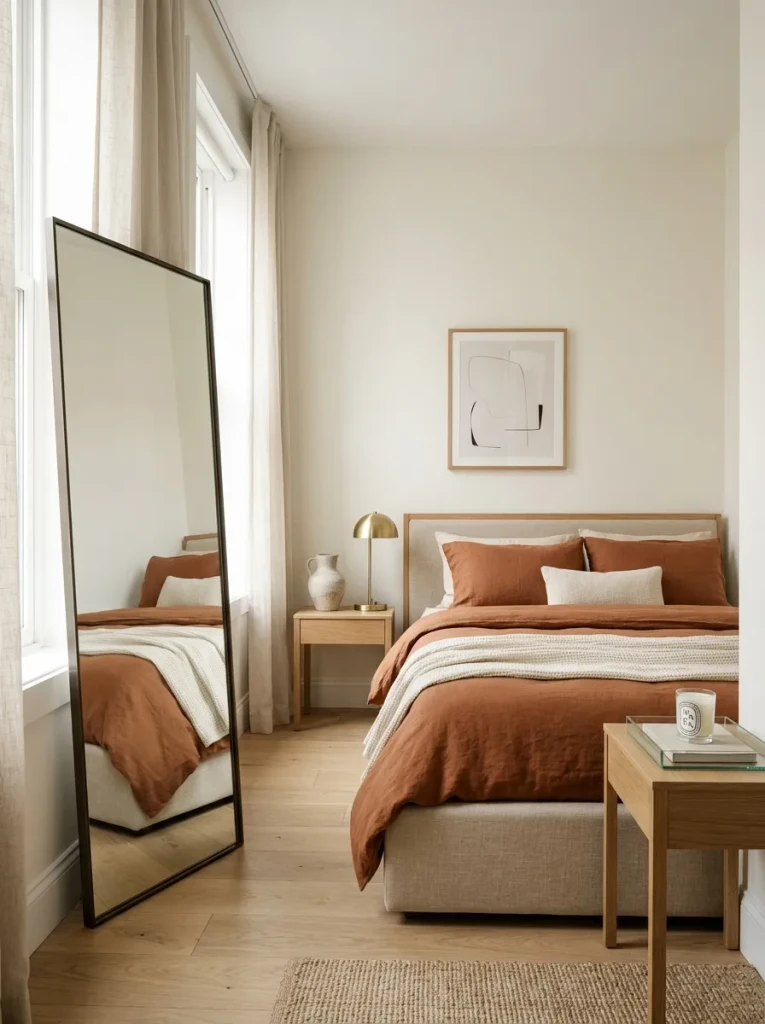
One oversized item can sometimes make a small room feel larger than several tiny accessories. A tall mirror is one of the best examples.
Place it near a window or opposite the brightest part of the bedroom so it reflects light rather than a crowded corner. A mirror around 60 to 70 inches tall gives a stronger sense of vertical space than a small decorative mirror.
Keep the frame slim and simple. The goal is visual depth, not another heavy focal point. Most guides tell you to remove things from a tiny room, but adding one properly scaled mirror can often improve the space more than stripping away several smaller objects.
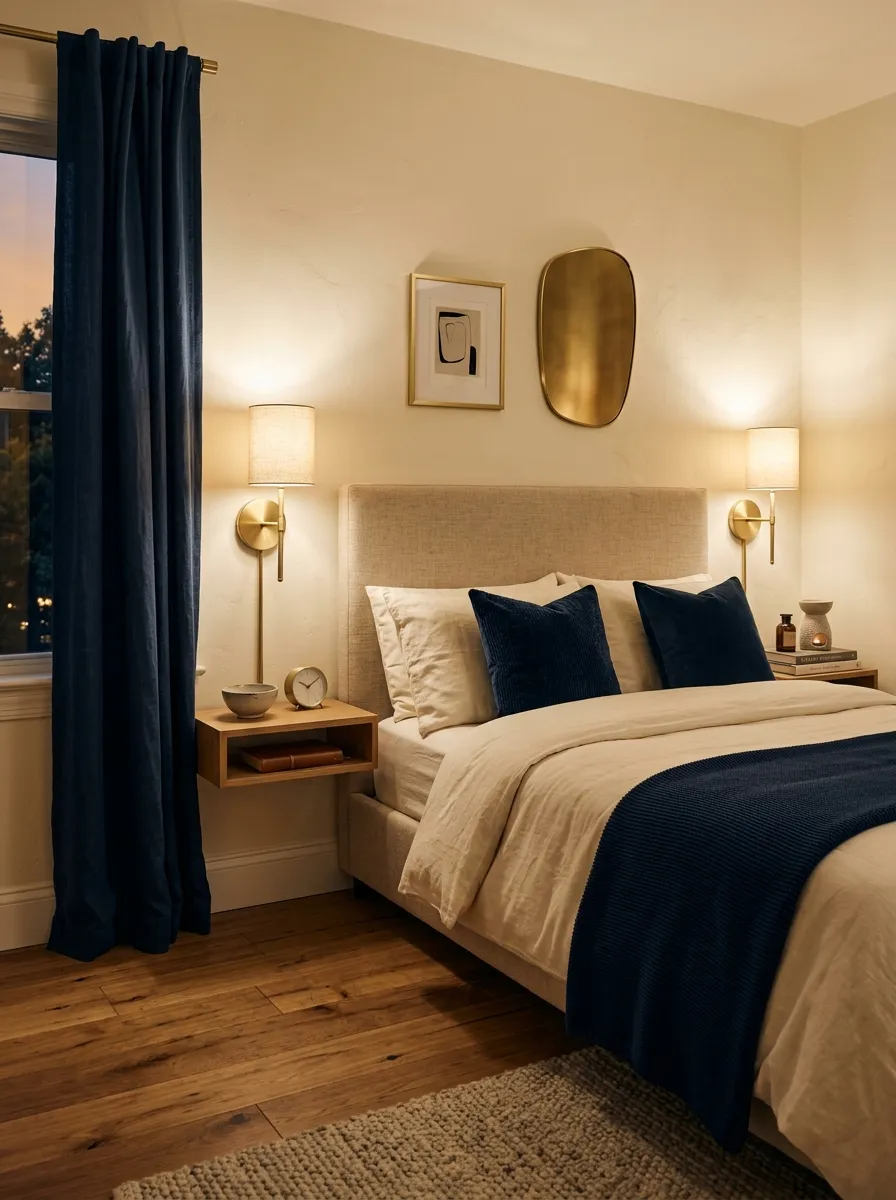
Bedside Wall Sconces
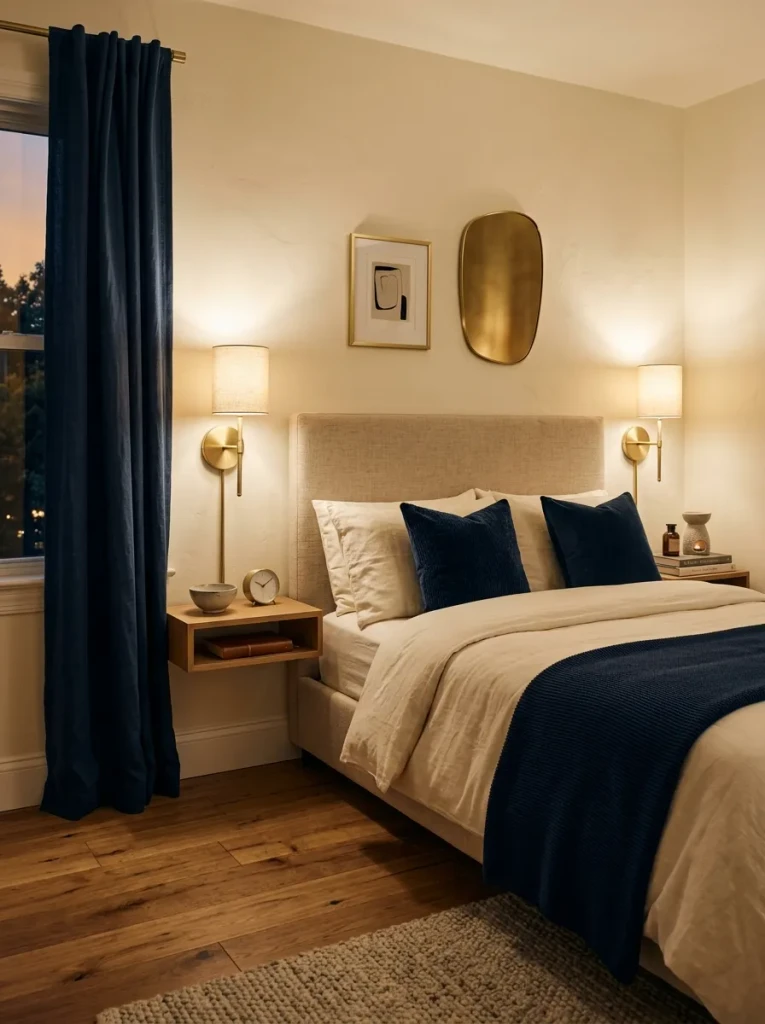
Bulky lamps can swallow most of a small nightstand. Moving the light to the wall gives that surface back to you.
For a warm bedroom atmosphere, look for bulbs around 2700K. Light above 3000K can begin to feel cooler and more clinical, especially in a compact sleeping space.
Plug in sconces are useful for renters because they do not always require electrical work. Mount them where the switch can be reached comfortably from bed, and use a simple cable cover if exposed cords bother you.
The result is practical: more usable bedside space and fewer objects competing for attention.
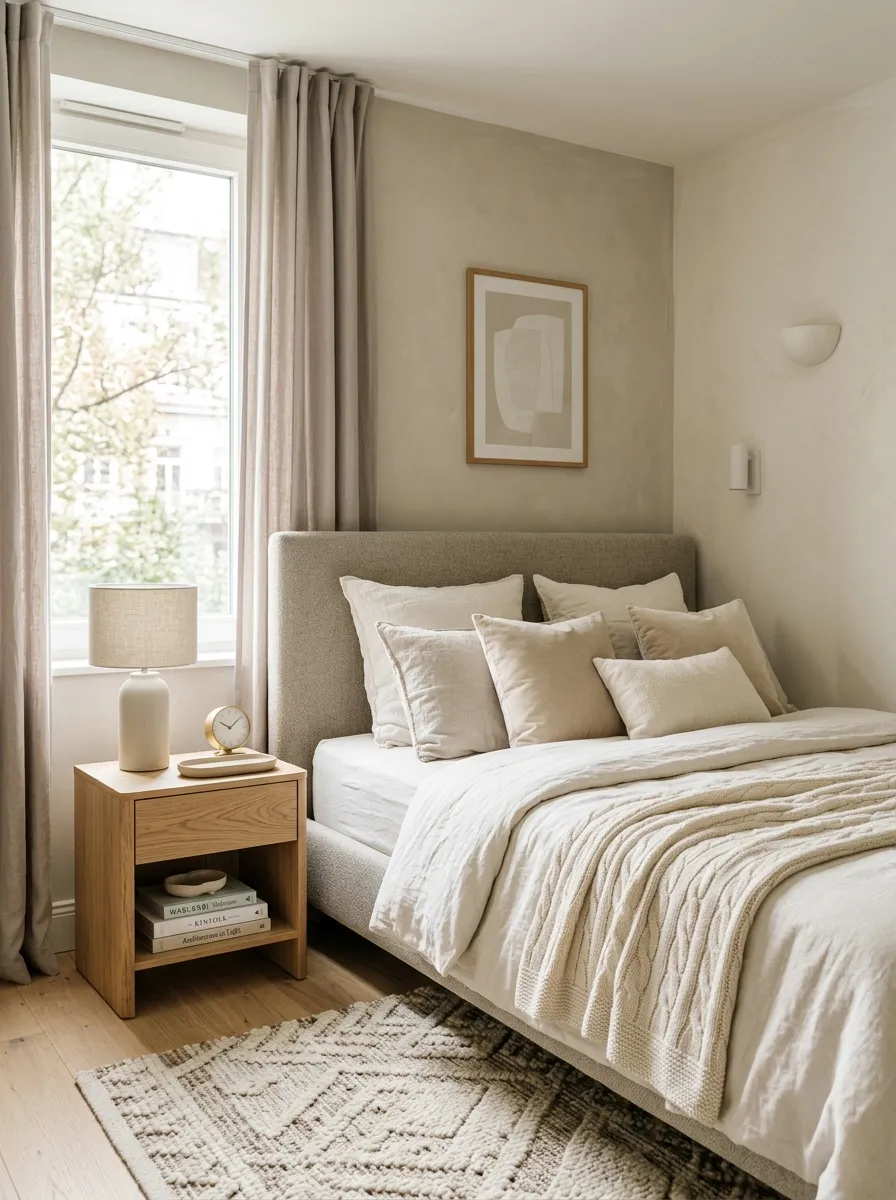
Light Color Palette
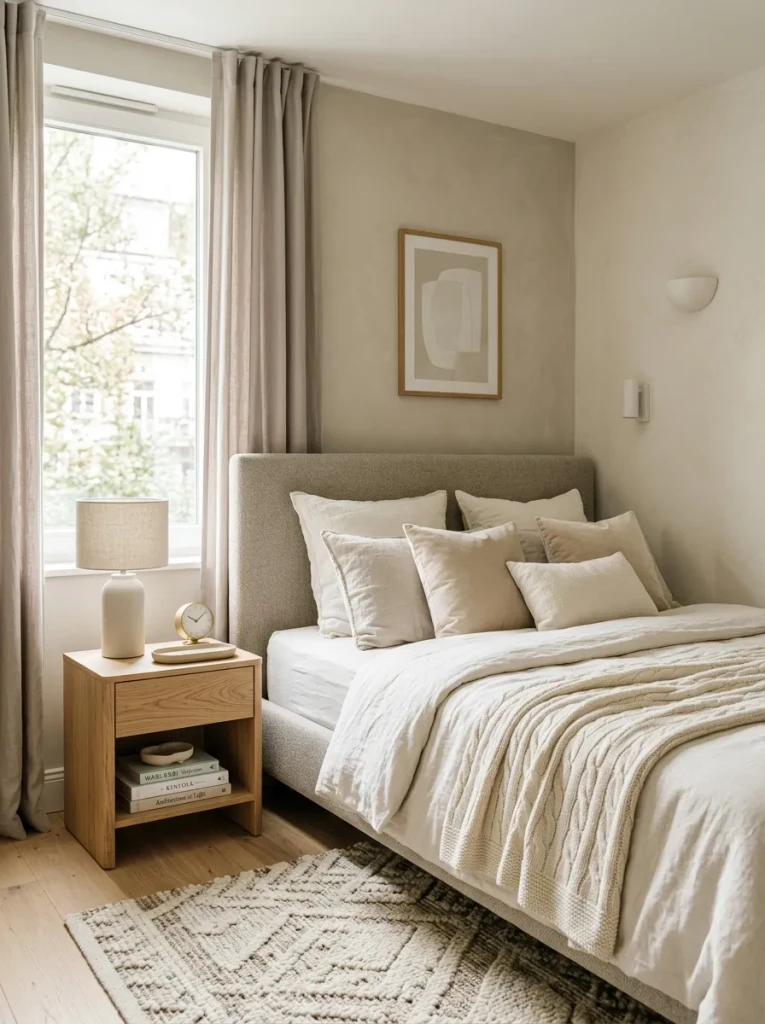
Light colors help most when they are layered rather than used as one flat shade. An all white bedroom can easily feel unfinished instead of spacious.
Start with warm white, cream, pale beige, or soft greige on the largest surfaces. Then add slightly deeper shades through bedding, curtains, or wood tones.
A simple ratio works well:
- Keep walls and major furniture visually light.
- Use medium tones for textiles.
- Save darker colors for small accents.
This creates depth without making the room feel enclosed. The goal is not to erase color. It is to keep large surfaces from competing with one another.
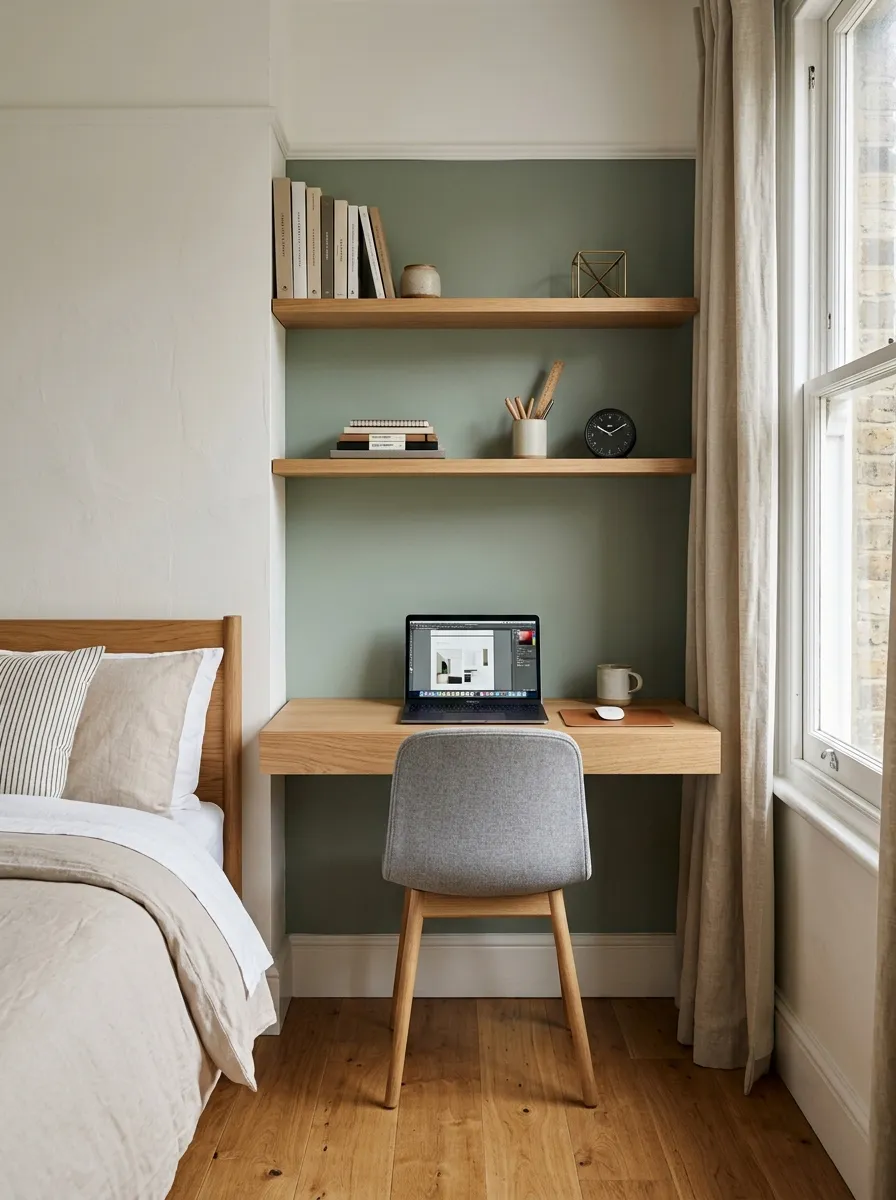
Slim Floating Desk
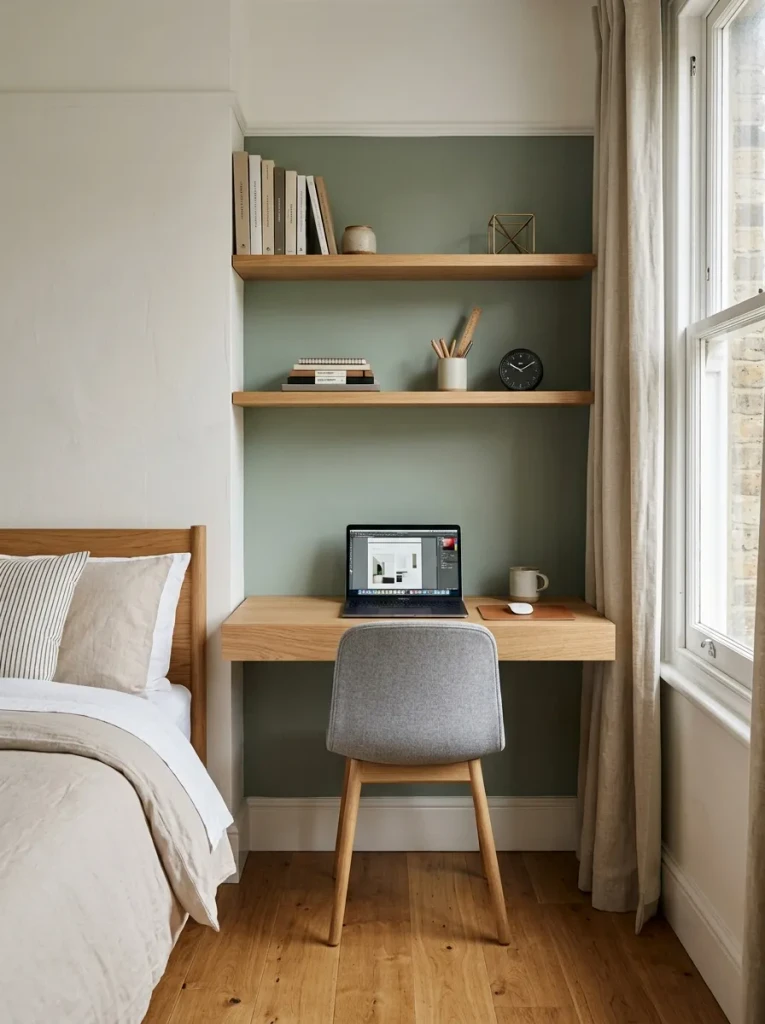
Need a workspace but have no room for a traditional desk? A floating surface can create one without permanently consuming valuable floor area.
Look for a desktop around 16 to 20 inches deep. That gives you enough room for a laptop and notebook without projecting too far into the room.
Mount one or two shallow shelves above it for supplies, then choose a chair that slides completely underneath. Keep cords clipped to the underside of the desk rather than letting them hang toward the floor.
This setup works especially well in bedrooms where the same room has to handle sleeping, studying, and working.
Floor Length Curtains
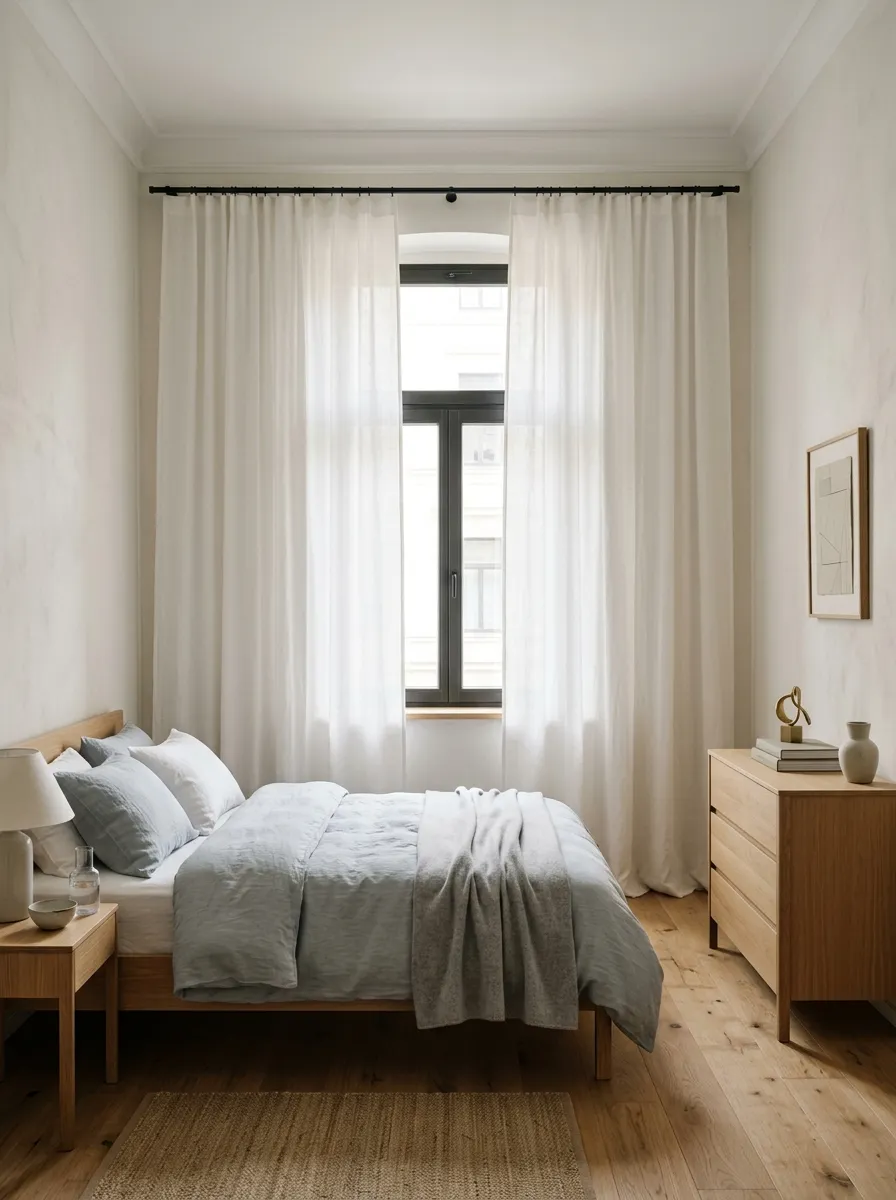
Curtains can change how tall a room appears before you move a single piece of furniture.
Mount the curtain rod several inches above the window frame, ideally closer to the ceiling when proportions allow. Extend the rod 4 to 8 inches beyond each side of the window so more glass remains visible when the curtains are open.
Choose panels that reach the floor rather than stopping awkwardly below the sill. Long vertical lines naturally draw the eye upward.
Just avoid excessive fabric pooling on the floor. A little softness is fine, but a large pile of fabric makes a compact room look busier.
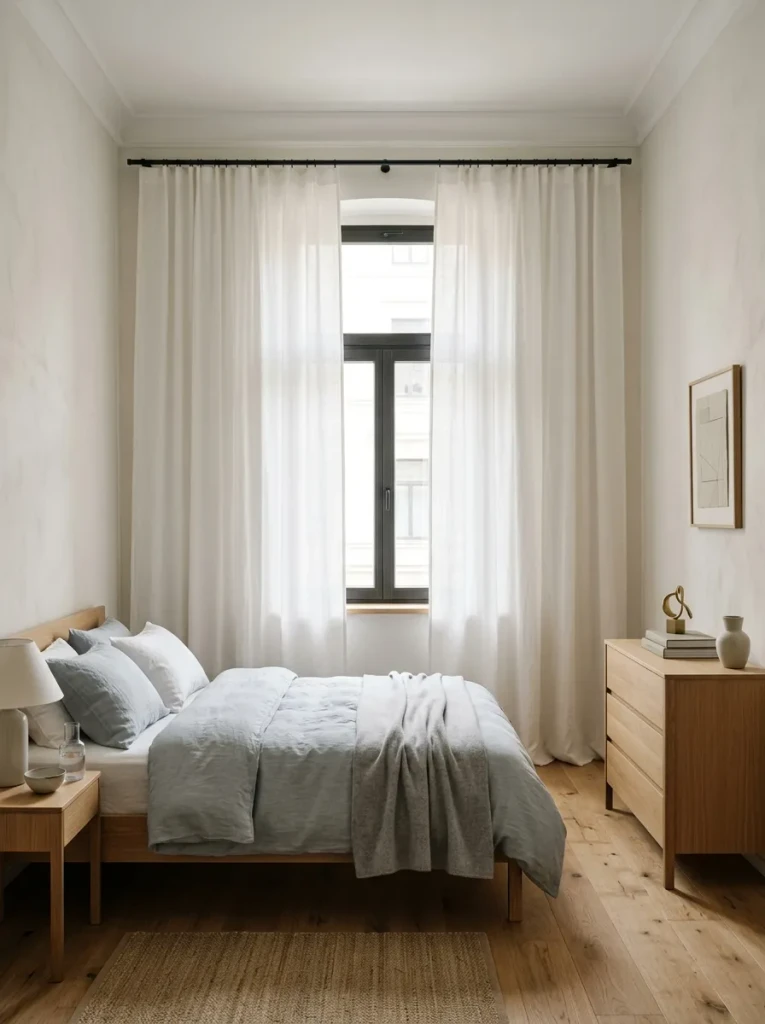
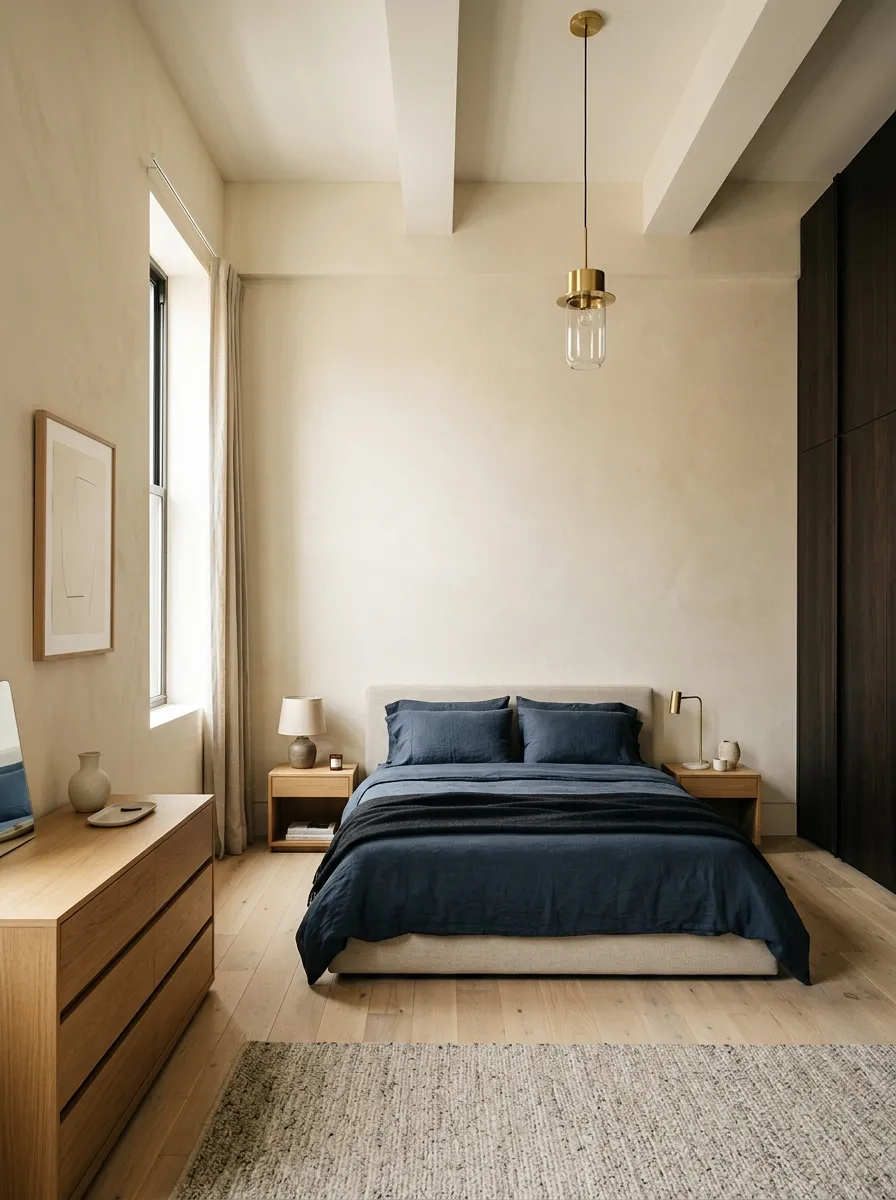
Low Profile Furniture
A low bed can make a ceiling feel surprisingly generous.
Platform beds, short nightstands, and streamlined benches leave more visible wall above them, which changes the proportions of the room. That extra open wall creates breathing room even though the square footage remains exactly the same.
Keep most major furniture within a similar height range so the layout feels deliberate. One taller wardrobe is fine if you genuinely need the storage.
The trick is not making everything miniature. Choose properly scaled furniture with lower visual height rather than filling the room with several tiny pieces that still create clutter.
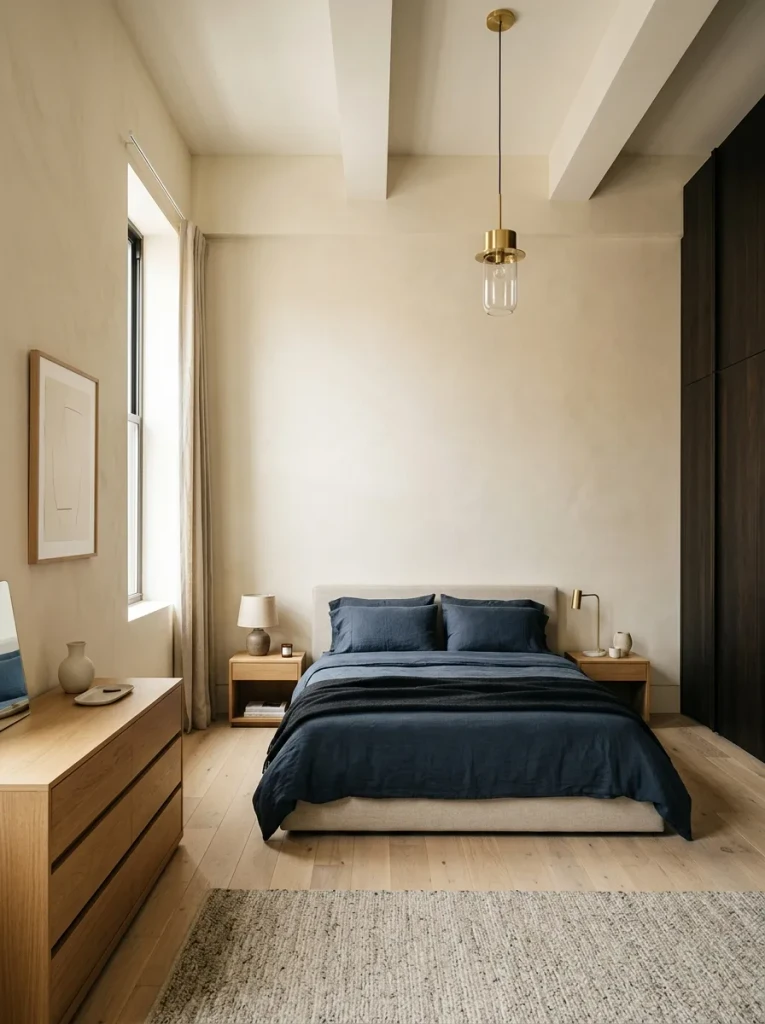
Corner Reading Nook
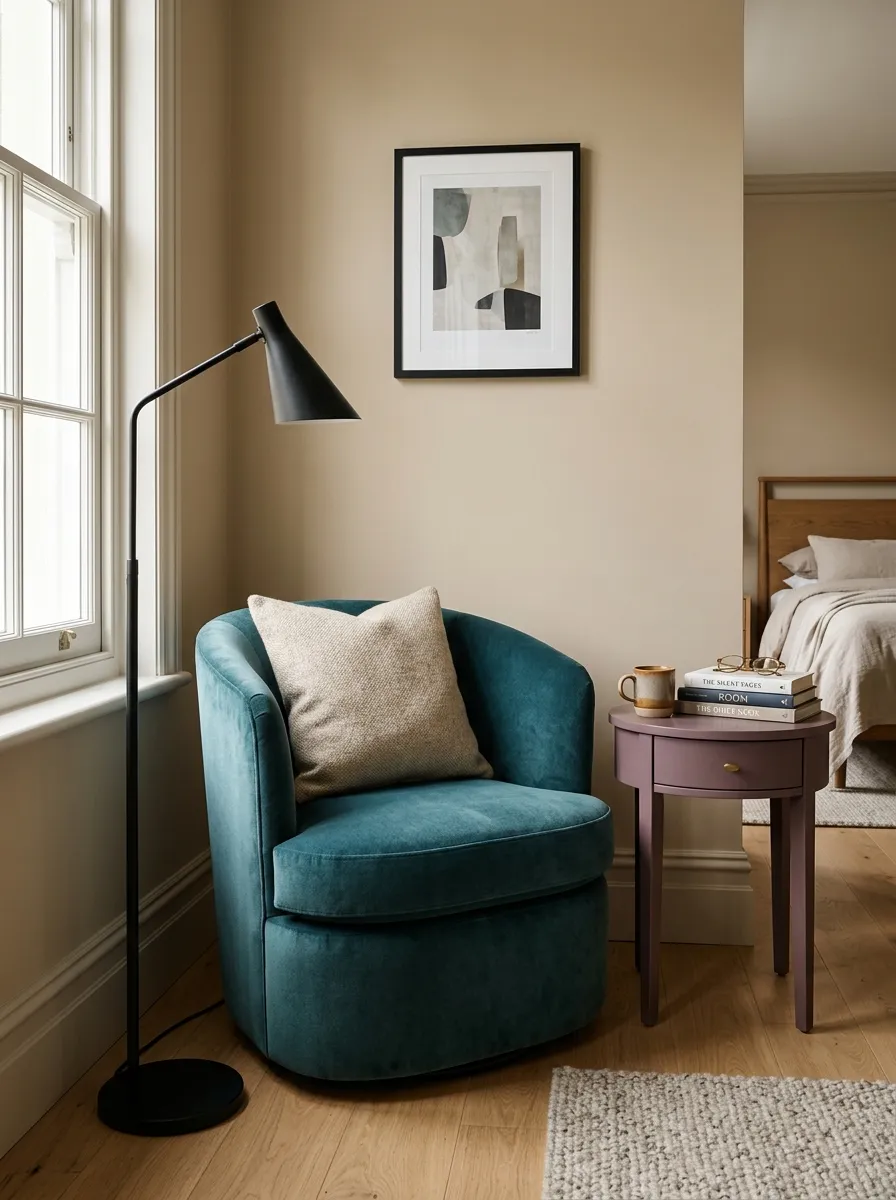
That awkward corner beside a window does not automatically need another cabinet.
A compact chair around 26 to 30 inches wide can create a useful reading spot without dominating the room. Add a narrow floor lamp or wall light and a small side table just large enough for a mug and book.
Before buying anything, mark the furniture footprint on the floor with painter’s tape. If you cannot walk naturally around the taped area, the chair is too large.
A reading corner should make unused space useful. It should never turn the route to your closet into an obstacle course.
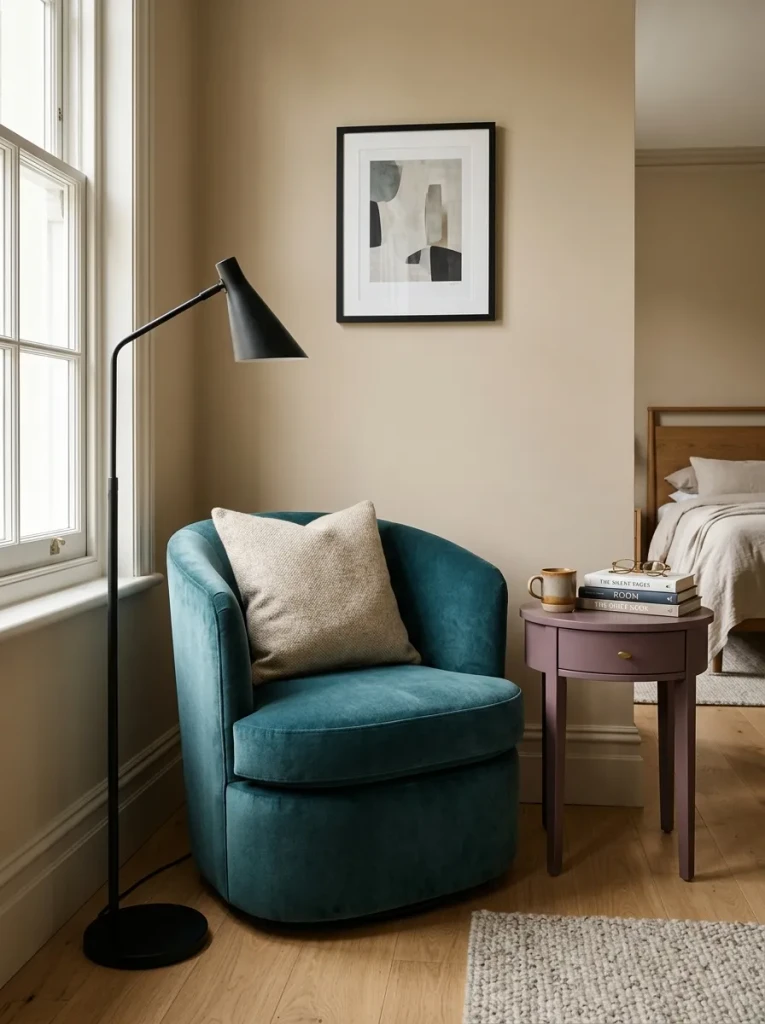
Behind Door Storage
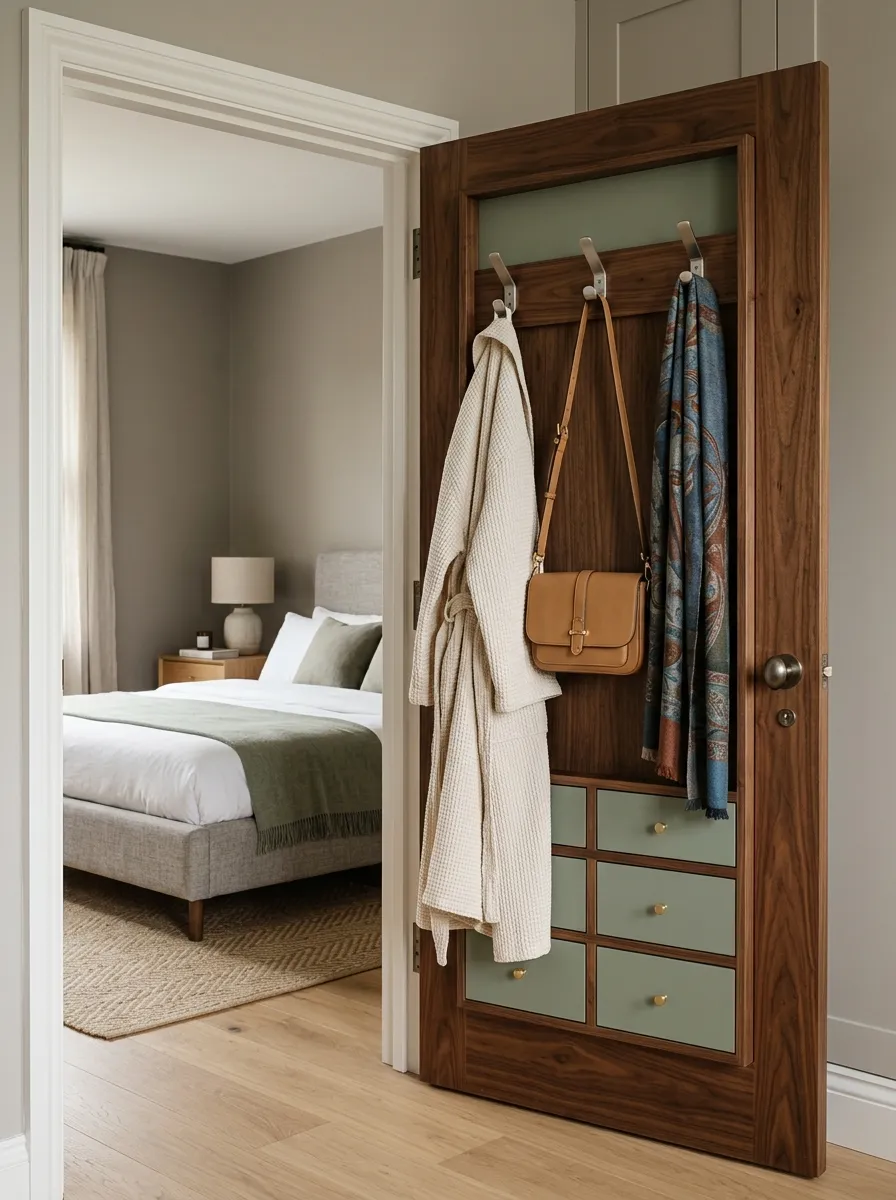
Look behind your bedroom door before deciding you are out of storage.
A shallow hanging organizer, short rail, or set of hooks can hold scarves, bags, robes, or tomorrow’s outfit without using visible wall space elsewhere.
Measure the gap between the open door and the wall first. Bulky organizers can prevent the door from opening fully or leave dents in the wall.
Keep this area reserved for practical items rather than decoration. Behind door storage works best as discreet support storage, especially for belongings you reach for regularly but do not want displayed throughout the room.
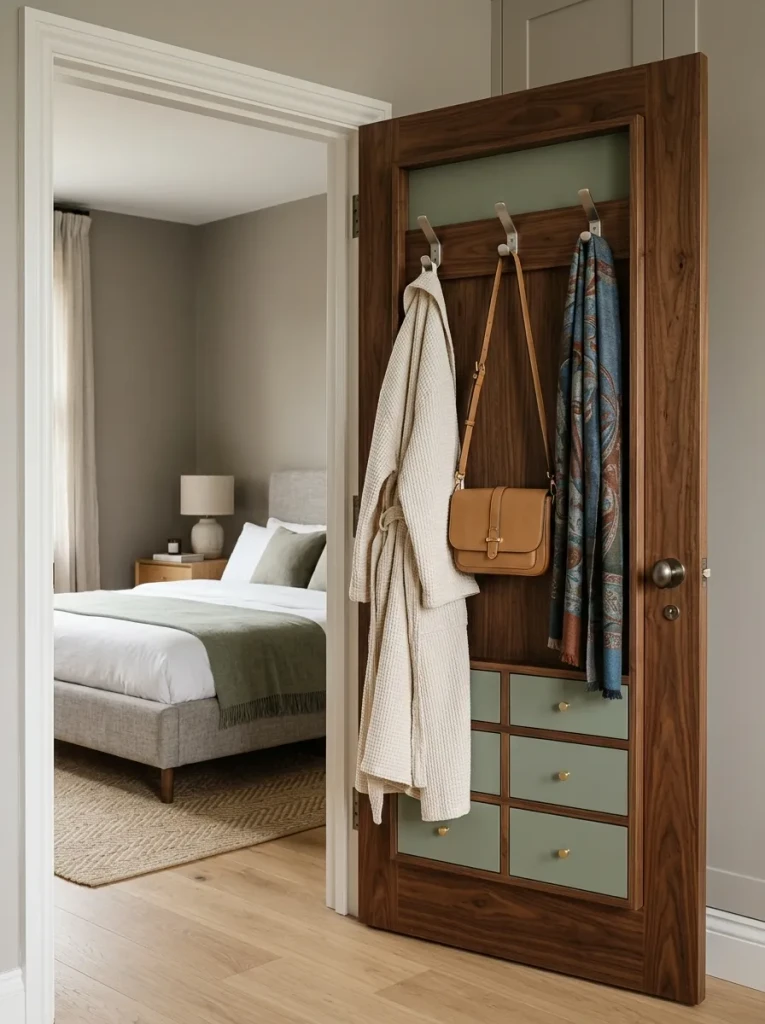
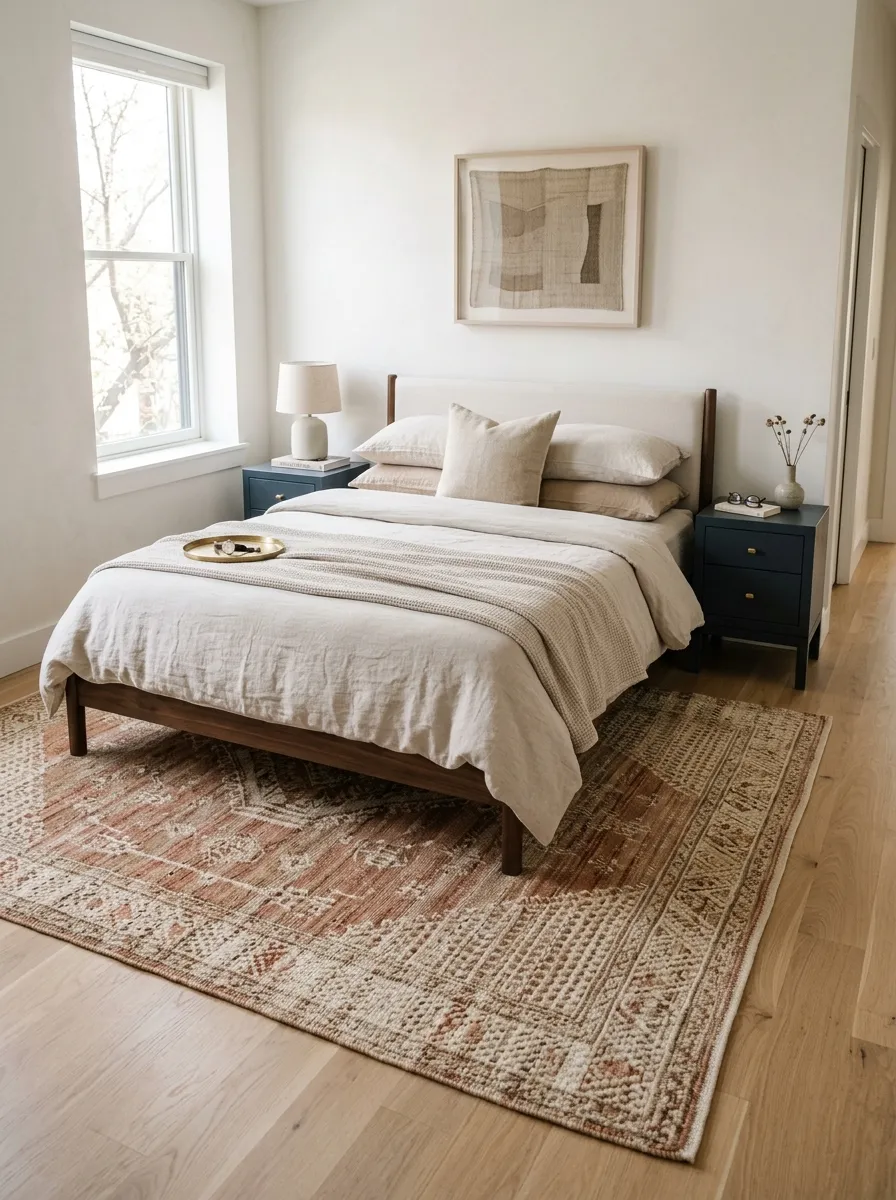
Oversized Rug Placement
Here is one of the more counterintuitive small room tricks: sometimes bigger looks less cluttered.
A tiny rug beside the bed breaks the floor into several visual sections. One larger rug connects the bed and nearby furniture into a single zone.
For a queen bed, an 8 by 10 foot rug often creates a balanced look if the room allows it. Smaller rooms may need a 6 by 9 foot option positioned under the lower two thirds of the bed.
Always measure before ordering. A generous rug should create continuity, not curl awkwardly against every wall.
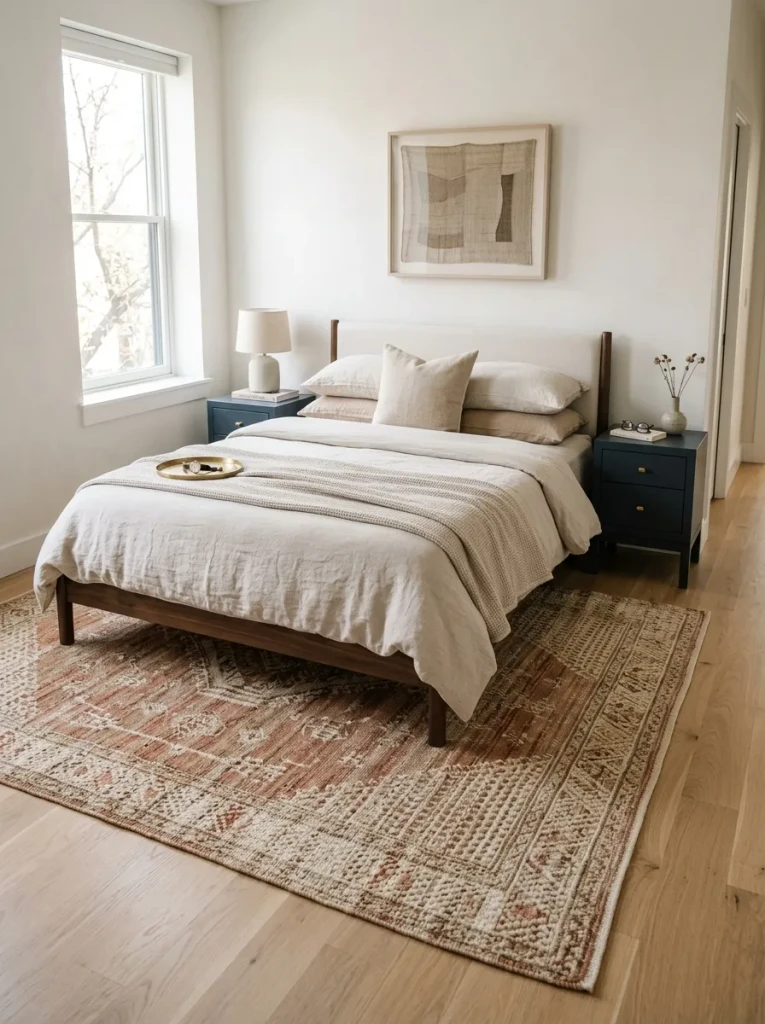
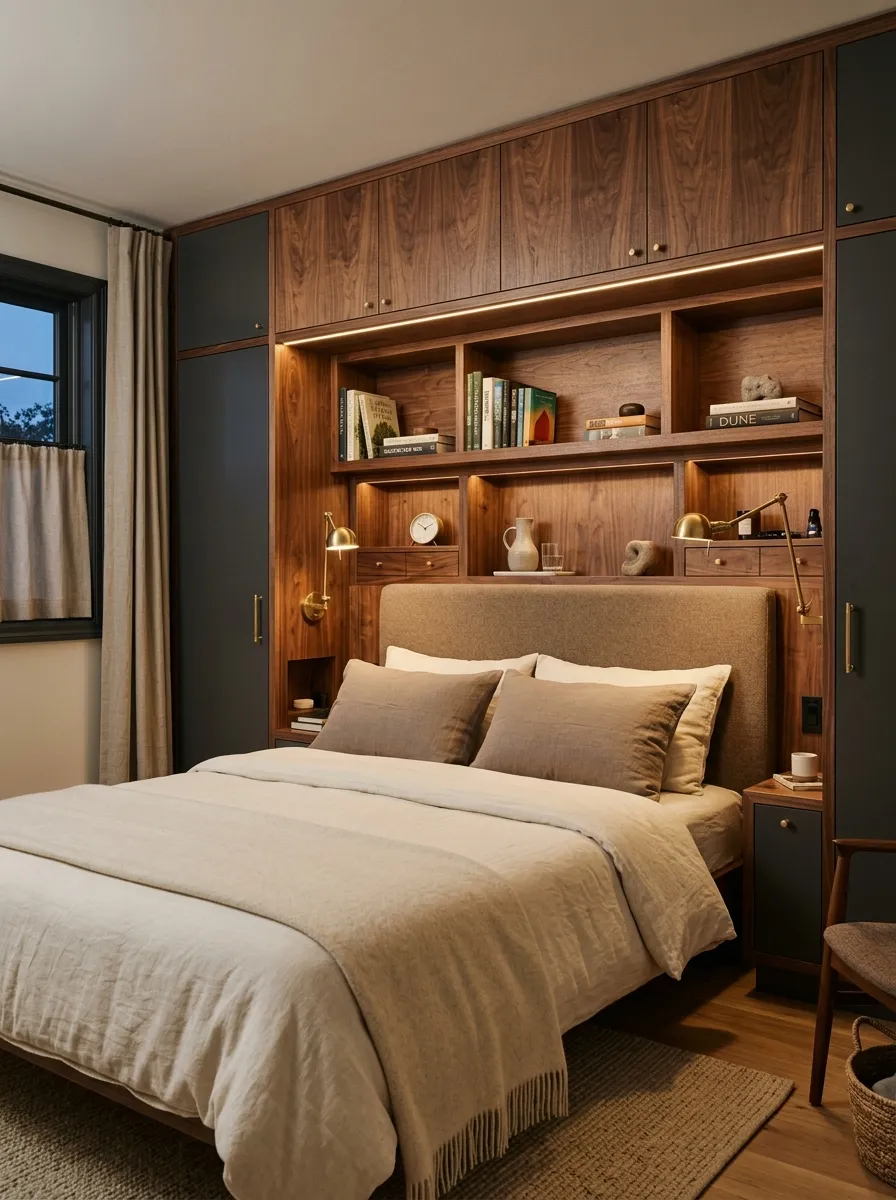
Built In Headboard Storage
The wall directly behind the bed can work harder without turning into general shelving.
A storage headboard keeps nighttime essentials within reach and may eliminate the need for one or both bedside tables. Look for shallow shelves around 6 to 10 inches deep so the unit does not push the bed too far into the room.
Keep books and frequently used items on lower shelves. Reserve upper compartments for lightweight decor.
Unlike ordinary wall shelving, this setup is specifically about organizing the bed zone. That distinction helps the room feel planned instead of covered in random storage.
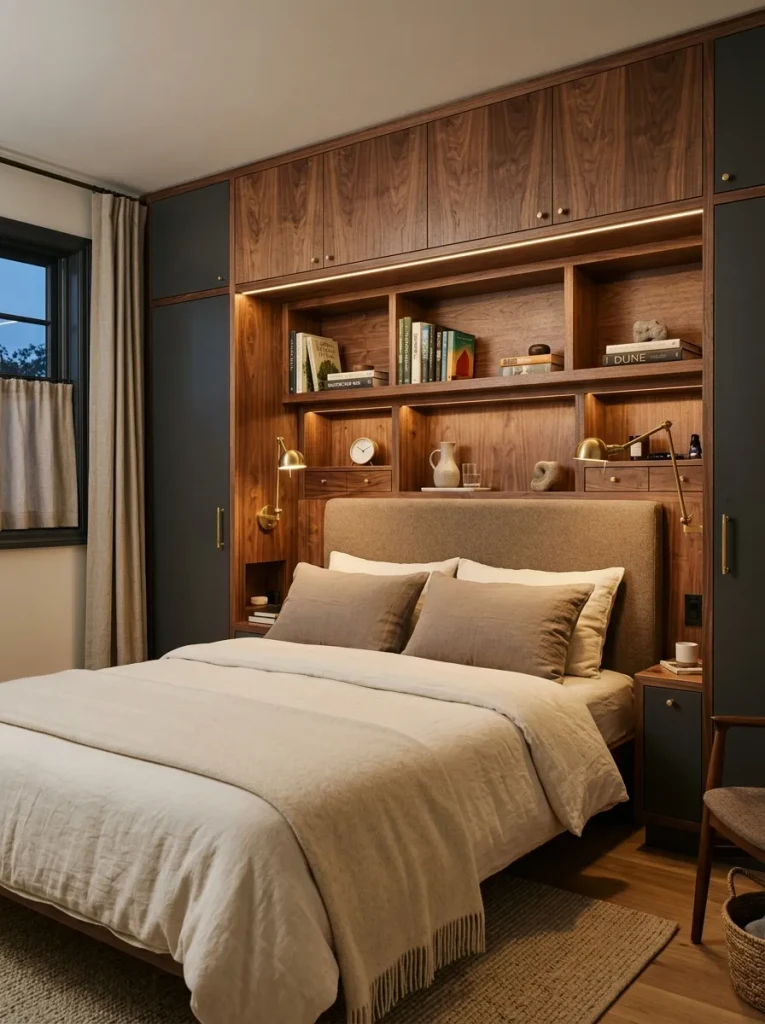
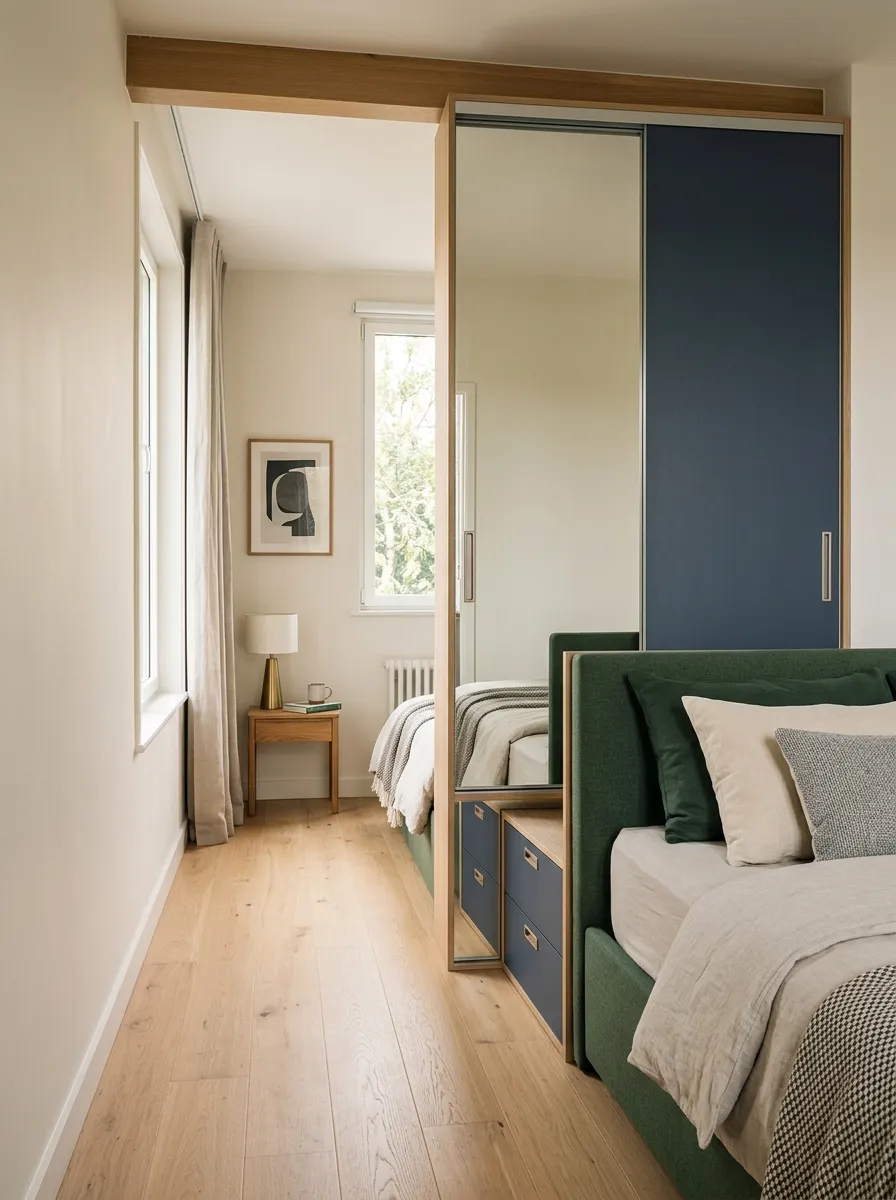
Sliding Closet Doors
Hinged closet doors require invisible floor space. You may not notice it until you try placing furniture nearby.
Sliding doors stay within the closet footprint, allowing a dresser, chair, or bedside table to sit closer without blocking access.
They are particularly useful in rooms where the gap between the bed and wardrobe is already narrow. Mirrored panels can increase reflected light, while plain light colored panels create a calmer appearance.
Before changing doors, check whether the existing closet frame can support a sliding system. This is one idea where accurate measuring matters more than Pinterest inspiration.
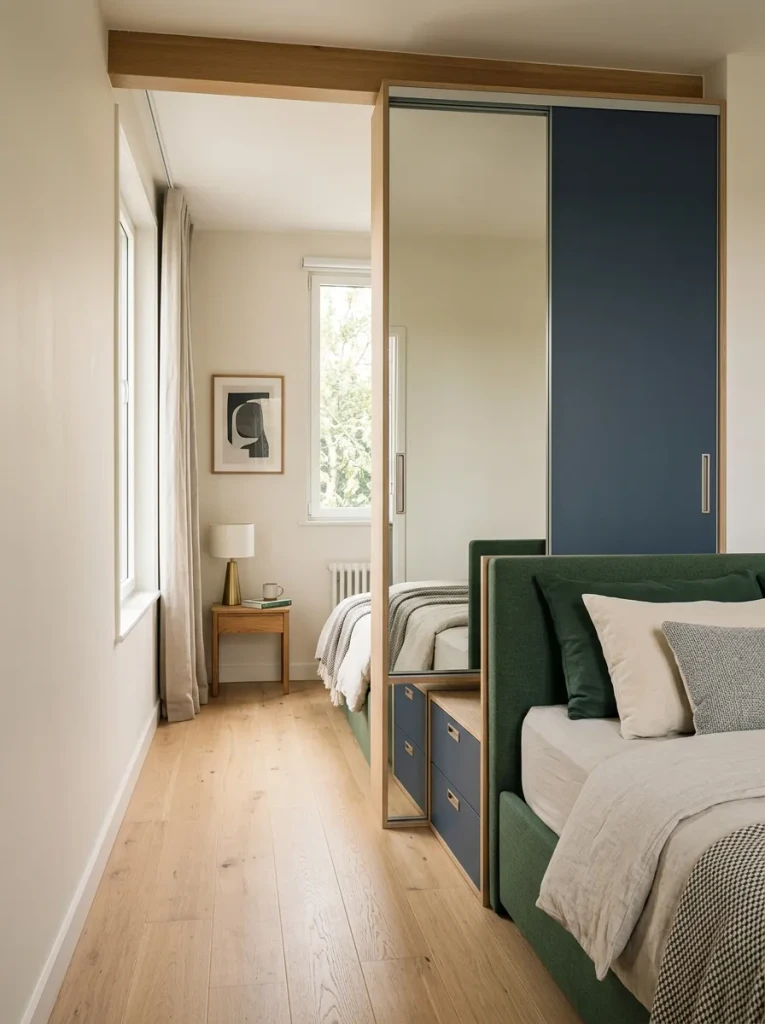
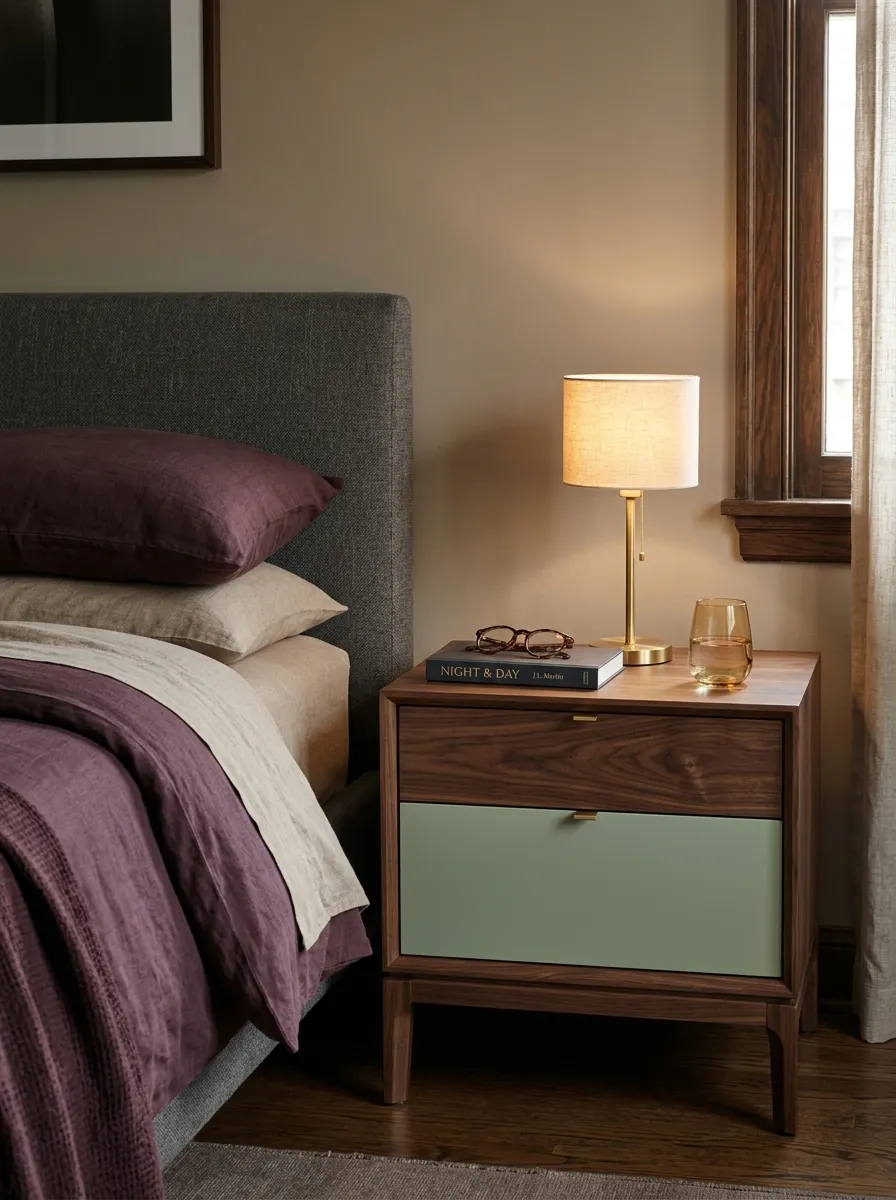
Minimal Bedside Styling
Your nightstand should not become the bedroom’s lost and found department.
Keep the surface limited to what you actually use at night: perhaps a lamp, water, glasses, and one book. Chargers can sit inside a drawer or attach neatly behind the table with cable clips.
Leaving around one third of the tabletop empty creates an immediate sense of order.
One thing that surprised me in small rooms is how much visual clutter accumulates at bedside level. Cleaning up that one surface often makes the entire bed area feel more intentional without buying anything new.
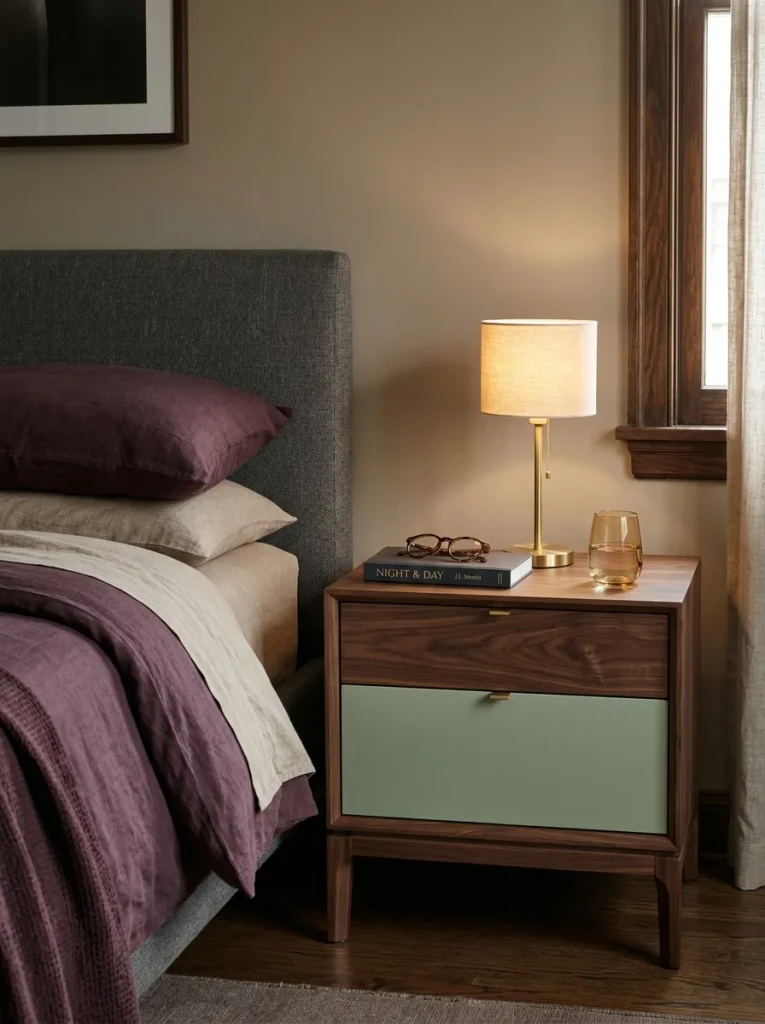
Open Leg Furniture
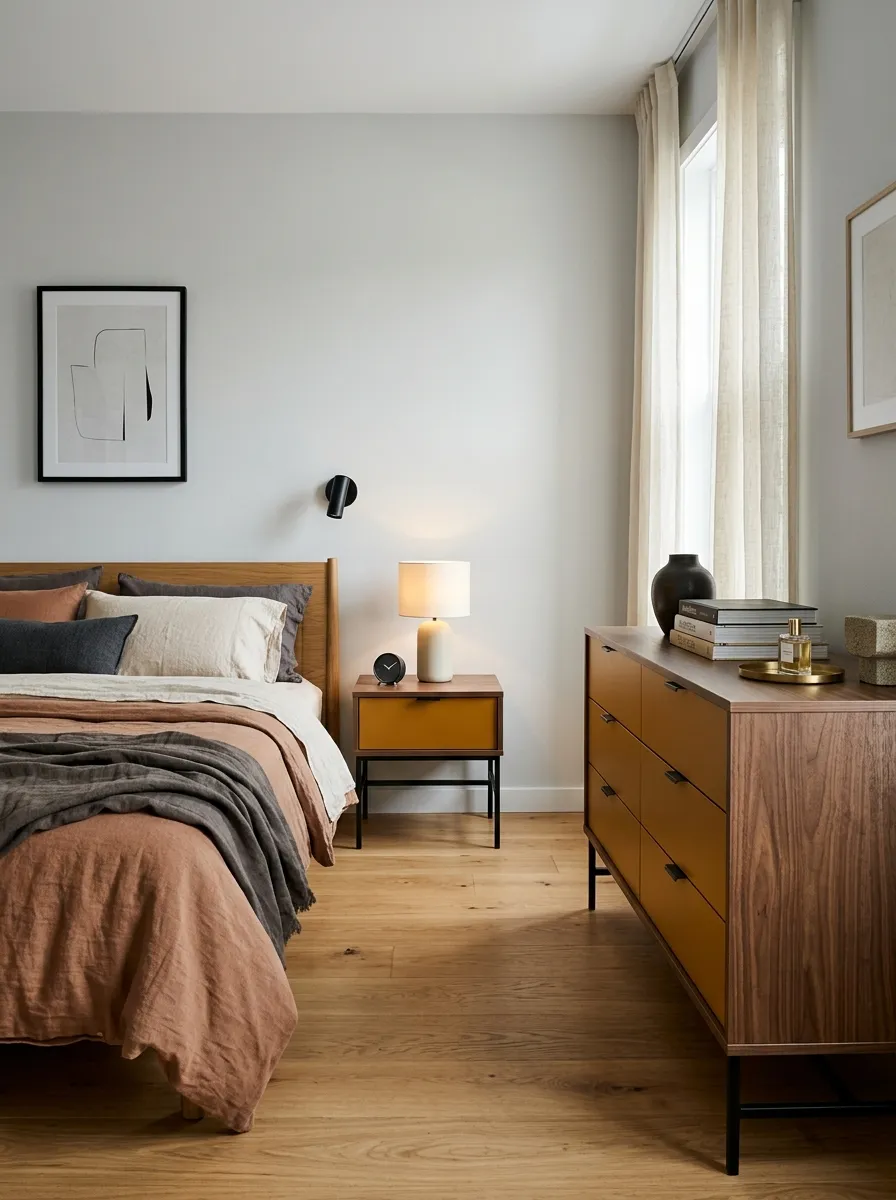
Furniture raised on slender legs allows more flooring to remain visible, which helps a tight room feel less blocked.
Look for dressers, nightstands, and chairs with open bases rather than heavy solid panels extending to the floor. Even 5 or 6 inches of visible space beneath a piece can make it appear lighter.
Do not immediately fill that gap with baskets. The empty space is part of the effect.
This idea is especially useful if your room already contains several storage pieces. You keep the same function while reducing the visual weight of the furniture.
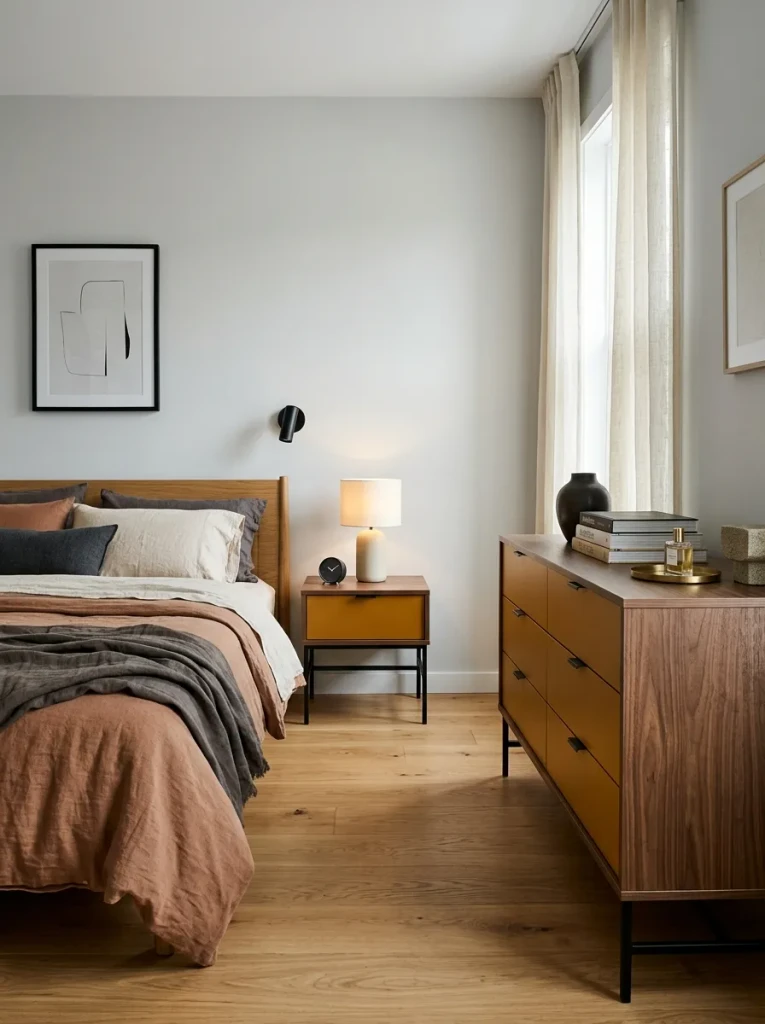
Wall Hook Station
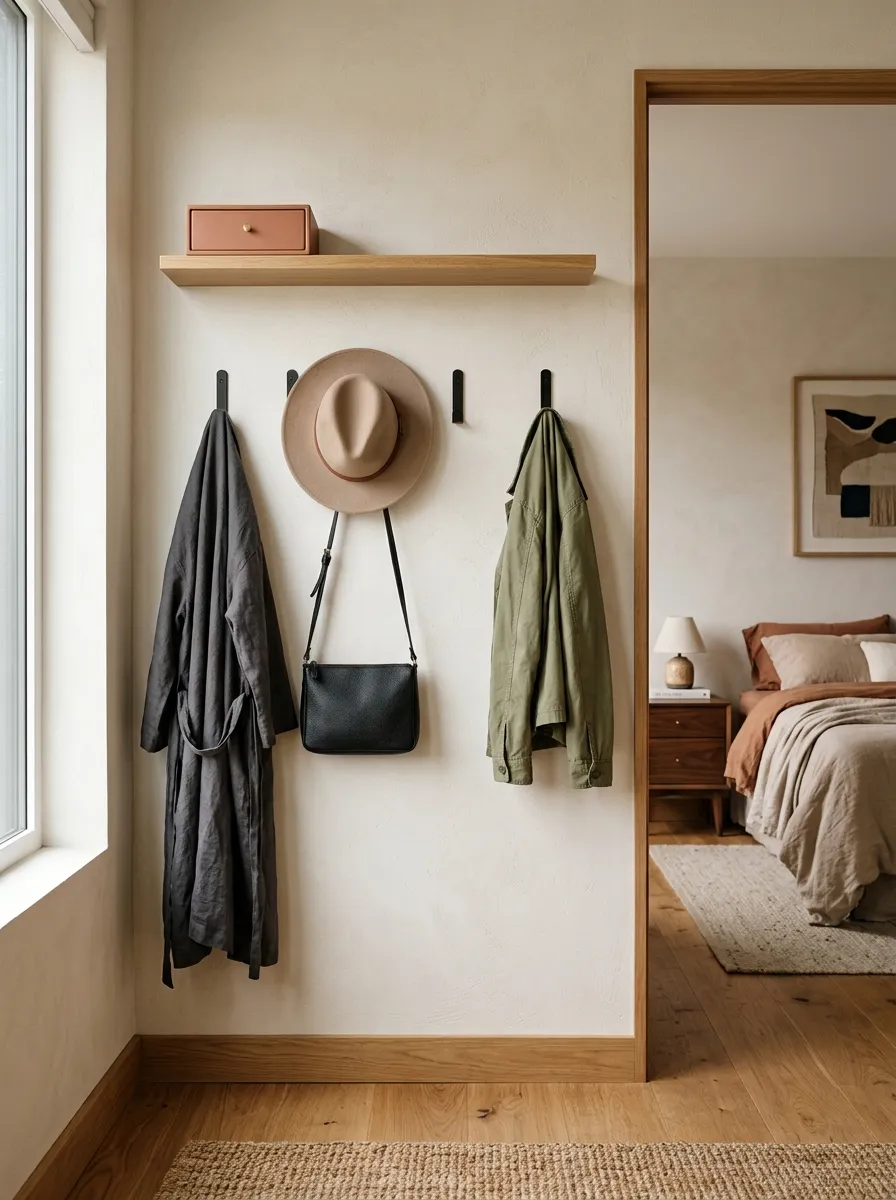
A few well placed hooks can prevent clothes and bags from migrating onto every chair in the room.
Create one dedicated hook station near the closet or bedroom entrance. Three to five hooks are usually enough for a robe, handbag, hat, and frequently worn jacket.
Space them far enough apart that items do not overlap into one bulky mass.
This differs from behind door storage because the items remain visible, so treat the setup as part of the room design. Choose hooks in one finish and limit the display to things you genuinely use. Otherwise, it quickly becomes vertical clutter.
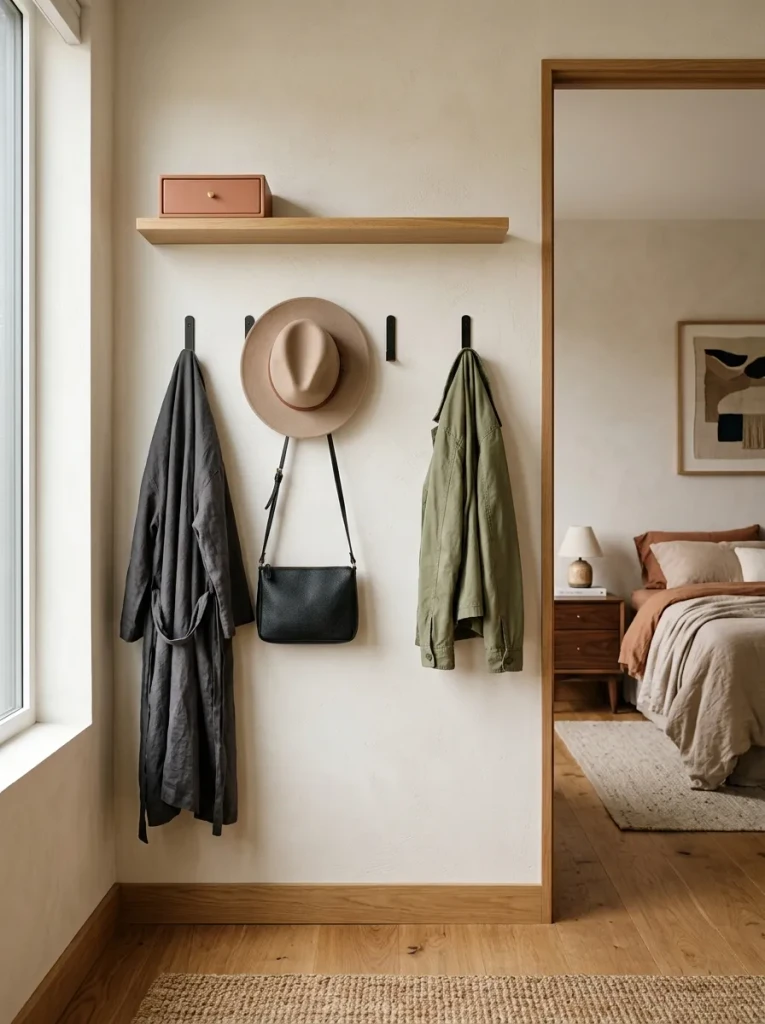
Hidden Storage Bench
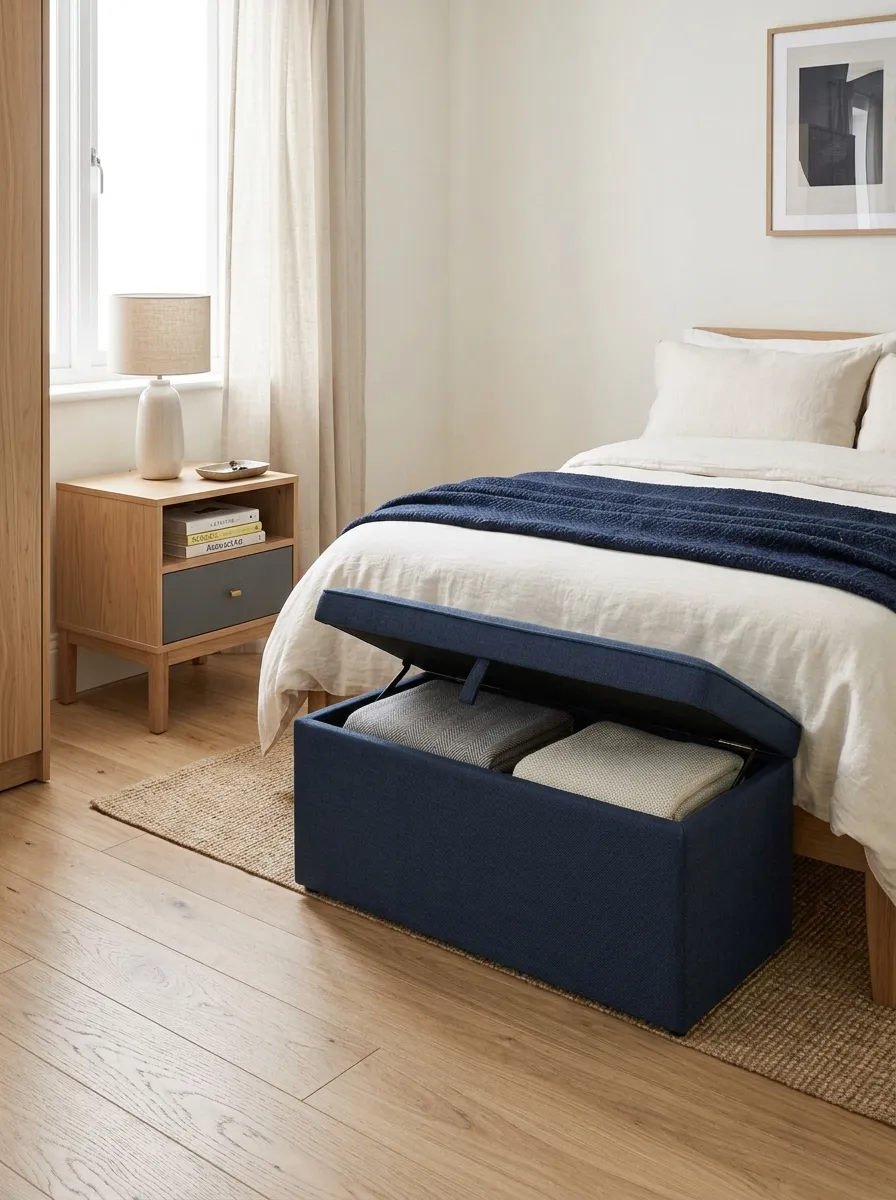
A bench at the foot of the bed earns its space only if it does more than look decorative.
Choose a compact model with a lift top or internal compartment for extra blankets, pillows, or seasonal linens. Keep at least 24 to 30 inches of walking clearance between the bench and the opposite wall or furniture whenever possible.
If that clearance is not available, skip the bench entirely. A smaller storage cube may work better.
This piece is useful because it combines seating, storage, and a temporary landing spot without requiring three separate items.
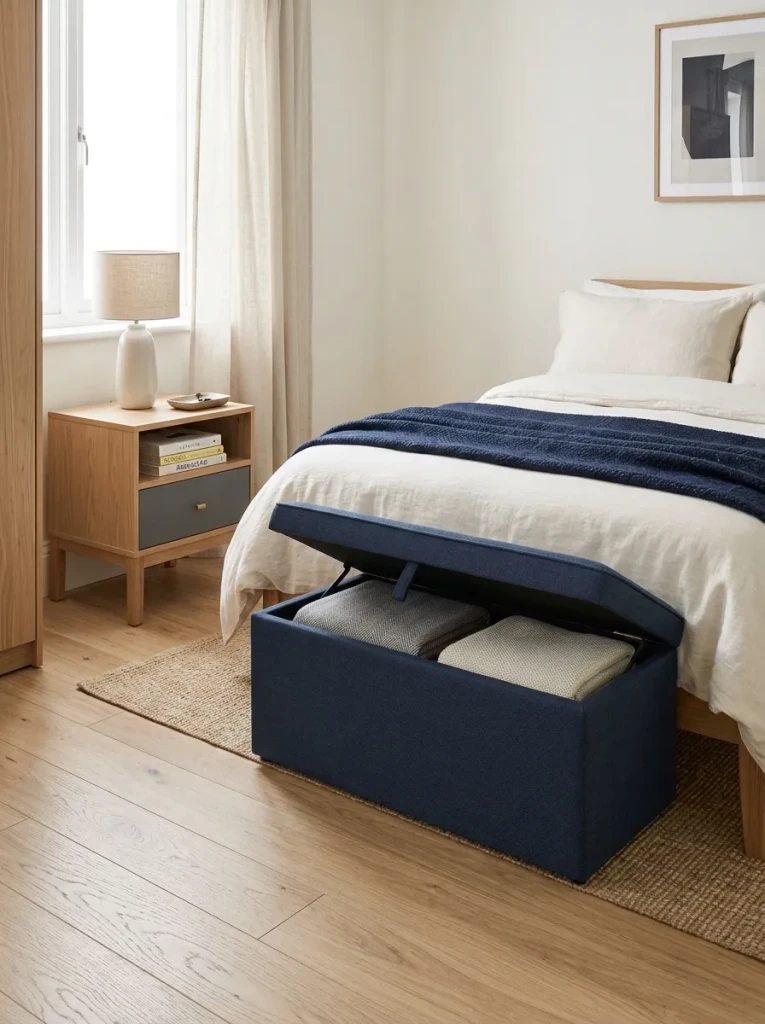
Ceiling Height Shelving
The highest part of your wall is useful, but it should not become daily storage.
Install shallow shelving near the ceiling for lightweight items you rarely need, such as seasonal accessories, keepsake boxes, or spare bedding stored in fabric containers.
Keep these shelves visually simple and use matching boxes so the upper wall does not feel chaotic.
This strategy is different from standard vertical shelving. Mid level shelves are for accessible items. Ceiling level shelves are for low frequency storage.
Always anchor high shelving properly. Nothing makes a relaxing bedroom less relaxing than wondering whether a heavy box is planning an overnight escape.
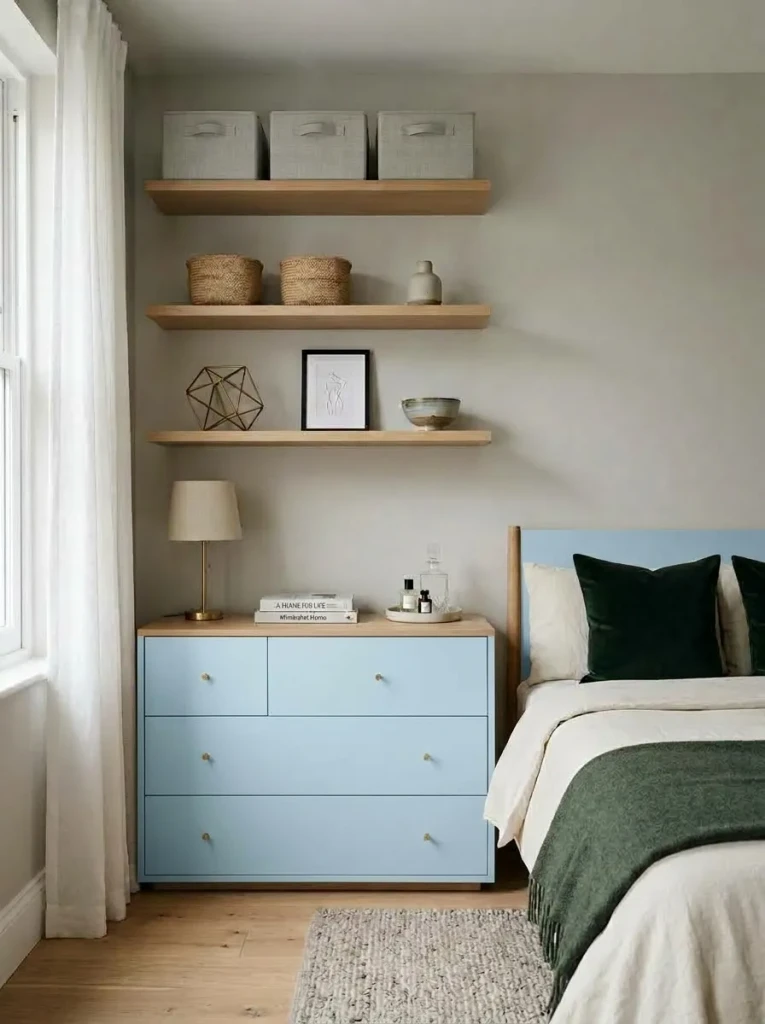
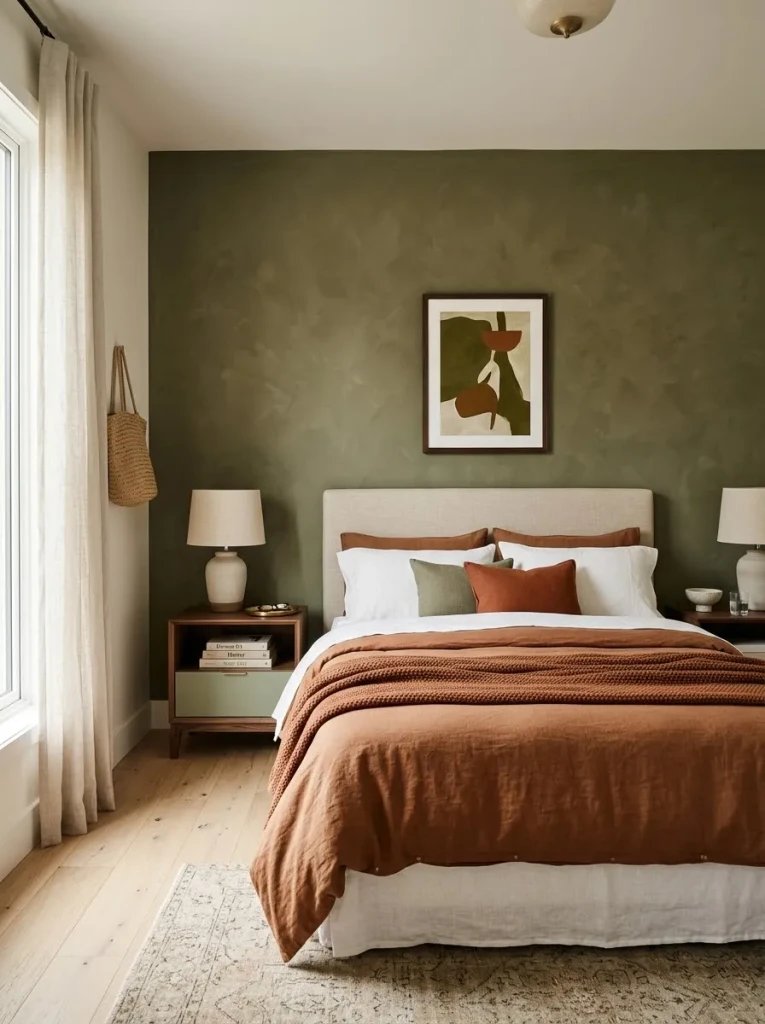
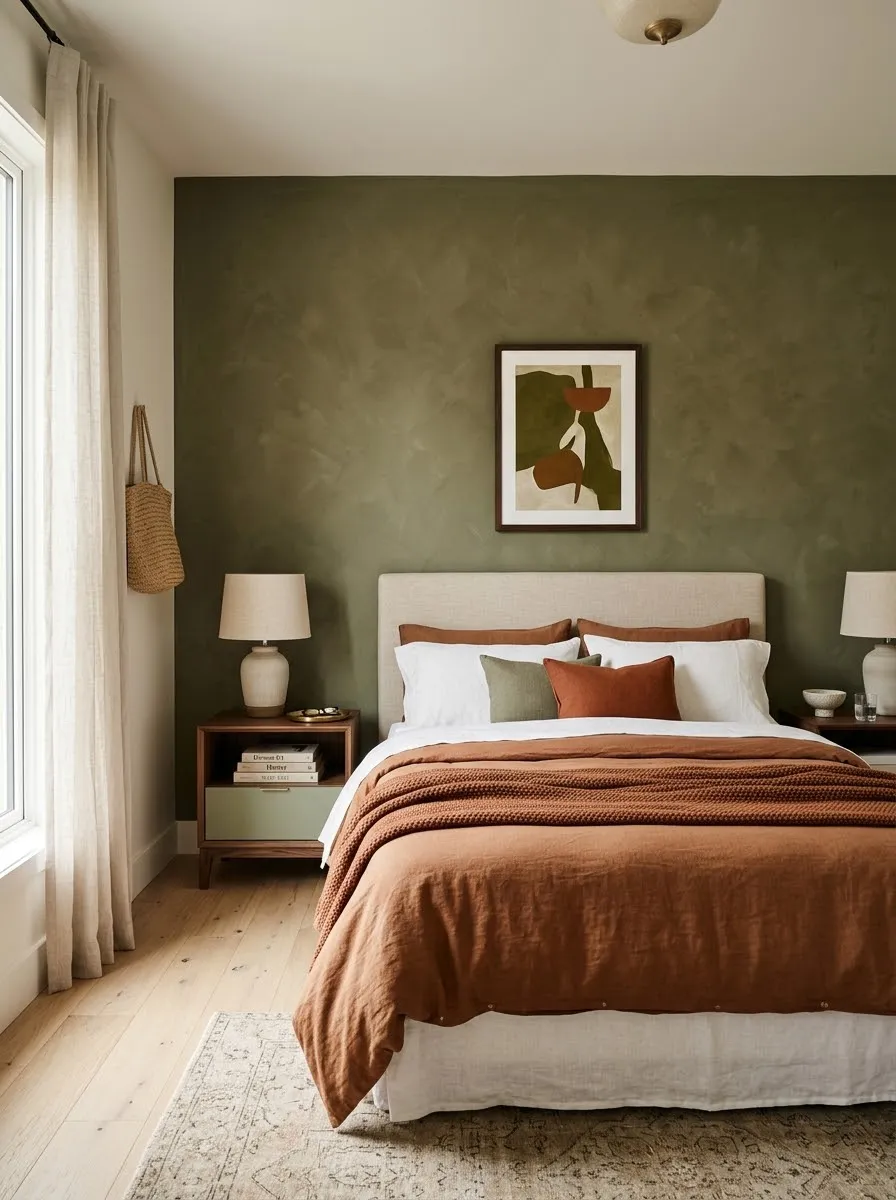
Single Accent Wall
Small bedrooms can handle dark or saturated color. The trick is giving that color a clear job.
Use one stronger shade behind the bed, then keep the other walls quieter. Muted olive, dusty blue, clay, plum, and deep taupe can all work depending on the light in the room.
Repeat the color once or twice in small details such as a cushion or artwork.
Avoid matching every accessory to the wall. Too much coordination can make a room feel staged rather than lived in. One confident color statement usually has more impact than several competing ones.
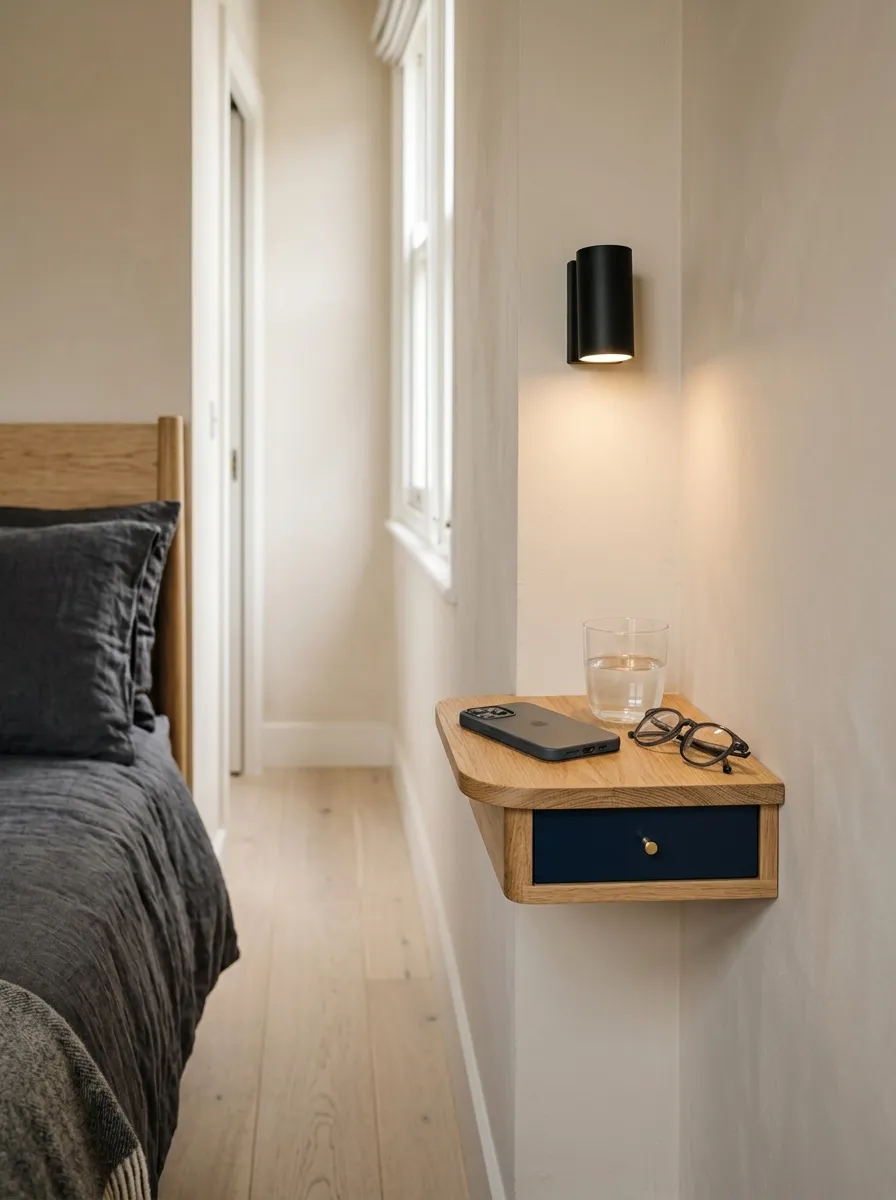
Narrow Bedside Shelf
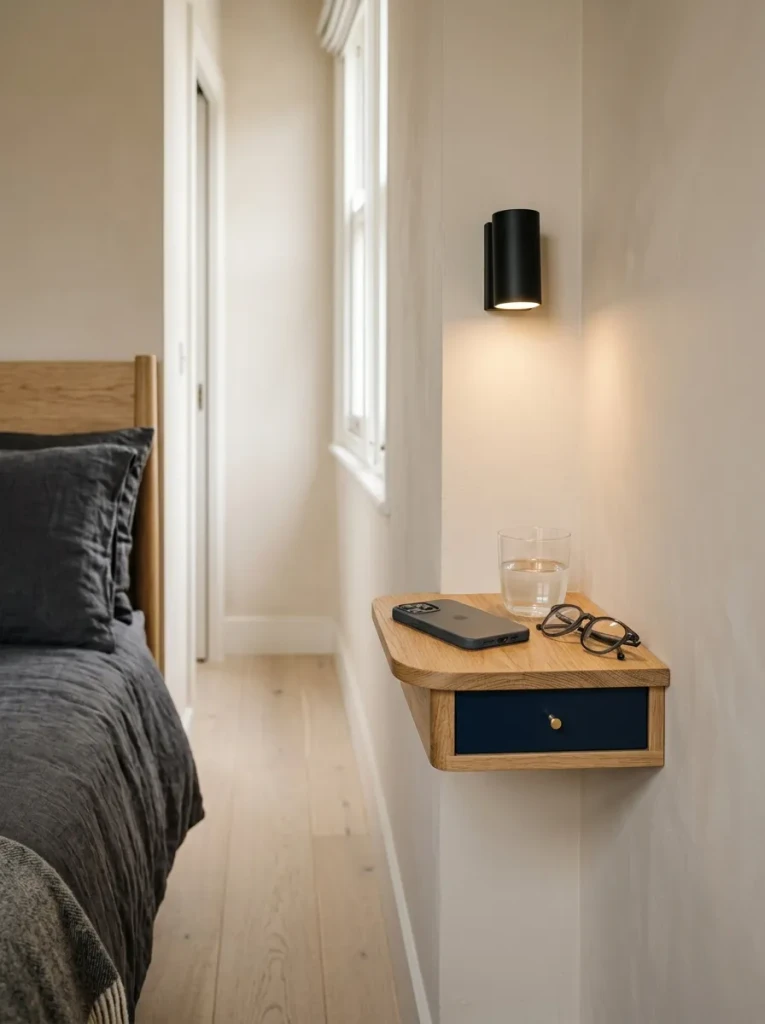
Sometimes there simply is not enough room for a proper nightstand.
A wall shelf only 8 to 12 inches wide can still hold a phone, glasses, or water. Mount it close to mattress height and pair it with a wall light so a lamp does not consume the entire surface.
Rounded corners are worth considering if the shelf sits directly beside a narrow walkway.
This is not decorative shelving. It is a tiny functional landing spot for rooms where every inch beside the bed matters.
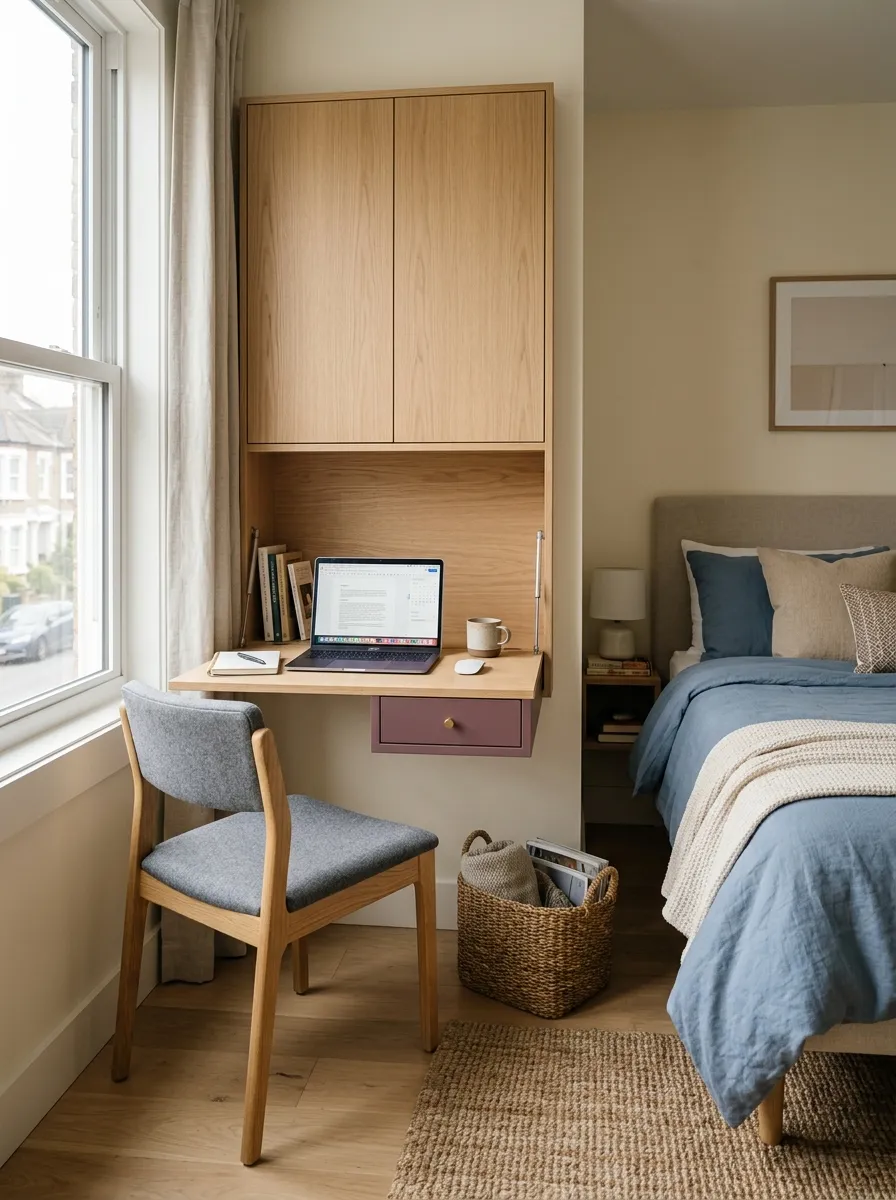
Fold Down Desk
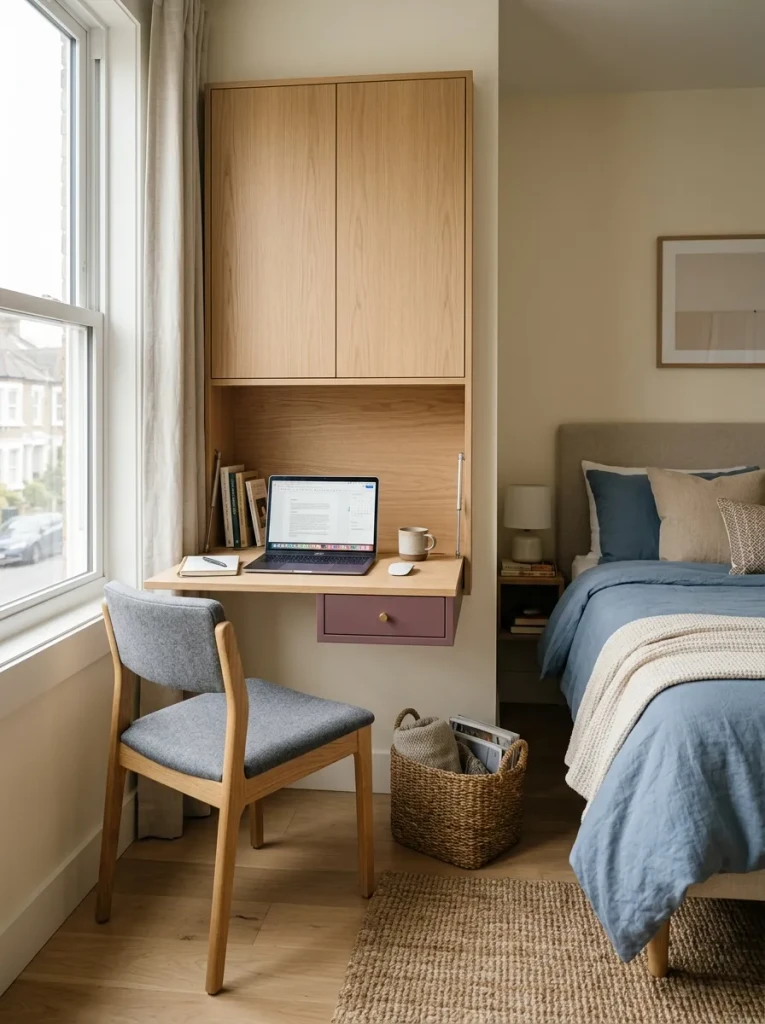
A desk you can close after work helps a bedroom return to being a bedroom.
Wall mounted fold down desks are particularly useful in studio apartments, guest rooms, and bedrooms used for remote work. Choose a model deep enough for your laptop but shallow enough to fold flat without dominating the wall.
Keep office supplies in one nearby basket or drawer rather than leaving them scattered after the desk closes.
The biggest benefit is psychological as much as physical. Once the surface disappears, the room feels less like an office you happen to sleep in.
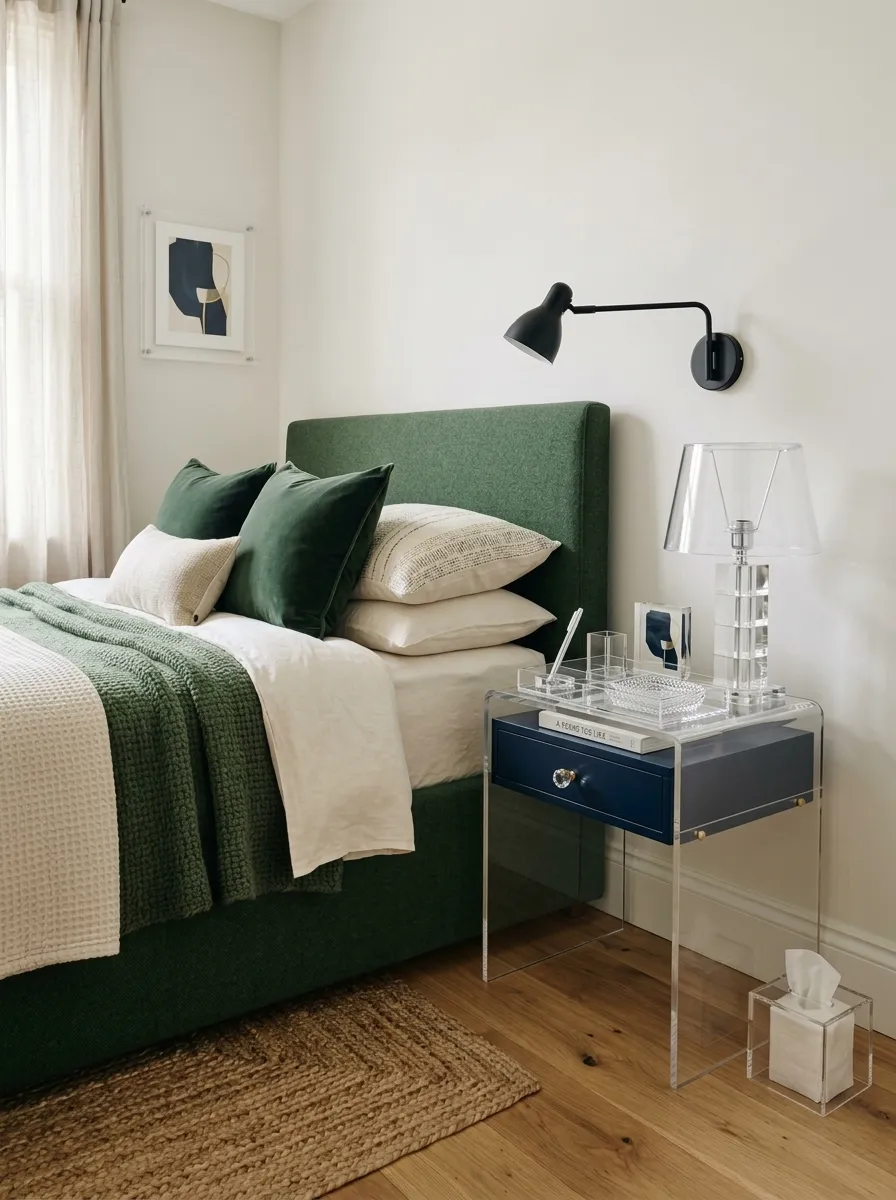
Clear Acrylic Furniture
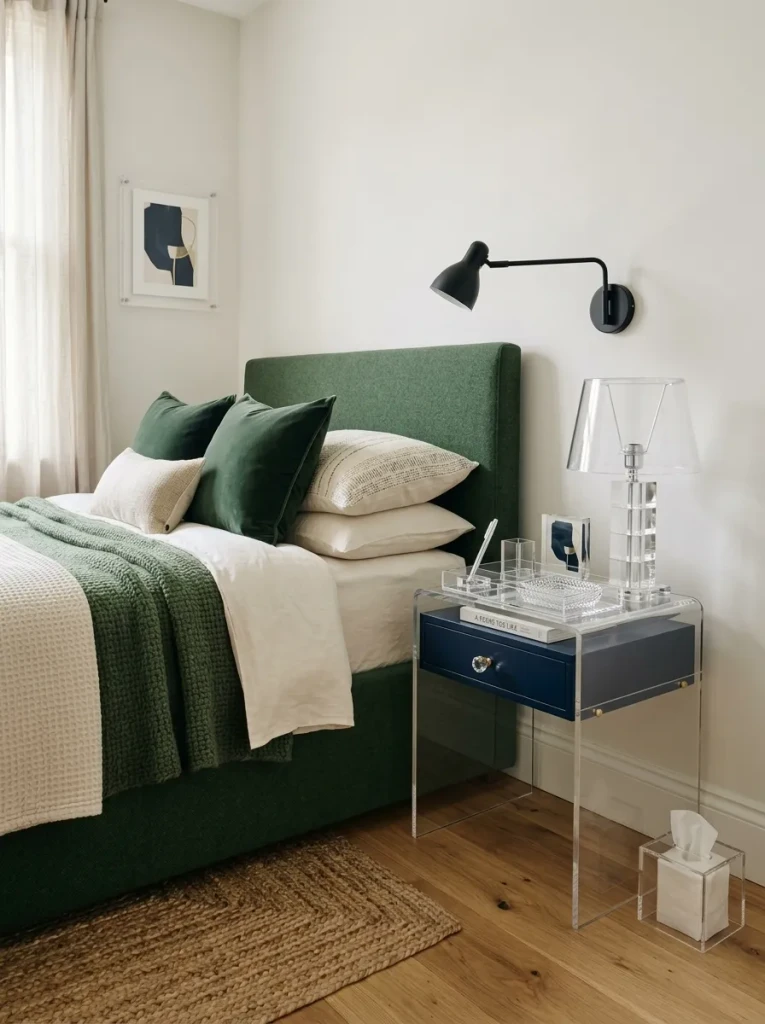
Transparent furniture can reduce visual weight, but one piece is usually enough.
A clear bedside table or compact chair allows sightlines to continue through the furniture instead of stopping at a solid block. This works particularly well beside a visually heavy bed or dresser.
Pair acrylic with wood, linen, woven fabric, or matte finishes so the room still feels warm.
Avoid filling the room with clear furniture. Too much acrylic can make a bedroom feel more showroom than home. Think of it as a visual disappearing trick, not a complete decorating theme.
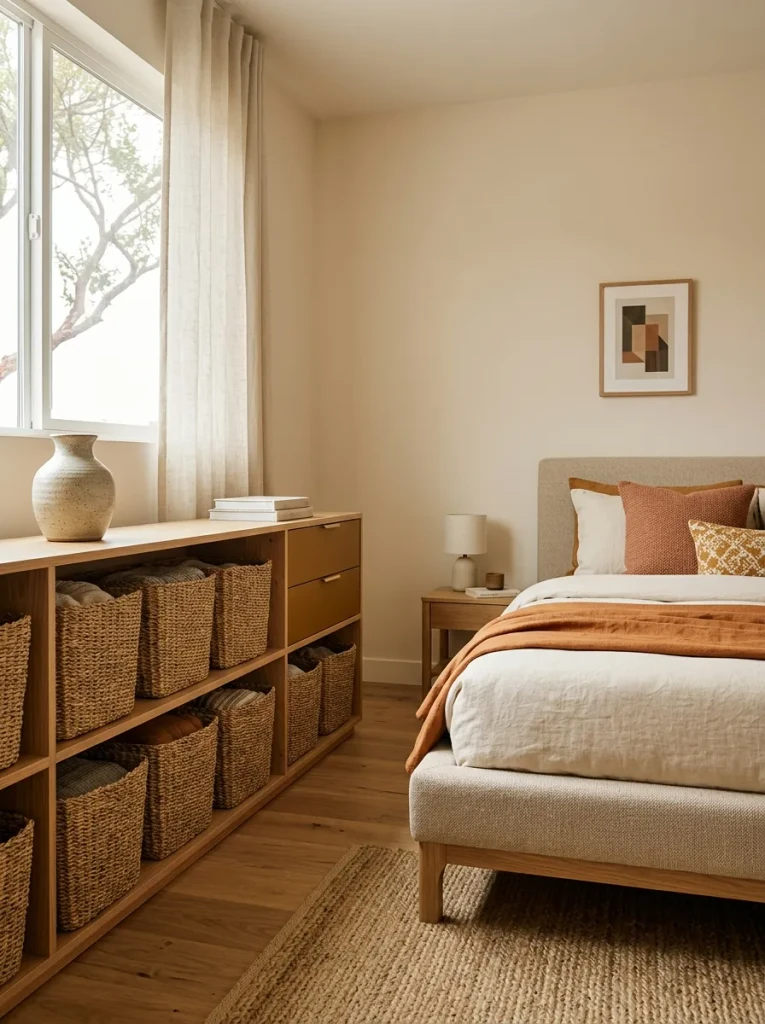
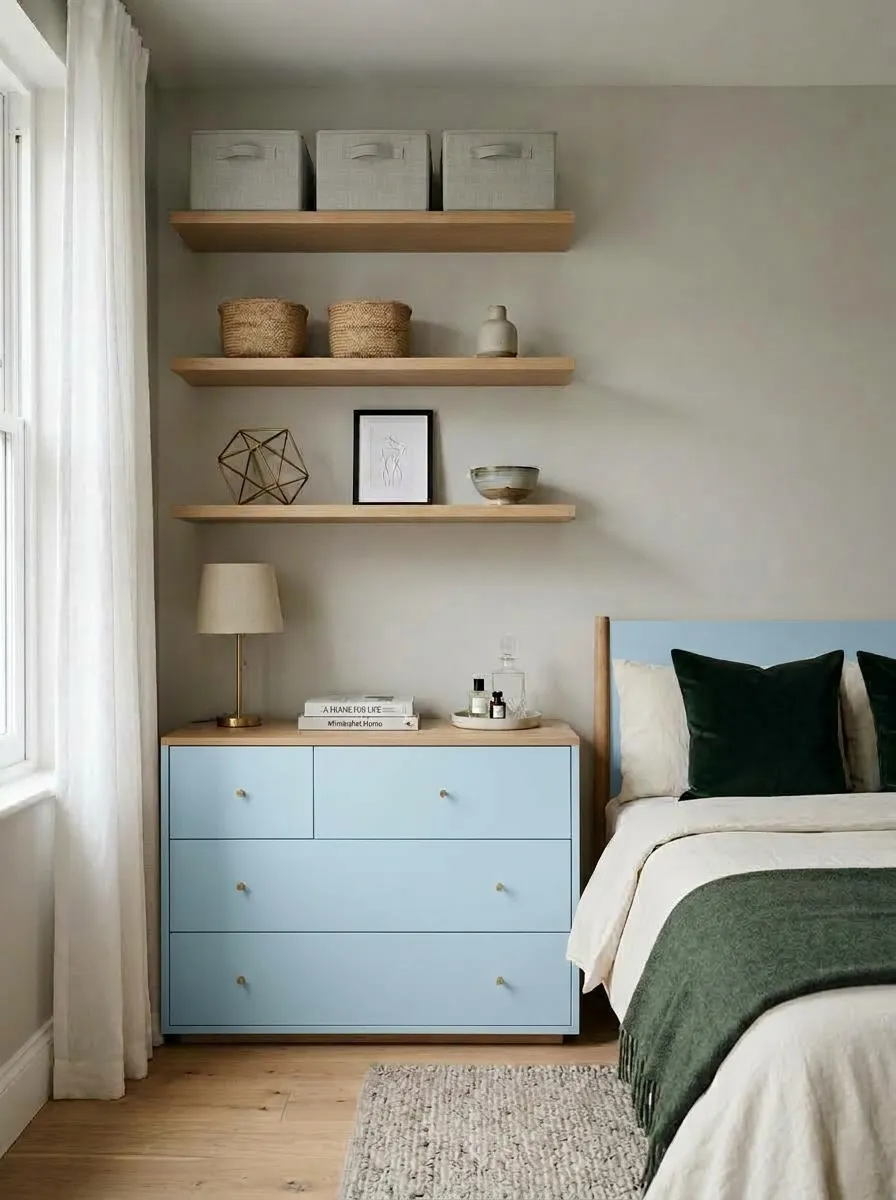
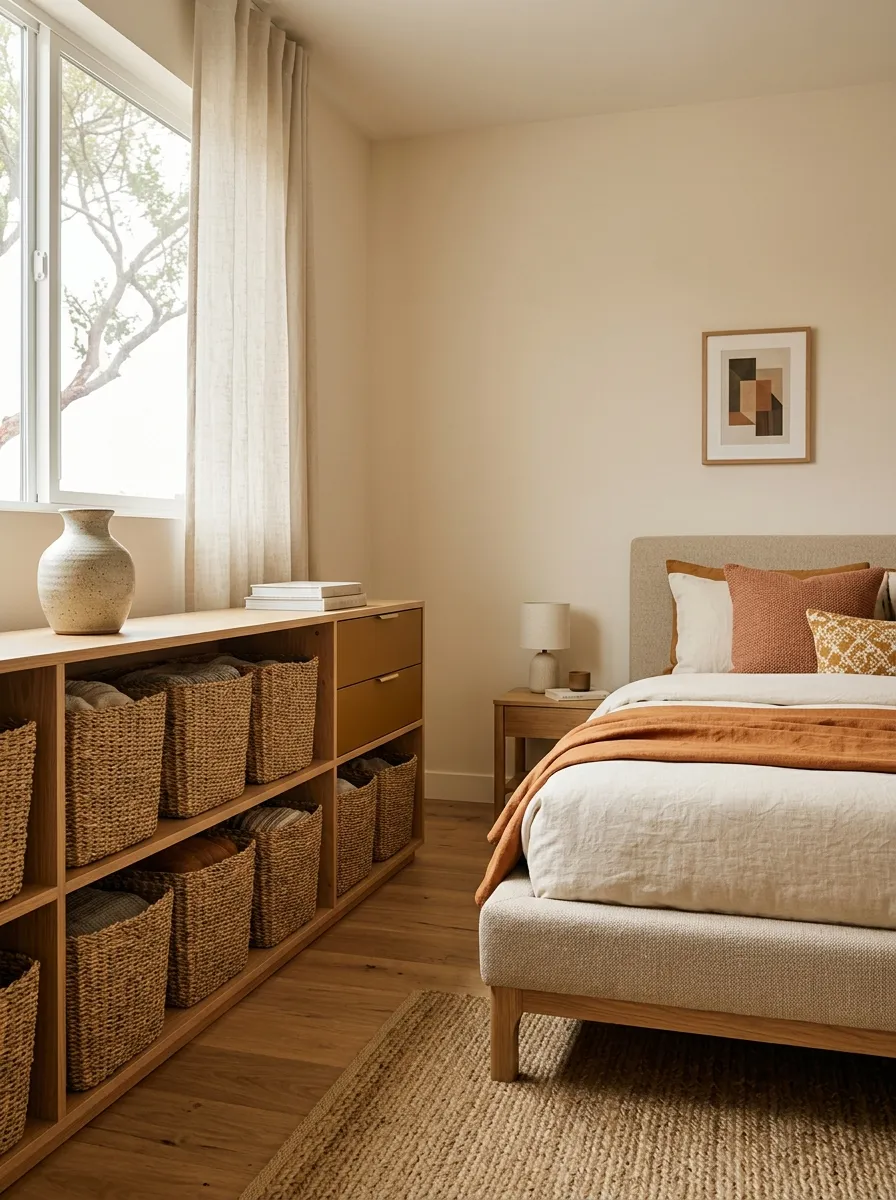
Matching Storage Baskets
Open storage becomes calmer when the containers speak the same visual language.
Measure the shelf first, then choose baskets with similar dimensions, materials, and colors. Woven baskets work well for soft items, while structured fabric boxes are better for smaller accessories that easily become messy.
Label the hidden side rather than the front if you prefer a cleaner appearance.
Do not buy baskets simply because an empty shelf exists. Decide what each one will store first. Otherwise, you may end up with attractive containers that are mostly storing other attractive containers.
Conclusion
A small bedroom does not need dozens of tricks. The most effective small bedroom decor usually comes from making a few deliberate choices: use the walls intelligently, protect walking space, reduce visual clutter, and choose furniture that earns every inch it occupies.
Start with the area that annoys you most. Maybe it is the cramped bedside gap, the overflowing closet, or the desk that never really disappears. Fix that one problem first, then reassess the room before buying anything else.
Save this guide on Pinterest for your next update, try one idea this week, and share it with someone wrestling with a tiny bedroom. Small changes add up quickly when every inch finally has a purpose.